ADAD
ADADUpdating your news feed...

NEWS EXPRESS is Nigeria’s leading online newspaper. Published by Africa’s international award-winning journalist, Mr. Isaac Umunna, NEWS EXPRESS is Nigeria’s first truly professional online daily newspaper. It is published from Lagos, Nigeria’s economic and media hub, and has a provision for occasional special print editions. Thanks to our vast network of sources and dedicated team of professional journalists and contributors spread across Nigeria and overseas, NEWS EXPRESS has become synonymous with newsbreaks and exclusive stories from around the world.















Loading banners
Loading banners...

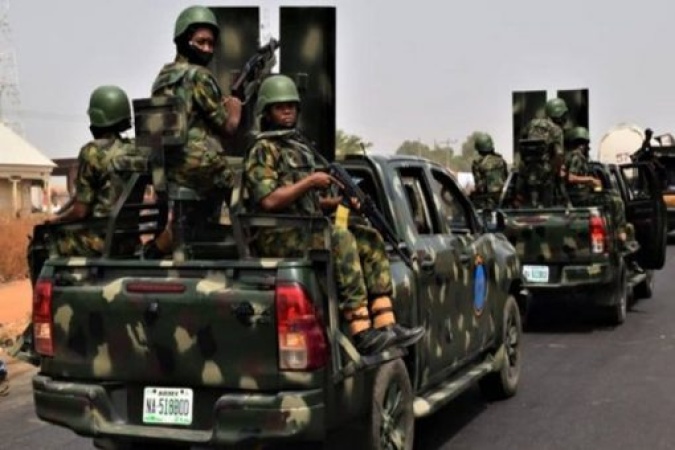
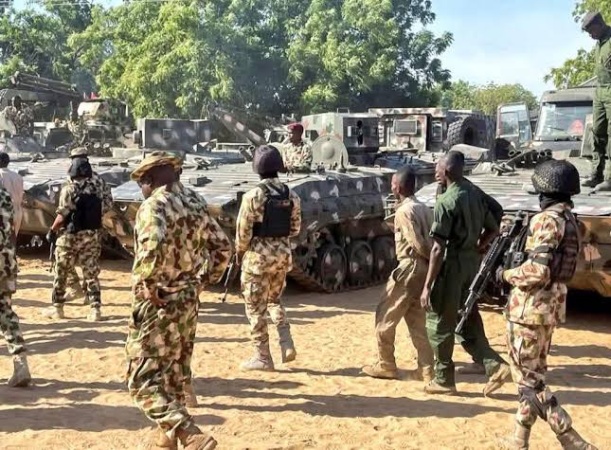
Military troops on the move
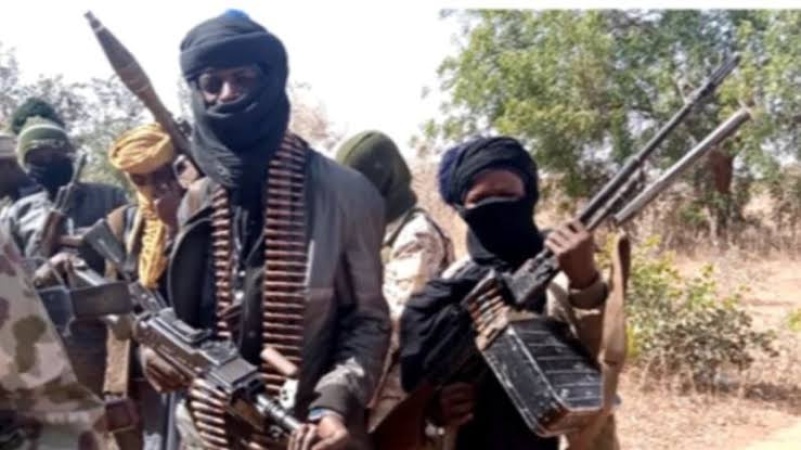
The coordinated and retaliatory attacks between farming and herding communities in Plateau State has intensified over the past week, illustrating the continued deadly violence marked by mutual suspicion, reprisals, and fragile peace efforts across several local government areas.
Security reports indicate that the latest incidents, spanning from April 6 to April 13, cut across Bassa, Riyom, Barkin Ladi, Bokkos and Mangu LGAs, involving clashes, ambushes, cattle rustling, and targeted killings affecting both Fulani pastoralists and Berom communities.
The most recent development occurred on April 13 at about 0700 hrs, when troops under Operation Enduring Peace (OPEP), conducted a search-and-rescue operation in Ariri and Kwasha villages of Bassa LGA following reports of a missing herder.
During the operation, troops discovered the corpse of the herder and recovered 32 cattle alive, while three others were found dead. The remains and livestock were handed over to community leaders.
On the same day, troops also responded to intelligence on an illegal settlers’ camp in Ungwan Doki, Riyom LGA, where four suspected illegal migrants were arrested.
On April 12, at about 1440 hrs, troops restored calm after a clash between farmers and herders in Rakum village, Barkin Ladi LGA. Five locals, two herders, and a police officer sustained injuries, after being attacked by Berom Militia while one suspect was arrested.
Earlier at about 1222 hrs in Rasa village, troops foiled another attack on a herder by suspected armed Berom elements and evacuated the injured victim to hospital. At about 2100 hrs, troops responded to sporadic gunfire along Hukke–Rewienko road in Bassa LGA, repelling attackers and rescuing an injured civilian.
In a related development, at about 1800 hrs, troops foiled an attempted cattle rustling incident in Kpashio village, recovering 92 cattle reportedly abandoned by fleeing suspects. The owner of the livestock was either killed and buried in shallow grave or escaped the assault.
April 11: Ambush and rising tension
On April 11 at about 2145 hrs, troops responded to an ambush in Tanjol community, where a 21-year-old resident, Joseph Irmiya, was attacked by Fulani bandits later died from injuries.
Shortly after, troops intercepted an attempted attack on Rim community, where one youth sustained gunshot wounds. Separately, troops conducting stop-and-search operations in Kuru, Jos South LGA at about 2030 hrs arrested two suspects in possession of a pistol and ammunition.
April 9: Deadly attack and counter-operations
On April 9 at about 2230 hrs, suspected Fulani bandits attacked Mbwelle village in Bokkos LGA, killing eight residents, including Habila Istifanus (38), Hassan Istifanus (31), Iliya Mangut (70), Sunday Gideon (31), Innocent Banabas (20), Lucky Titus (38), Wisdom Lucky (15), and Bwehsun Hassan (25).
Earlier on April 9, troops under Operation Wutan Daji stormed Fulani bandits enclave at Wase and Kanam LGAs, neutralising 13 them during the offensive along identified corridors in Daba and Seri villages.
The troops had established blocking positions between Dutsen Zaki and Odare Forest, where they intercepted armed elements moving on motorcycles. Recovered items included two motorcycles, five 25-litre jerrycans of Premium Motor Spirit (PMS), one AK-47 rifle, and a magazine loaded with three rounds of 7.62mm special ammunition.
On April 8, troops of Operation Enduring Peace (OPEP) foiled an attack on commuters along the Razat–Kafi Abu road in Barkin Ladi LGA, where one civilian was killed and two others injured.
Later the same day, troops repelled a militia attack along the same axis and conducted a cordon-and-search operation in Suma Suga Takwok, recovering two AK-47 rifles, two magazines, and five rounds of 7.62mm ammunition.
In Riyom LGA, one civilian was killed in an ambush along the Dagbam bridge axis on the GOL–HOSS–Bwei road, while two others escaped unhurt. Troops also foiled an attack on Jol community on April 7, forcing the assailants to retreat without casualties.
Similarly, troops rescued one victim and recovered ammunition following an earlier attack in Dum village, Bachi District, where another victim was found dead.
Security operatives also intercepted 16 stray cattle grazing on farmland in Tahoss community, an incident linked to recurring disputes between farmers and herders.
The pattern of violence reflects a sustained cycle of reprisals between farming communities and pastoral groups.
On April 5, a Fulani herder, identified as Abubakar Hababe (40), was found dead in Riyom LGA in what sources described as a reprisal attack. The killing by suspected Berom Militia was reportedly linked to earlier incidents, including the attack on an illegal mining site in Gyel village where three miners were killed.
Other incidents include the discovery of the body of a 30-year-old herder, Shafiyu, in Jos South LGA, and the killing of a Fulani boy, Abdullahi Mohammed, in Mangu LGA.
Tensions were escalated since March 28, after the assassination of a Fulani leader, Alhaji Bilyaminu Julde, the Ardo of Gindiri in Barkin Ladi LGA.
The events of the past weeks illustrates a critical reality Plateau’s security challenge is not defined by a single incident or narrative, but by an interconnected chain of violence. Each killing, each ambush, and each act of cattle rustling is both a consequence of previous violence and a trigger for the next.
The major challenge In addressing the crisis is the divergence between on-ground realities and dominant narratives (Christian Genocide). While attacks affect multiple communities, public discourse often frames incidents through a single lens, which has continued to amplify grievances and obscure the real broader context.
What emerges from this sequence is a pattern in which an attack on a herder or farmer sparks outrage, Retaliation follows, often targeting another community, the counter-attack then becomes justification for further violence.
This cycle is then reinforced by cattle rustling, destruction of farmland, and ambushes along rural routes, all of which deepen mistrust between communities.
There are also concerns about underreporting or silence surrounding certain attacks (silent killings of non indigenes) particularly those occurring in remote areas, which may not receive the same level of attention as more publicised incidents. This imbalance contributes to perceptions of injustice and fuels further reprisals.
While the Fulani bandits are described as terrorists, Islamist militants and invaders in the Plateau, the Berom Milita and Erigwe youths have carried out the same types of attacks. One is framed as Christian genocide and the other attack is framed as defending a community.
Ending the senseless killing will, however, require more than security deployments. It will depend on credible intelligence, community cooperation, accountability for perpetrators, and a shift away from narratives that simplify a complex conflict.
Until then, the pattern observed over the past week is likely to persist, one reprisal leading to another, and peace remaining elusive. (Zagazola)