 ADAD
ADAD
Updating your news feed...
NEWS EXPRESS is Nigeria’s leading online newspaper. Published by Africa’s international award-winning journalist, Mr. Isaac Umunna, NEWS EXPRESS is Nigeria’s first truly professional online daily newspaper. It is published from Lagos, Nigeria’s economic and media hub, and has a provision for occasional special print editions. Thanks to our vast network of sources and dedicated team of professional journalists and contributors spread across Nigeria and overseas, NEWS EXPRESS has become synonymous with newsbreaks and exclusive stories from around the world.
.webp)






Loading banners
Loading banners...

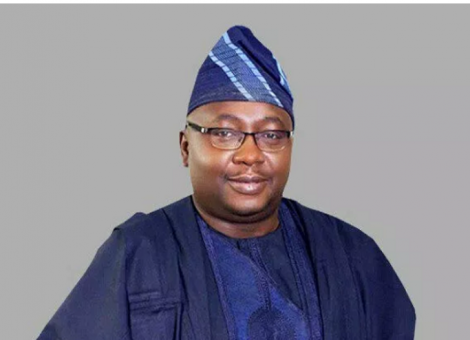
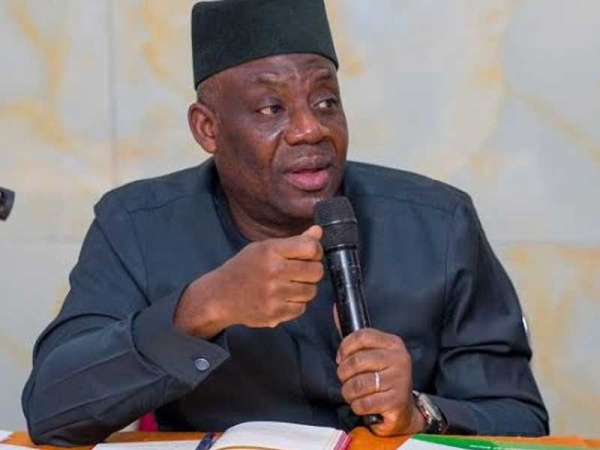
Minister of Power, Adebayo Adelabu
The Nigerian Electricity Management Service Agency (NEMSA) on Wednesday got a two-year ultimatum to exit the federal government payroll and depend solely on its own Internally Generated Revenue (IGR).
Speaking at the inauguration of the agency’s board in Abuja, the Minister of Power, Chief Adebayo Adelabu, recalled that it took his intervention at the National Salaries and Wages Commission two years ago for the government to retain NEMSA on its payroll.
According to him, the government was removing NEMSA from its wages with the excuse that the agency should generate revenue for its own salaries and overhead.
Adelabu said he, however, prevailed on the government to allow the agency two more years because it is still a fledgling organization.
Consequently, the minister yesterday charged the newly inaugurated board with innovatively generating sufficient internal revenue so the agency can be self-reliant.
He said, “I told you about the battle I fought on your behalf about two years ago when they were almost removing NEMSA from the federation’s payroll: you must pay your own staff, and also you must be responsible for your overhead. But the National Salaries and Wages Commission took them up that NEMSA is not yet mature without revenue, and let’s give them another two years. So you have two years.”
He asked the agency to be creative in generating revenue internally from value-added services in the sector.
The minister explained that the funding would come from retaining the bulk of the revenue instead of transferring it completely to the Treasury Single Account.
He pledged to convince the Federal Ministry of Finance that to allow NEMSA generate the revenue to address its numerous challenges.
He admitted that NEITI members of staff need updated local and foreign training to cope with the technical demands in the industry.
Adelabu pledged to work in partnership with foreign institutions in order to give them the desired foreign training.
He charged the board to ensure NEMSA combats the proliferation of substandard materials in the Nigerian Electricity Supply Industry.
According to him, grid collapse can be linked with weak compliance with technical standards.
Stressing that safety in the sector is non-negotiable, the minister insisted NEMSA must ensure only quality materials are deployed to the country’s electricity market.
He revealed that 17 states now have their regulatory autonomy from the Nigerian Electricity Regulatory Commission (NERC).
Owing to the amended 2023 Electricity Act, he said, Local Government Areas will start showing interest in participating in the sector.
The board members were Chief Ikechi Nwosu (Chairman), Mohammed Liman (Secretary), Zubair Aburrauf Idris, a member representing the North West, and Alhaji Sani Shehu, a member representing the North East.
Charles Asogwa, a member representing South East, Igbah E., a member representing the North Central, Engr. Adeyemi Adetunji, a member representing the South West, and Engr. Emmanuel Nkpeh, a member representing the South South.
Responding on behalf of the members, the board chairman said that because NEMSA is very technical and difficult, staff members require updated local and foreign training to regulate the sector technically.
She pledged to work in collaboration with the other stakeholders for the success of the agency.
Nwosu said, “For NEMSA to be able to achieve its mandate, NEMSA requires a lot of foot soldiers, a lot of them, because there are certain areas that have not been well inspected or regulated technically. And at the same time, when we get the workforce, they also need very robust training, both internationally and locally here in Nigeria.” (The Nation)



