

ADVERTISEMENT

ADVERTISEMENT
Updating your news feed...

NEWS EXPRESS is Nigeria’s leading online newspaper. Published by Africa’s international award-winning journalist, Mr. Isaac Umunna, NEWS EXPRESS is Nigeria’s first truly professional online daily newspaper. It is published from Lagos, Nigeria’s economic and media hub, and has a provision for occasional special print editions. Thanks to our vast network of sources and dedicated team of professional journalists and contributors spread across Nigeria and overseas, NEWS EXPRESS has become synonymous with newsbreaks and exclusive stories from around the world.

ADC Presidential hopeful Peter Obi
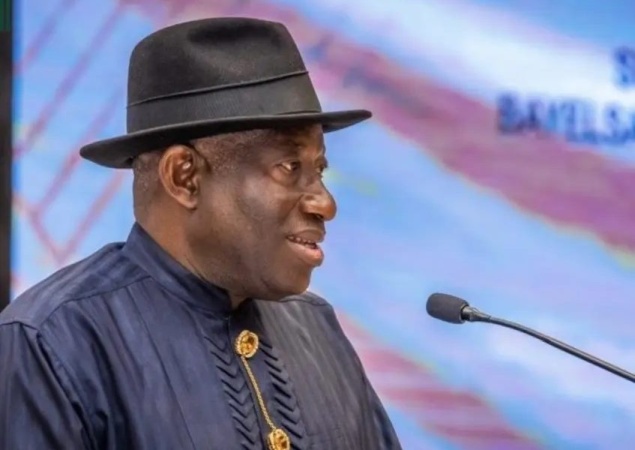
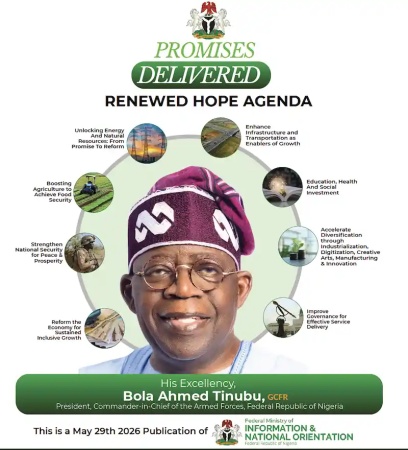
Presidential candidate hopeful of the African Democratic Congress (ADC), Mr. Peter Obi, has criticised recent remarks by President Bola Ahmed Tinubu suggesting that Nigerians should take comfort in being “better off than Kenya and other African countries.” Tinubu, who was reacting to concerns over high fuel prices, made the comparison over the weekend during a working visit to Bayelsa State.
However, Obi, in a statement issued on Monday, argued that while the comment may have been intended to ease concerns over rising living costs and economic hardship, it risks downplaying the severity of Nigeria’s current socio-economic challenges.
He drew a parallel between such comparative statements and the biblical parable of the Pharisee and the Tax Collector in the Gospel of Luke (18:9–14), which contrasts self-righteous comparison with honest self-assessment. He also referenced a similar caution in the Qur’an (53:32) against self-praise and arrogance.
According to Obi in the statement signed by his Special Adviser Valentine Obienyem, downward comparisons among nations often serve as “a refuge rather than a remedy.” He warned that leadership communication must be anchored on measurable realities rather than selective narratives.
Obi also recalled a past campaign-era remark attributed to President Tinubu, “Na statistics we go shop?”, arguing that such a disposition undermines the importance of data in governance.
The 2023 Labour Party Presidential Candidate stressed that statistics remain essential tools for national planning and performance evaluation. He noted that no country can achieve meaningful development without benchmarking itself against others using credible data.
Citing multiple development indicators, Obi argued that Kenya currently outperforms Nigeria in several key areas, including security, Human Development Index (HDI), GDP per capita, life expectancy, literacy levels, and electricity access.
He noted that Nigeria continues to face severe security challenges, ranking among the most terror-affected countries globally, while Kenya does not fall within the worst-affected group.
Available figures, he said, place Kenya’s HDI at about 0.630 (ranked 143 of 180 countries), compared to Nigeria’s 0.530 (ranked 164 of 180). Kenya’s GDP per capita is estimated at $2,200–$2,300, compared to Nigeria’s $807–$835.
The former Anambra State Governor further cited poverty estimates indicating that about 63 percent of Nigerians live below the poverty line, compared to approximately 43 percent in Kenya. He also noted disparities in life expectancy—about 67 years in Kenya compared to 54 years in Nigeria—and literacy rates, estimated at 81–85 percent in Kenya and 62–65 percent in Nigeria.
Other indicators, according to him, include electricity access, out-of-school children figures, inflation trends, and currency stability, all of which he said favour Kenya over Nigeria in comparative performance.
He highlighted that Kenya has recorded more stable inflation rates of around 4.5 percent or lower in recent years, while Nigeria’s inflation has remained above 15 percent. He also pointed to sharper currency depreciation in Nigeria compared to Kenya over the same period.
Obi added that despite global pressures, Kenya has not experienced the same level of fuel price volatility as Nigeria in recent years.
He argued that these indicators demonstrate the need for more honest assessment of Nigeria’s situation, stressing that comparisons should be grounded in verified data and used as tools for accountability rather than consolation.
He concluded that Nigeria’s challenges require humility, responsibility, and urgent reforms aimed at addressing structural constraints to development.