ADAD
ADAD
Updating your news feed...
NEWS EXPRESS is Nigeria’s leading online newspaper. Published by Africa’s international award-winning journalist, Mr. Isaac Umunna, NEWS EXPRESS is Nigeria’s first truly professional online daily newspaper. It is published from Lagos, Nigeria’s economic and media hub, and has a provision for occasional special print editions. Thanks to our vast network of sources and dedicated team of professional journalists and contributors spread across Nigeria and overseas, NEWS EXPRESS has become synonymous with newsbreaks and exclusive stories from around the world.



















Loading banners
Loading banners...

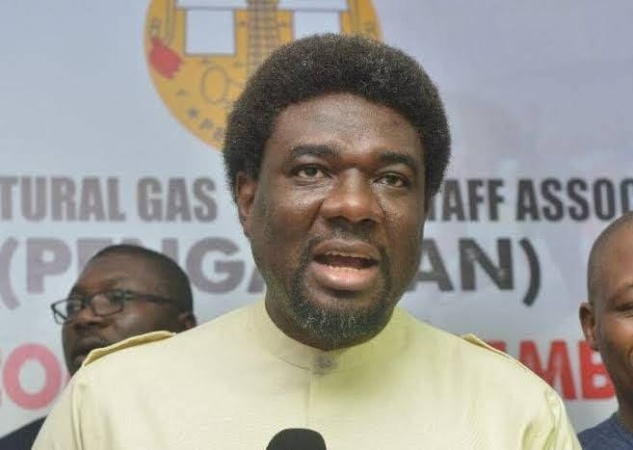
The Trade Union Congress of Nigeria (TUC) has urged the Federal Government to deploy excess crude oil revenue to subsidise local refineries, warning that failure to act could push the price of Premium Motor Spirit (PMS) to as high as N2,000 per litre.
TUC President, Festus Osifo, made the call during a press briefing in Abuja on Thursday, highlighting the strain rising fuel costs are placing on Nigerian workers.
“The persistent increase in petrol prices, driven by global crude volatility and naira depreciation, is worsening economic hardship for workers across the country,” Osifo said.
He attributed the surge partly to international tensions involving the United States, Israel, and Iran, which have disrupted global oil supply, and warned that the weakening naira is compounding inflationary pressures and eroding the real value of salaries.
To address the crisis, Osifo proposed that the government channel at least 60 percent of excess crude revenue—generated when international oil prices exceed the 2024 budget benchmark of $64.85 per barrel—into subsidising crude supplied to domestic refineries, including the Dangote Refinery and other modular facilities.
He explained: “Even if government-owned refineries are fully operational, petrol prices may not drop significantly unless crude supply is subsidised. Selling crude at international rates to local refineries still results in high pump prices.”
Osifo also called for stabilising the naira, noting that exchange rate stability would reduce the cost of imported energy and other goods. He reiterated TUC’s support for the commercialisation of state-owned refineries, stressing that reducing government interference could improve efficiency and profitability in the sector.
Addressing alternative energy, the TUC president expressed concern over the slow development of Compressed Natural Gas (CNG) infrastructure, acknowledging the policy’s potential but warning that its short-term impact remains limited due to inadequate refuelling facilities.
On national security, Osifo lamented the persistent insecurity across Nigeria, emphasizing that no meaningful development can occur in an unsafe environment. While commending the efforts of the armed forces, police, and intelligence agencies, he urged the government to equip security operatives with modern tools, intelligence, and technology to tackle insurgency and criminality more effectively.
On labour matters, Osifo noted the intense pressure facing workers in both public and private sectors.
He revealed ongoing discussions around wage reviews and collective bargaining agreements to align with current economic realities, stressing the need for broader interventions to protect workers from inflation and rising living costs.
“The cost of petrol is heading towards N2,000 per litre, depending on your location. It has deeply affected the purchasing power of Nigerian workers,” Osifo said.
“Let the government take at least 60 percent of excess crude revenue and use it to subsidise crude supplied to refineries. Subsidising production directly ensures immediate reduction in petrol prices.”
TUC plans to formally communicate its proposals to the Federal Government, including the Presidency, to ensure prompt implementation of measures to ease the hardship facing Nigerians. (The Sun News)