
ADVERTISEMENT

ADVERTISEMENT

ADVERTISEMENT

ADVERTISEMENT














Loading banners


NEWS EXPRESS is Nigeria’s leading online newspaper. Published by Africa’s international award-winning journalist, Mr. Isaac Umunna, NEWS EXPRESS is Nigeria’s first truly professional online daily newspaper. It is published from Lagos, Nigeria’s economic and media hub, and has a provision for occasional special print editions. Thanks to our vast network of sources and dedicated team of professional journalists and contributors spread across Nigeria and overseas, NEWS EXPRESS has become synonymous with newsbreaks and exclusive stories from around the world.
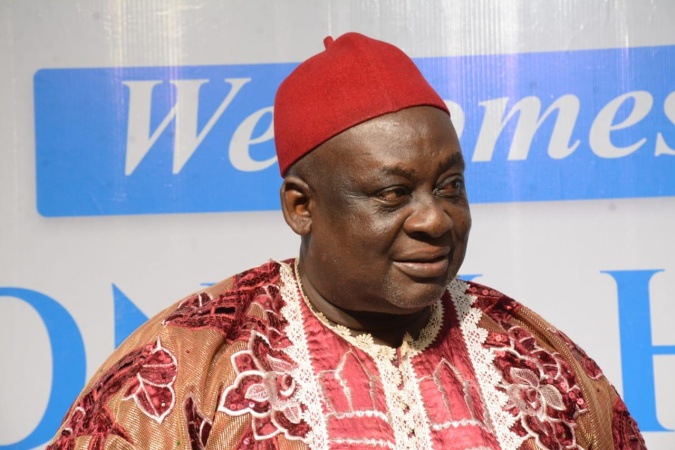
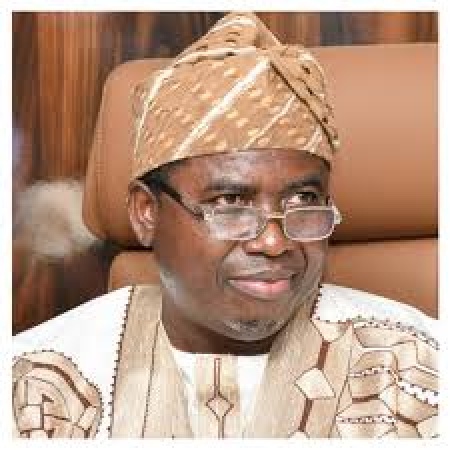
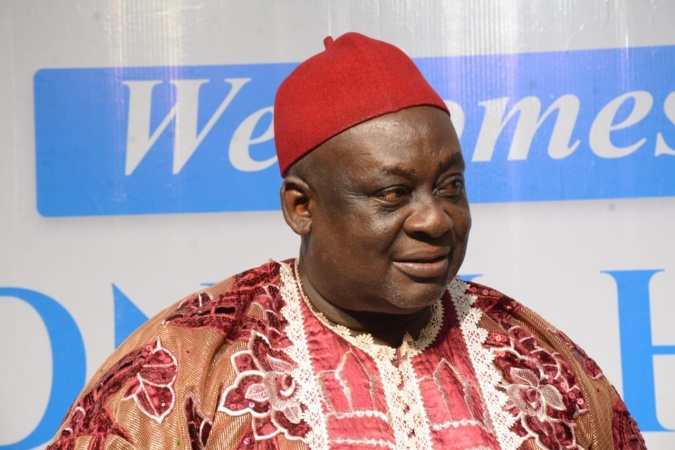
National President, National Alliance for Peace, Nze Dr Okolie Amaechi Sadiq
By PETER ANOSIKE
The National President of National Alliance for Peace in Nigeria (NAPN), Nze (Dr)Okolie Amaechi Sadiq, has given reasons why they came up with a proposal which is aimed at bringing about enduring peace in the country.
Speaking in an interview, he said that peace is essential for a country because it drives economic growth, fosters stability, and enables social development.
According to him, without peace, development stalls, infrastructure is destroyed, and the economic cost can be severe.
In this interview, he spoke on the aims and objectives of the organization as well as how peace would finally begin to reign in the country.
Excerpt:
What really informed the idea of National Alliance for Peace?
Well, National Alliance for peace is a child of necessity. If you take time to listen to news in Nigeria or read the Nigerian dailies, most of the things you would be hearing is stories of violence. It seems as if peace has become very distant to Nigeria and the truth is that without peace, there would never be any meaningful development. So, I told myself that there is no way we would continue on this trajectory. I told myself that we need to change this negative narrative about our dear country, Nigeria. Even recently, Global Terrorism Index in their 2026 report ranked Nigeria as the fourth most terror-affected country in the world. The ranking reflected a significant increase in terrorist activity in the country in 2025, so the desire to change this narrative was how the idea came about. So, the National Alliance for Peace Nigeria (NAPN), is conceived as a non-partisan, nationwide peace movement designed to complement government efforts through structured dialogue, moral persuasion, and community-anchored conflict resolution. I strongly believe that Nigeria’s persistent cycle of communal violence, ethno-religious conflict, insurgency, urban ethnic tensions, and resource-based grievances has continued to undermine national cohesion, development, and public trust in institutions and something has to be done about it.
What are the aims and objectives?
The main objective of National Alliance for Peace in Nigeria is to rebuild trust among citizens, and the state by transferring grievance into dialogue and fear into cooperative security. The work Is guided by four principles: suasion (appeal to conscience and reason), persuasion (dialogue over coercion), patriots, (responsible love of country), and inclusive nationalism (shared destiny beyond ethnicity or faith).
The programme is structured to operate in three phases. The first phase is zonal Stakeholders consultations. Structured consultations will be concluded across the six geopolitical zones with traditional rulers, religious leaders, youth and women groups, security agencies, civil society organizations, academics, the media, and victims of conflict. Outputs will include conflict-driver mapping early –warning indicators, documentation of indigenous peace practices, and zone-specific policy recommendations. The second phase is zonal national dialogues in flashpoint states. In this phase, high-level dialogues would be convened in Kaduna-(North-West): farmer-herder tensions, religious extremism, youth radicalization. Jos-Plateau(North-Central) Indigene settler disputes and land use conflicts; Port Harcourt, Rivers(South-South):Rivers’ political unrest, resource control justice, militancy, environmental insecurity; Enugu(South-East): marginalization narratives and youth agitation; Lagos(South-West):Yoruba-Igbo skirmishes, mystery fire incidents, demolitions and urban migration pressures ,and ethnic profiling in mega cities; Maiduguri, Borno (North-East): Boko Haram insurgency impacts along the Maiduguri-Damaturu axis, with linked dialogues in Adamawa state addressing recurrent Hausa-Fulani and Christian-Muslim clashes. Each dialogue will integrate inter-faith sessions, community testimonies, policy roundtables, youth and women assemblies, and security-justice interfaces. Key deliveries include formal peace charters and frameworks for each zone, notably the Lagos urban coexistence framework, the Maiduguri-Adamawa peace and recovery framework.
With all these efforts, how would peace be made permanent in Nigeria?
That is a very important question because our objective is to ensure lasting peace in the country. We will establish the following, National Peace Advisory Council, zonal peace committees, a community peace ambassadors network, an annual Nigeria Peace Week, and peace-education modules for schools and universities. Monitoring will rely on quarterly peace audits, community scorecards, and early warning dashboards. The youths would be engaged as peace-builders. There would be media and cultural advocacy in local languages as well as sustained collaboration with state institutions and civil society. The expected outcomes include reduced communal violence in target zones and flashpoints, stronger early-warning systems, improved citizen-state trust, and a durable national framework for dialogue and non-violent conflict management. Our object is to advance peace, not as rhetoric, but as a strategic national asset – cheaper than war, stronger than repression, and more enduring than silence.


