Updating your news feed...
NEWS EXPRESS is Nigeria’s leading online newspaper. Published by Africa’s international award-winning journalist, Mr. Isaac Umunna, NEWS EXPRESS is Nigeria’s first truly professional online daily newspaper. It is published from Lagos, Nigeria’s economic and media hub, and has a provision for occasional special print editions. Thanks to our vast network of sources and dedicated team of professional journalists and contributors spread across Nigeria and overseas, NEWS EXPRESS has become synonymous with newsbreaks and exclusive stories from around the world.












Loading banners
Loading banners...

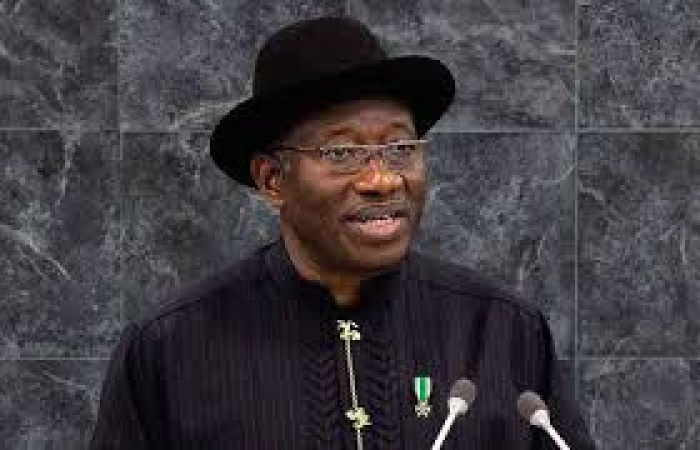
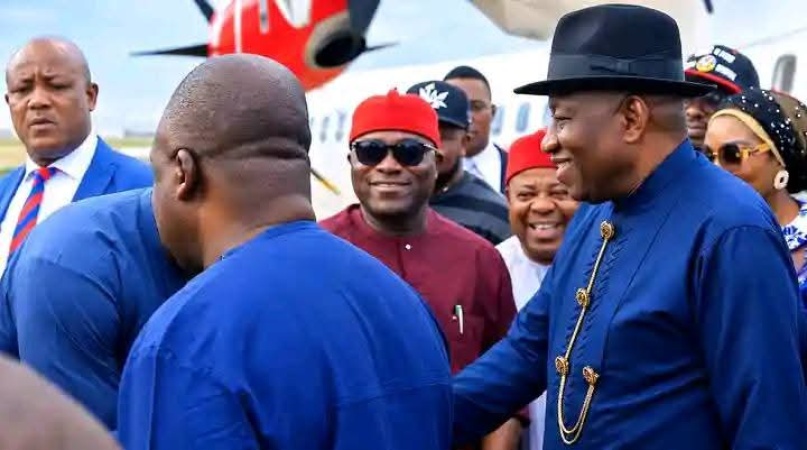
Former President Jonathan
Former President of Nigeria, Dr Goodluck Jonathan; former Board of Trustees Chairman of the Nigerian Ports Authority (NPA), Chief Bode George; and other maritime stakeholders have called for the development of an international seaport to prevent future cargo diversion to neighbouring countries.
The stakeholders stated this on Monday at the 1st International Deep Seaport Forum organised by Maritime Media Limited in Lagos, where they warned that Nigeria risks a future where its cargoes will have to be transported from neighbouring countries if the nation fails to develop an international seaport urgently.
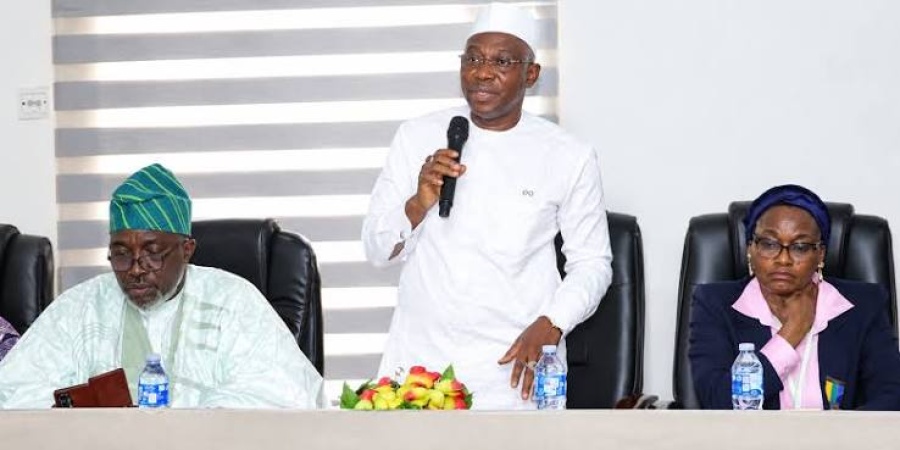
The forum brought together former heads of state, port administrators, government officials, state governors, and industry leaders to interrogate Nigeria’s deep-sea port development prospects and chart a path forward.
Speaking during the event, Jonathan explained that while the rest of the world was migrating to modern shipping, Nigeria was buying ships from countries that wanted to throw away their ships.
He stressed that preliminary accounts suggested that Nigeria may have taken costly strategic missteps during a critical transition period in global shipping.
“You know, we had the Nigerian National Shipping Line, and nobody has really investigated why these enterprises just went down. When the world is migrating to the container, the container means that you need deeper ships.
“The NNSL went to buy ships from people who wanted to throw their ships away, to migrate to where the world was going. And after acquiring this, they couldn’t move. And of course, the Nigerian Shipping Line went down. It may not be 100 per cent correct, but there is something,” he said.
According to him, while the world was shifting from conventional cargo handling to containerised shipping and deeper-draft vessels, Nigeria invested heavily in outdated vessels that were being phased out internationally.
“This mismatch between investment decisions and global industry trends may have significantly weakened the viability of the national carrier, ultimately contributing to its collapse,” he said.
He cautioned that although the account was not fully verified, it points to deeper structural and policy failures that must be examined to avoid repeating similar mistakes.
Jonathan warned that the lessons from the collapse of the NNSL remain highly relevant as Nigeria seeks to reposition its maritime sector, particularly in the face of evolving global shipping standards.
He advocated for renewed efforts to critically assess past decisions and ensure that future investments in maritime infrastructure and operations are aligned with global realities.
Jonathan noted that without such reflection, Nigeria risks once again falling behind in international shipping, with potential consequences for trade competitiveness and economic growth.
The Chairman of the occasion and former Chairman of the NPA, Bode George, warned against the concentration of port infrastructure in Lagos.
“It cannot be right to concentrate all your infrastructure and resources in one place. What is happening in the Strait of Hormuz now is a wake-up call. Who knows what could happen tomorrow?” he said.
The Minister of Marine and Blue Economy, Adegboyega Oyetola, who was represented by the NPA’s General Manager of Corporate and Strategic Planning, Mr Seyi Iyawe, said the Federal Government is firmly committed to a green port development agenda built around three pillars.
“We are embracing green port philosophy, we are moving away from the conventional ports. We know that deep seaports are Important. What we should consider is the hinterland connectivity of the port; it is very important to take into consideration how the cargoes would be moved out. One of our challenges has been digital automation and transportation; now that the NSW is launched, we need a port that would be automated, and we have to go green,” Oyetola said.
A former Managing Director of the NPA, Bello Gwandu, offered a note of caution on the push for deep-sea ports, arguing that Nigeria’s real need is for well-connected international ports rather than deep-sea facilities that may not attract sufficient cargo traffic.
Earlier, the convener of the event, Elder Asu Beks, commended President Bola Tinubu for the creation of the specialised Ministry of Marine and Blue Economy, aimed at harnessing Nigeria’s vast maritime potentials.
Beks, who is also the Chief Executive Officer of Maritime Media Limited, explained that Nigeria, with a coastline spanning over 853 kilometres, “there is no gainsaying the fact that Nigeria is a critical player in the comity of maritime nations.
“This is why we must commend Mr President for his bold effort to create an enabling environment for the growth and development of this vital sector. Consequently, all hands must be on deck to support the various interventions being put in place to reposition and revitalise the industry,” he said.
He said that the event is a testament to resilience, commitment to a shared vision, and, most importantly, the determination to never allow setbacks to extinguish one’s dreams.
“Regrettably, evolving global maritime dynamics characterised by larger and faster vessels have shifted attention to deep seaports with greater draft capacity. This has rendered many of Nigeria’s ports, particularly river ports, less competitive,” he said.
According to him, this reality, coupled with cumbersome and expensive cargo clearance procedures, has made Nigerian ports relatively unattractive and, unfortunately, uncompetitive on the global stage. (The Sun)