 ADAD
ADAD
Updating your news feed...
NEWS EXPRESS is Nigeria’s leading online newspaper. Published by Africa’s international award-winning journalist, Mr. Isaac Umunna, NEWS EXPRESS is Nigeria’s first truly professional online daily newspaper. It is published from Lagos, Nigeria’s economic and media hub, and has a provision for occasional special print editions. Thanks to our vast network of sources and dedicated team of professional journalists and contributors spread across Nigeria and overseas, NEWS EXPRESS has become synonymous with newsbreaks and exclusive stories from around the world.























Loading banners
Loading banners...

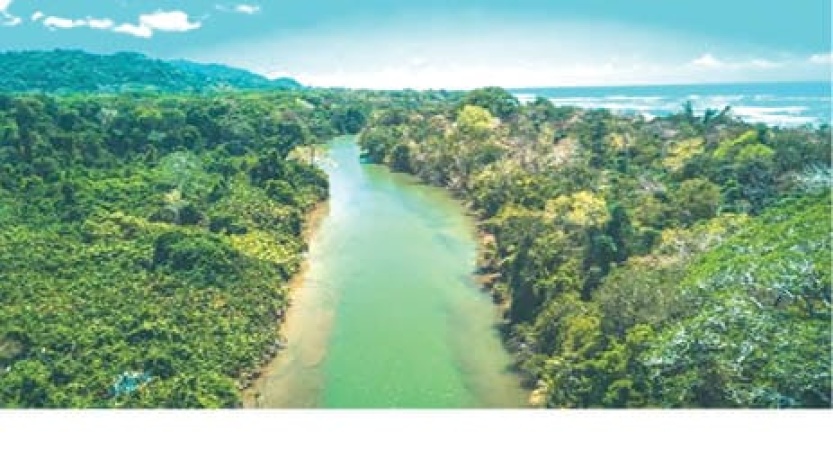
Forests, Nigeria’s vast repository of natural resources and scenic landscape, have increasingly devolved into dens where terrorists, bandits, armed robbers and other criminal elements hibernate to unleash terror on innocent Nigerians.
For years, criminals have maintained a stranglehold on several forest reserves across the country, using them as hideouts to plan and execute abductions, killings and destruction of property on a large scale.
From Sambisa Forest, which harbours dreaded Boko Haram and its splinter group Islamic State West Africa Province (ISWAP) in the North East, to Kainji Lake Forest shielding bandits and other militant groups operating across the North West and North Central, criminals have overrun Nigeria’s massive natural heritage and rich biodiversity – a money spinner in other climes.
Weekend Trust digs into the mechanics of criminal operations in major forests and game reserves across the country, years of neglect culminating in the illicit takeover and provides experts’ insights on how to rid the dense areas of violent crime.
Before the oil boom, the export of forest products, such as timber and wood, contributed significantly to Nigeria’s Gross Domestic Product (GDP) and foreign exchange. A report by the Food and Agriculture Organisation (FAO) of the United Nations revealed that from 1960 to early 1970, export of wood products and agricultural commodities provided more than 70 per cent of Nigeria’s GDP.
FAO noted that export earnings from forestry grew rapidly at 4.1%, 8% and 28.8% from 1950–60, 1960–70 and 1970–80, respectively. And from 2011 to 2015, in the early stages of criminal incursions into the forests, Nigeria exported $400.2 million worth of timber. While the government has suspended timber exportation to address deforestation and its adverse effect on climate change, it grapples with a spate of forest invasion.
Descent to criminal enclaves
Once upon tourists’ delights, many Nigerian forests, game reserves and national parks have now turned into sanctuaries from where terror groups incessantly raid communities – especially underserved areas – and retreat with little or no hindrance from security agencies.
Since the abduction of about 300 Chibok schoolgirls in 2014, the mention of Sambisa Forest, where the victims were reportedly held captive, strikes fear into many hearts. Located about 60 km southeast of Maiduguri, the Borno State capital and southwest of Chad Basin National Park, Sambisa Forest has an area of 518 square kilometres. It straddles parts of Adamawa, Yobe, Gombe, Bauchi and Jigawa states.
The forest thrived as a game reserve during the colonial period and was used for safaris in the 1970s, with a large population of leopards, lions, elephants and hyenas for tourism. In 1991, the Borno State government incorporated the reserve into the national park of the Chad Basin. But as years rolled by, poor management upended the operations of the reserve until Boko Haram insurgents who fled from Maiduguri town hijacked it in 2013.
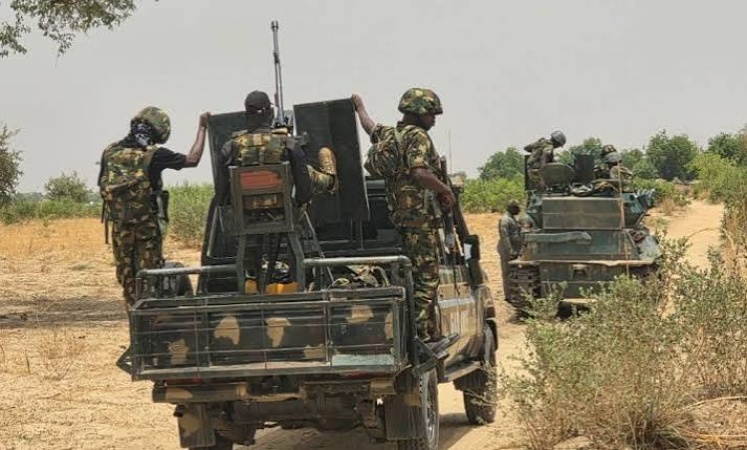
Since then, terrorists have carried out a series of attacks from the forest and resisted military raids targeted at flushing them out of the zone. They frequently ambushed Nigerian military convoys and patrols operating around Sambisa, using roadside bombs, snipers, and hit‑and‑run attacks. In April 2021, the terrorists reportedly shut down a military jet, though the Nigerian Air Force insisted the Alpha Jet crashed. Its wreckage was eventually recovered from the forest one year later.
At the peak of a supremacy battle between Boko Haram and ISWAP members in May 2021, a fight broke out as the latter sought to take control of the forest in a fierce encounter.
In an article titled ‘Once Upon a Game Reserve: Sambisa and the Tragedy of a Forested Landscape,’ a political scientist at the Federal University, Oye-Ekiti, Prof Azeez Olaniyan, traced the descent of the reserve to a terrorists’ fortress to corruption and poor leadership of the military era.
“As was the case with several sectors of Nigerian life, corruption reared its head in park management to the extent that funds budgeted for the game reserve were mismanaged. The number of forest guards and range managers was not only inadequate, but they were also poorly trained and funded. The neglect resulted in an invasion of the reserve by hunters and poachers without many restraints. This was to have effects on the wildlife in the space.
“Then General Ibrahim Babangida’s military regime nursed the idea of a national guard. The general cleared the inner areas of the reserve and built a training camp fitted with military facilities. The facility was codenamed “Camp Zairo” (Zero). The national guard was a special security force designed to protect his military regime, separate from the police and the military. Eventually, public outcry prevented the National Guard from taking off.
“The idea of an uncontrolled special security outfit in the hands of a dictatorial military regime was something the people could not accept. The facilities were left in the bush. It was these facilities that Boko Haram would convert into training camps several years later,” the researcher wrote.
Close to Sambisa Forest is Alagarno, a densely wooded area in Damboa Local Government Area of Borno State, occupied by terrorists. Alagarno Forest has long served as a stronghold for Boko Haram and ISWAP militants due to its thick vegetation and difficult terrain, stalling adequate military access and effective aerial operations. Despite repeated military offensives targeted at terrorists’ camps, the forest, which stretches toward Yobe State, remains a hot spot.
Kainji Lake Forest
The Kainji Lake Forest covers Kainji Lake, located within the Kainji Lake National Park (KLNP). Established in 1978, the park snakes across Niger and Kwara states. It spans about 5,382 square kilometres and has three divisions: the Kainji Lake area, the Borgu Game Reserve and the Zugurma Game Reserve.
However, what should be a thriving tourist centre has degenerated into a hotbed of banditry and terrorism in recent years. The latest attacks, reportedly launched from the criminals’ haven in the park, occurred between late December 2025 and early January 2026 in Borgo LGA of Niger State.
The Police Public Relations Officer in the state, Wasiu Abiodun, had confirmed in a statement that the bandits suspected to be operating from the Kainji Lake National Park attacked Kasuwan Daji Market in Kabe District of Borgu LGA and set it ablaze, killing 30 villagers and abducting many others.
Recalling the attacks during the period, Fr. Matthew Kabirat, the Director of Social Communications, Catholic Diocese of Kontagora, in a statement, said “heavily armed bandits” in about 30 motorcycles left their hideout in the Borgu game reserve and travelled through the Kanu Hills to Kaiwa and Gebe, killing seven persons and setting houses ablaze on December 28, 2025.
The Diocese revealed that between Sunday, 28th December 2025 and Saturday, 3rd January 2026, the bandits roamed freely across the northern part of Borgu LGA and the southern part of Shanga LGA in Kebbi State.
“In view of the above, it is clear that pending the elimination of the bandits and their hideouts in Kanji Game Reserve, there is an immediate need for a large and well-equipped military task force in the area capable of and empowered to pursue, engage and eliminate the bandits whenever they come out of the Game Reserve again for further attacks. Without such a task force, there will be a massive and ongoing loss of life and permanent displacement of large numbers of people,” it added.
A 2024 report titled “Dangerous Liaisons” by Clingendael, an independent international affairs think tank, revealed a network of violent extremist organisations (VEO) operating within the park. They include the Group-of-Twelve, an extremist group that migrated to Kainji Lake from Burkina Faso via Benin, ISWAP, Ansaru and Jama’at Nusrat al-Islam wal-Muslimin (JNIM).
“VEO presence around Kainji Lake came into full focus with the bold attack on Wawa Prison in October 2022. This high-security facility holds senior Boko Haram and other violent extremist fighters from Nigeria’s North East but also from the Sahel. The attack was foiled, as Nigerian forces allegedly knew about the intended attack months beforehand,” the report added.
Attacks around Kainji Lake, particularly along the access roads to and from the forest, surged in 2023 to 29 from five recorded the previous year, the report stated. It added that in May 2023, local and government sources claimed that an unidentified armed group numbering about 200 had set up a base at a former camping site on the lake and chased away all the rangers.
“From there they began to exert influence as far as the Beninese border…hence, there is a clear problem in Kainji Lake National Park which involves a variety of extremist groups and bandit groups,” it concluded.
Falgore Forest/Falgore Game Reserve
Covering about 1,000 km², Falgore Forest – also known as Falgore Game Reserve – sits about 150km south of Kano metropolis, spanning parts of Tudun Wada, Doguwa, and Sumaila LGAs and bordering Kaduna and Bauchi states. It was upgraded to a game reserve in 1969 and recognised as a national park in 2021.
Despite being a repository of biodiversity with 26 tree species and 24 animal species, the vast forest has a bad reputation for serving as a hideout for cattle rustlers, armed robbers and other criminal gangs.
In an earlier report by this paper, sources said terrorists’ footprint in the forest was recorded in 2015 when villagers near the area reportedly saw some strange persons moving freely with guns.
“They came to Falgore with many animals, sometimes moving freely with guns. Most of them are youths, moving without family, indicating that they are not real herdsmen who normally move around with wives and kids,” the District Head of Doguwa, Alhaji Aliyu Harazimi, had told Daily Trust.
In 2017, the Nigerian Army converted the forest into a training ground to forestall criminal activities. The then Chief of Army Staff, Lt. Gen. Yusuf Tukur Buratai (rtd) said the army would ensure the forest is rid of kidnappers, cattle rustlers, armed robbers and other forms of criminals.
But in July 2020, the Kano State Commissioner of Police, Habu Sani, directed police operatives, especially those on Kano-Kaduna and Kano-Jos roads, to be vigilant of any form of attacks. About a month later, in August, criminals attacked travellers around the forest.
Witnesses said the assailants, wielding heavy arms, blocked the road for hours, kidnapped three people and injured many others, including the Hisbah Commander in Doguwa, Mallam Mukhtar Abdulmumin, who was returning to Kano.
In June 2021, the Nigerian Army announced joint clearance operations in Falgore Forest by 1 Division, the Nigeria Police, the Nigeria Security and Civil Defence Corps, vigilantes, and local hunters, to smoke out criminals using the forest as an operational base.
There are reports that bandit groups from neighbouring states, such as Kaduna and Zamfara, continue to infiltrate the forest, using it as a sanctuary for launching attacks on trade routes and villages in southern Kano.
Rugu, Kumuku, Kateri Forests
Covering parts of Faskari and Sabuwa LGAs in Katsina and bordering Zamfara, Kaduna, Niger states, and the Niger Republic, Rugu Forest has constantly served as a hideout for bandits and insurgents who attack nearby communities.
One of the landmark attacks linked to the forest was in December 2020, when bandits abducted about 300 pupils of Government Science College, Kankara, Katsina State and took them into their camps in the forest. They were released seven days later following a negotiation with the state government.
Barely two months later, in February 2021, the bandits invaded Government Girls Secondary School, Jangebe, in the Talata-Mafara LGA of Zamfara State and forced over 300 schoolgirls into the forest. The victims were freed four days later after undisclosed negotiation terms between the government and the abductors.
According to RouteWatch’s Nigerian Security Risk Index (SRI), 277 attacks and 684 fatalities were recorded in June 2024 alone in Katsina. It revealed that a separate attack on Layin Gara and Maikuma villages on April 8, 2025 left six residents dead with 59 others whisked away.
The raids were carried out from the 220‑km‑long Rugu Forest, where armed camps spread across Sabuwa, Faskari, Dandume, Safana, Batsari, Danmusa and Jibia LGAs.
Kamuku Forest, which links Kaduna with other states through Birnin Gwari LGA is infamous as one of the most deadly criminal dens. It borders Katsina, Niger, Zamfara and Kebbi, hosting cattle rustlers, kidnappers and armed robbers. Inside the forest, villagers are held in captivity and women raped while travellers along the route are not spared.
Similarly, Kateri Forest remotely located near the Abuja-Kaduna highway in Kaduna State hosts bandits due to its unmanned dense vegetation, providing cover for kidnappers, cattle rustlers and armed robbers.
A goldmine in Canada, Brazil
Canada is reported to have about 347 million hectares of forests – more than 36 times bigger than Nigeria’s forested area of 9,604,300 hectares. While forests cover 38% of Canada’s land area, representing 9% of the world’s forests, they occupy 10% of Nigeria’s landmass.
The 2020 Annual Report on the State of Canada’s Forest indicated that the forest sector directly employed 204,555 people, including forest rangers and forest guards, in the country in 2018 and contributed $23.7bn to its nominal GDP in 2019.
The report stated that the forest sector provided 205,000 jobs for Canadians, including about 12,000 jobs for indigenous people and was the primary source of economic well-being for 300 communities in the country.
“The value of Canadian forest product exports is about $33bn (2019)….The forest sector is an important part of Canada’s economy and is a key source of prosperity for people and communities from coast to coast. Between 2007 and 2017, the forest sector reduced energy use by 24 per cent and total fossil GHG emissions (direct emissions plus indirect emissions from purchased electricity) by 40 per cent,” it said.
The report revealed further that 200 million hectares of forests in Canada have a long-term forest management plan, while 168 million forest hectares were certified to third-party standards of sustainable forest management.
As in Nigeria, about 90 per cent of Canadian forests are owned and managed by regional governments.
“Those governments are responsible for forest management. Although rules, regulations and policies that guide forest management vary from one province and territory to another, they are all based on the principle of sustainable forest management,” the report added.
As of 2016, FAO estimated that almost 64% (about 544 million hectares) of Brazilian territory had forests – the largest in the world.
About 124 million hectares were said to be in the public domain comprising national forests, reserves of indigenous populations, national parks and other conservation areas, while most of the remaining 288 million hectares fell under private ownership.
“The economic contribution of Brazil’s forestry sector is estimated at US$53bn, representing about 6.9 per cent of total GDP,” FAO stated, adding that Brazil accounted for 2.4 per cent of the global market for forest products.
Ridding Nigeria’s forests of criminals
Experts say Nigerian forests, which are far smaller than those of Brazil and Canada, could also be properly managed if there were adequate deployment of technology and well-equipped forest guards.
In an interview with our correspondent, a Professor of Forestry in the Faculty of Agriculture, Federal University, Gashua, Yobe State, Prof. Johnson Alao, lamented that Nigeria was losing a lot to the occupation of forests by bandits and terrorists. He maintained that forest reserves could be kept out of the reach of criminals through the deployment of well-equipped forest guards and drones to monitor illegal movements in the forests.
He said, “Every forest is supposed to have a forest guard unit. If it were effective, those kidnappers wouldn’t have been there. Over time, the government neglected them and they were not empowered. They didn’t have uniforms, no boots, no vehicle; they were just sitting in the office. As they were growing old and retiring, they were not replaced.
“The government needs to eject those criminals through the military and equip forest guards so that they can perform their function. They can even be constituted into a paramilitary and be armed.”
Professor Abiodun Olufemi of the Department of Forest Production and Products, University of Ibadan, Oyo State, said the management system employed in Nigeria’s forestry sector “is very poor,” calling for joint forest management between the government and the surrounding rural communities.
He said, “There should be a massive campaign on forest education on the protective and environmental functions of forest reserves; incentives should be given to communities around forest reserves towards security issues.
“There should be serious punitive measures against those who misuse the forest reserves for other uses not gazetted. Surveillance and security facilities should also be provided in the forest reserves, while government policies on the security measures should be implemented.”
The Conservator General of the National Park Service, Dr Ibrahim Goni, had complained that many state governments failed to control their forest reserves effectively, thereby losing them to criminals.
“If the Federal Government is doing (everything) to ensure that forests under the National Park are governed, (and) the governors of the respective states are doing the same in ensuring that forests under the control of states are monitored, the issue of kidnapping and banditry will be reduced to the barest minimum,” Goni had said.
Move to sanitise forests
During a state dinner held at the Government House in Katsina in May 2025, President Bola Ahmed Tinubu acknowledged that Nigeria’s forests had been lost to criminals and promised his government would deploy technology to reclaim the ecosystem.
“We will invest more in technology and take over the forests,” Tinubu said, adding, “Security is a national issue, not just at the local or regional levels. If we genuinely need investment in Nigeria, we must address security.”
That month, the President launched the Presidential Forest Guards Initiative and by December, 7,000 recruited forest guards in Borno, Sokoto, Yobe, Adamawa, Niger, Kwara, and Kebbi states had graduated from a three-month training programme.
The Office of the National Security Adviser (ONSA), which announced this development, said the graduation ceremonies were held across Borno, Sokoto, Yobe, Adamawa, Niger, Kwara, and Kebbi states. Nigerian Forest Guards (NFG) is being coordinated by the Department of State Services (DSS) and the Nigeria National Park Service.
The National Security Adviser (NSA), Mallam Nuhu Ribadu, said the guards would secure Nigeria’s natural environment and support the efforts of security agencies to fight criminals.
“It [NFG] draws strategic input, doctrine, and operational alignment from the Defence Headquarters, Nigerian Army, Nigerian Navy, Nigeria Police and the National Security and Civil Defence Corps (NSCDC). This synergy ensures unity of purpose, seamless command and control, as well as operational effectiveness.
“I wish to assure the public that the Forest Guards will be deployed immediately to identify hot spots to enhance existing security architecture, particularly in forested and ungoverned areas. As first responders, they are expected to dominate and ensure the security of the forest ecosystem, gather actionable human intelligence, support ongoing security operations, and enhance presence in hitherto ungoverned spaces,” Ribadu stated.
Security experts demand effective forest guards
A security expert and former Director of the Department of State Services (DSS), Mike Ejiofor, commended the President for the national forest guard initiative, but called for adequate training of the guards to effectively man the forests. He, however, maintained that the establishment of state police remains the cornerstone of tackling insecurity in the country.
“If you have the state police that are adequately armed by the state government, it will go a long way in manning these forests and even collecting intelligence because they are familiar with the environment. But in a situation where people come from different backgrounds, you have language and cultural barriers and there is no confidence. If the state police are peopled by the indigenes, it becomes easier for them to collect intelligence and carry out effective operations,” Ejiofor added.
Senior Security Manager at Sticmirac International Ltd, an Abuja-based security consultancy firm, Dr. Steve Okwori, lamented that the essence of forests in Nigeria had been defeated. Their locations mostly in rural communities where there is no government and security presence, he said, created a gap criminals exploit.
“Our forests should serve as bastions of biodiversity, sources of sustainable livelihoods and symbols of national heritage. But all these are not achieved because of the value these criminals attached to our forests.
“They have turned our forests to theatres of insecurity where they carry out their criminal activities. It is in these forests they keep kidnap victims, plan attacks and retreat to after carrying out acts of criminality to regroup,” Okwori stated.
Though he commended the establishment of national forests guards the President’s directive permitting them to bear arms, he urged the government to intensify efforts to stop criminals from using the forests.
“My worry is that the process of ensuring the presence of security in rural communities is so slow in terms of deployment of the forest guards. The national security adviser needs to speed up the process of having forest guards on the ground.
“We also need to strengthen community policing initiative. Forest guards alone cannot carry out these operations. There should be constant interaction with members of rural communities so that they can alert the guards when they see anything suspicious. The forest guards also need the help of conventional security agencies: the military, police and the NSCDC. Intelligence is very key.
“We need to act as quickly as possible on actionable intelligence because response time is a challenge in security operations in Nigeria. We need to move from reactive security operations to a proactive intelligence-led preventive strategy so that we can nip crimes in the bud,” he stated. (Daily Trust)



