ADAD
ADAD
Updating your news feed...
NEWS EXPRESS is Nigeria’s leading online newspaper. Published by Africa’s international award-winning journalist, Mr. Isaac Umunna, NEWS EXPRESS is Nigeria’s first truly professional online daily newspaper. It is published from Lagos, Nigeria’s economic and media hub, and has a provision for occasional special print editions. Thanks to our vast network of sources and dedicated team of professional journalists and contributors spread across Nigeria and overseas, NEWS EXPRESS has become synonymous with newsbreaks and exclusive stories from around the world.











Loading banners
Loading banners...

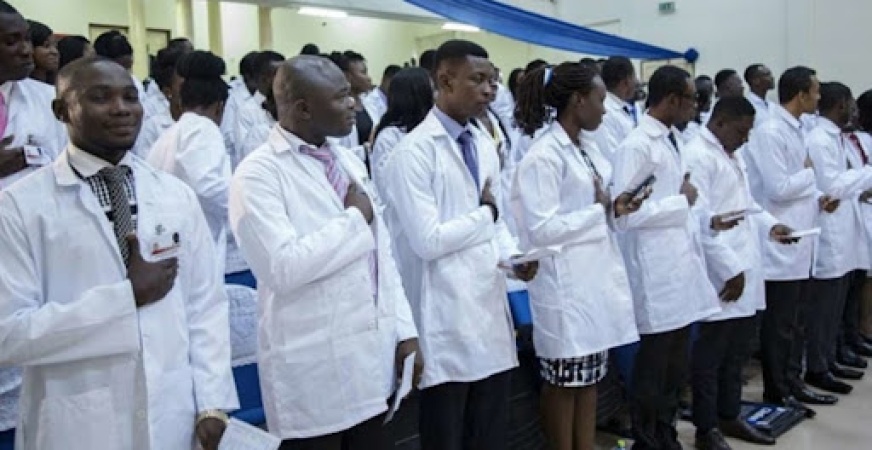
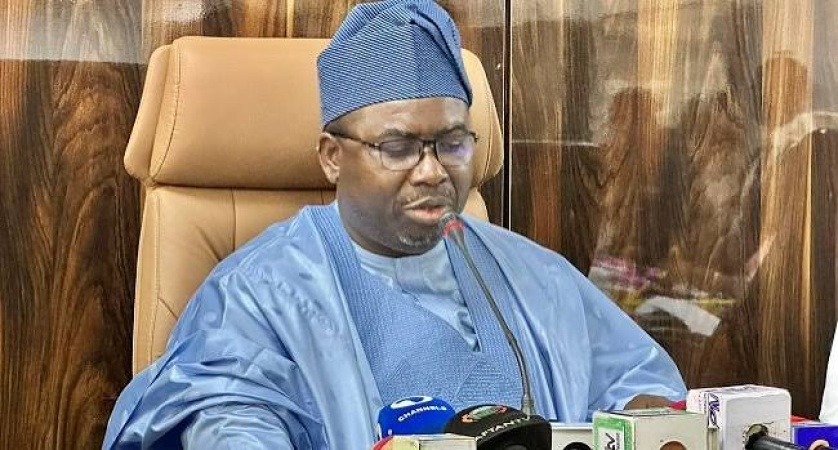
Nigeria is grappling with a worsening health workforce crisis as the mass migration of medical professionals continues to strain the country’s fragile healthcare system, the Minister of State for Health and Social Welfare, Iziaq Salako, has said.
Salako raised the alarm on Monday while delivering a keynote address at the 2026 United Kingdom Global Health Summit held at the Royal College of Physicians in London.
The minister said the exodus of Nigerian health workers, popularly referred to as “japa”, had intensified manpower shortages and placed enormous pressure on the country’s already overstretched health system.
According to a copy of his speech made available to our correspondent in Abuja, Salako noted that Nigeria currently has about four doctors per 10,000 people, far below the benchmark recommended by the World Health Organisation, which suggests a minimum of 10 physicians per 10,000 population.
Salako said, “The global health workforce crisis is not a future threat but a present emergency. Africa carries more than a quarter of the global disease burden but commands less than three per cent of the global health workforce.”
He added that the situation was particularly acute in Nigeria, Africa’s most populous nation, where the shortage of doctors, nurses, midwives and other health professionals had reached alarming levels.
The minister disclosed that migration of healthcare professionals had significantly worsened the country’s manpower deficit.
Citing data from the United Kingdom, he said about 13,609 Nigerian health workers migrated to the UK between 2021 and 2022, making Nigeria one of the largest sources of foreign-trained medical personnel in the country.
He also referenced a 2023 survey conducted by NOI Polls and Nigeria Health Watch, which found that 57 per cent of Nigerian doctors had taken concrete steps toward leaving the country in search of better opportunities abroad.
According to Salako, each medical doctor trained in Nigeria represents a major investment of public resources.
“Every doctor who leaves Nigeria represents a substantial flight of invested public resources, often exceeding $200,000 in training costs.
“This effectively transfers resources from one of the world’s most resource-constrained health systems to wealthier nations,” he said.
He described the trend as a matter of global equity that requires international cooperation to address.
Nigeria’s health sector has long struggled with inadequate funding, infrastructure deficits, and a heavy reliance on out-of-pocket payments by patients.
Despite being Africa’s most populous country with more than 220 million people, Nigeria’s healthcare system continues to face significant challenges, including poor facilities, workforce shortages, and limited access to quality care, particularly in rural communities.
Experts have repeatedly warned that the continued migration of healthcare professionals could further weaken service delivery in public hospitals.
Speaking at the conference, Salako noted that the Federal Government, under the administration of Bola Tinubu, had launched reforms aimed at strengthening the sector through the Nigeria Health Sector Renewal Investment Initiative, a strategy designed to coordinate health policies and funding under a unified framework.
The initiative, he explained, was built on the principles of “One Plan, One Budget, and One Conversation,” aimed at improving coordination and accountability in health sector financing.
Salako also highlighted wider global challenges affecting healthcare systems, including economic instability, climate change, and geopolitical tensions.
He noted that the International Monetary Fund had projected global economic growth of between 2.7 and 3.1 per cent in 2026, lower than pre-pandemic levels, a development that could further limit government spending on healthcare.
In addition, climate change is already affecting health outcomes globally.
According to the 2025 Lancet Countdown on Health and Climate Change, heat-related mortality has increased by 23 per cent since 1999, while extreme weather conditions have pushed millions into food insecurity.
In Nigeria, environmental challenges such as desertification in the North, flooding in the South, and pollution in oil-producing regions are increasingly contributing to disease outbreaks and displacement.
To address the manpower shortage, Salako said the government expanded training capacity in medical schools and other health institutions.
According to him, Nigeria recorded about a 160 per cent increase in medical school admissions between 2023 and 2025, with similar expansion in the training of nurses, pharmacists, and laboratory scientists.
He said authorities were also strengthening training for community health workers and introducing task-shifting policies to improve service delivery in underserved communities.
“We recognise that a resilient health system must rest on a broad and diverse workforce,” he said.
The minister said the government was also seeking to engage Nigerian health professionals living abroad to support the country’s health sector.
He disclosed that seven Nigerian healthcare diaspora associations across the UK, the United States, Canada, Germany, Australia, and South Africa would undertake a coordinated medical mission in Nigeria between April and July this year.
The initiative, he said, would focus on knowledge transfer, skills development, and strengthening health institutions.
Nigeria’s diaspora health professionals are estimated to number more than 150,000 globally, many of whom occupy senior positions in hospitals and research institutions overseas.
Salako described them as a “strategic asset” that could help bridge capacity gaps in the domestic healthcare system.
The minister called for stronger international cooperation to address the global health workforce crisis, including ethical recruitment practices and support for countries that train health workers who later migrate abroad.
He urged developed countries to fully implement the WHO Global Code of Practice on the International Recruitment of Health Personnel, which encourages fair and transparent recruitment practices.
Salako also advocated for bilateral agreements that would allow health workers to gain experience abroad while ensuring skills and knowledge are transferred back to their home countries.
“No nation can solve the global health workforce crisis alone. The next pandemic or health emergency will not respect borders.
“Strengthening health systems in developing countries is not charity—it is global security,” he said. (The PUNCH)