
ADVERTISEMENT

ADVERTISEMENT

ADVERTISEMENT

ADVERTISEMENT














Loading banners


NEWS EXPRESS is Nigeria’s leading online newspaper. Published by Africa’s international award-winning journalist, Mr. Isaac Umunna, NEWS EXPRESS is Nigeria’s first truly professional online daily newspaper. It is published from Lagos, Nigeria’s economic and media hub, and has a provision for occasional special print editions. Thanks to our vast network of sources and dedicated team of professional journalists and contributors spread across Nigeria and overseas, NEWS EXPRESS has become synonymous with newsbreaks and exclusive stories from around the world.
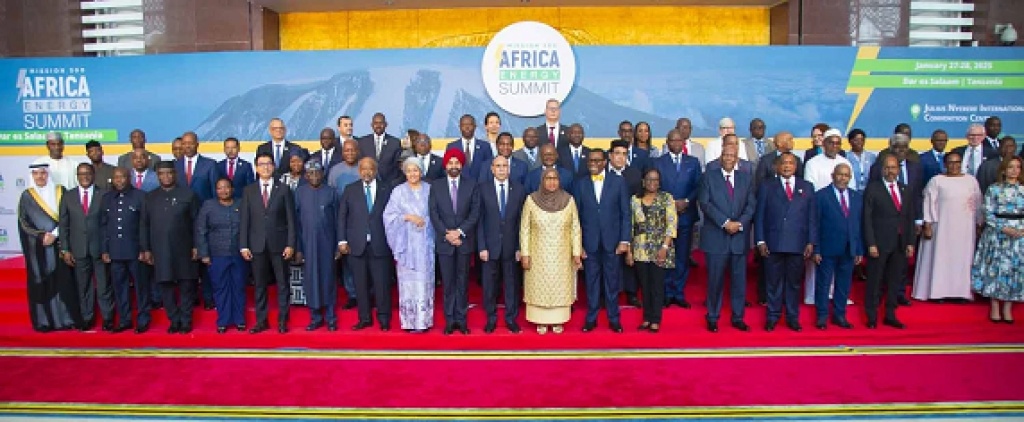
Africa Energies Summit
The African Energy Chamber (AEC) has called for a boycott of the Africa Energies Summit 2026, heightening dispute over who truly benefits from Africa’s oil and gas economy.
At the centre of the controversy is NJ Ayuk, Executive Chairman of the African Energy Chamber, who says the issue goes beyond a conference and strikes at the credibility of institutions that profit from Africa while allegedly sidelining Africans and Black professionals from meaningful internal roles.
According to Ayuk, the contradiction has become too glaring to ignore. He argues that organizations cannot build business models around African governments, African companies, African sponsorship and African resources while failing to reflect African inclusion in their own employment structures.
“This is not just about one event or one hiring decision,” Ayuk said. “It is about whether institutions that benefit from Africa are prepared to treat Africans as genuine stakeholders, not just as sponsors, speakers, delegates or symbolic participants.”
That framing has given the boycott call unusual force. Rather than treating the matter as an isolated grievance, the Chamber is challenging the legitimacy of a platform that has long positioned itself as an important meeting ground for Africa’s upstream oil and gas industry.
The Africa Energies Summit, scheduled for 12–14 May 2026 in London, occupies a prominent place on the sector’s international calendar. It is one of the forums where investors engage policymakers, state officials court capital and African hydrocarbon opportunities are presented to the global market. In practical terms, it is part of the machinery through which Africa’s energy future is marketed and monetised.
Ayuk says that prominence is precisely why the issue cannot be brushed aside.
“You cannot claim African relevance, demand African legitimacy and enjoy African support while Africans are excluded from fair access to jobs and influence within your own system,” he said. “That is not partnership. That is appropriation dressed up as inclusion.”
In Ayuk’s view, the dispute is not only about who gets hired by a summit organiser. It is about whether African participation in global energy platforms is substantive or merely cosmetic. A conference may showcase African ministers, promote African investment opportunities and attract African sponsorship, he argues, but if Africans remain absent from meaningful internal decision-making roles, then the language of partnership begins to ring hollow.
That criticism lands on one of the most politically sensitive fault lines in Africa’s extractive industries: the struggle over local content.
Traditionally, local content has focused on domestic procurement, indigenous participation, workforce development, local ownership and capacity-building in projects tied to Africa’s natural resources. But Ayuk is now pushing that principle beyond the oilfield and into the wider commercial ecosystem that profits from African energy.
“Local content must not stop at the wellhead, the service contract or the project site. It must also apply to the platforms, conferences and business forums that make money from Africa’s energy story. If African governments are expected to defend local participation in operations and supply chains, then the same standard should apply to those who convene and profit from the conversation,” Ayuk said.
That argument is politically potent because it shifts the debate from symbolism to structure. For years, African industry stakeholders have complained that the continent often supplies the resources, the government access, the market opportunity and the commercial narrative, while others continue to dominate the platforms through which those opportunities are packaged and sold. Ayuk’s boycott call speaks directly to that grievance.
Ayuk argued: “We are too often invited to attend, to sponsor, to speak and to legitimise these platforms. But when it comes to helping run them, shaping them or benefiting from them internally, Africans are too often pushed to the margins. That is the imbalance we are confronting.”
Seen from that angle, the dispute is less about one conference than about a familiar hierarchy in international business: Africa remains central to the pitch, but not always central to power.
The Chamber’s position has not emerged in a vacuum. Over recent weeks, Ayuk and the AEC have sharpened their criticism, insisting that institutions drawing value from Africa must demonstrate African inclusion in serious, measurable ways. What appears to have most angered the Chamber is what Ayuk describes as an attempt to reduce representation to optics.
The Cameroonian attorney also noted: “African faces on a programme are not enough. African names on an agenda are not enough. African themes in a brochure are not enough. Inclusion has to mean access to jobs, advancement, authority and decision-making power.”
That is why the boycott is being presented not as a publicity stunt, but as a pressure tactic designed to impose consequences. By urging African officials, regulators, companies and investors to reconsider their participation, the Chamber is attempting to raise the reputational and commercial cost of exclusion.
Ayuk argues that allegations of discriminatory hiring should not remain an internal matter when the institution in question depends so heavily on Africa for relevance and revenue.
“If you profit from Africa, you must respect Africans. Attendance, sponsorship and participation should never be automatic where there are serious concerns about exclusion. African stakeholders have a responsibility to ask who is benefiting, who is being left out and what exactly their presence is legitimising,” he said.
That introduces an unmistakably political dimension to the dispute. By calling on African ministers and regulators to stay away from the summit, the Chamber is also placing pressure on public officials who routinely champion local content, indigenous participation and domestic value creation. Ayuk says those principles cannot be defended in speeches at home and then ignored in practice abroad.
Ayuk argued that “You cannot advocate local content in Abuja, Luanda or Accra and then lend your prestige to institutions accused of shutting Africans out,” noting that “If we are serious about African participation, then we must be consistent. The principle cannot apply only when it is convenient.”
In that sense, attendance itself becomes political. Showing up is no longer merely a matter of professional engagement; under the Chamber’s framing, it can also be read as tacit endorsement.
The broader significance of the controversy lies in what it reveals about the unfinished struggle over African control in African-linked industries. The oil and gas sector has long promised empowerment, opportunity and transformation, yet questions of access, representation and decision-making authority remain deeply contested.
Ayuk says the Chamber’s intervention is intended to make one point unmistakably clear – African inclusion cannot be per formative.
He insists that Africa must no longer appear only as content while others control the platform, pointing out that “If our resources, our markets and our governments are important enough to build a business around, then Africans must be important enough to be trusted with real roles, real authority and real opportunity.”
Whether the boycott gathers broad momentum remains uncertain. But the issue it has exposed is larger than any single event in London. It is about whether Africa will continue to serve primarily as a market and a message, or whether Africans will increasingly insist on being part of the architecture that defines, brokers and profits from that message.
That is now the challenge hanging over the Africa Energies Summit 2026. By turning a conference into a test case, the boycott has forced a blunt question into the open: can institutions built on African access continue to operate comfortably if Africans are perceived to be excluded from real internal power?
For Ayuk, the answer is clear. “This is a line that must be drawn,” he said. “Africa cannot keep showing up as the theme while others keep control of the structure. That era has to end.” (The Sun, excluding headline)


