ADAD
ADAD
Updating your news feed...
NEWS EXPRESS is Nigeria’s leading online newspaper. Published by Africa’s international award-winning journalist, Mr. Isaac Umunna, NEWS EXPRESS is Nigeria’s first truly professional online daily newspaper. It is published from Lagos, Nigeria’s economic and media hub, and has a provision for occasional special print editions. Thanks to our vast network of sources and dedicated team of professional journalists and contributors spread across Nigeria and overseas, NEWS EXPRESS has become synonymous with newsbreaks and exclusive stories from around the world.



Loading banners
Loading banners...

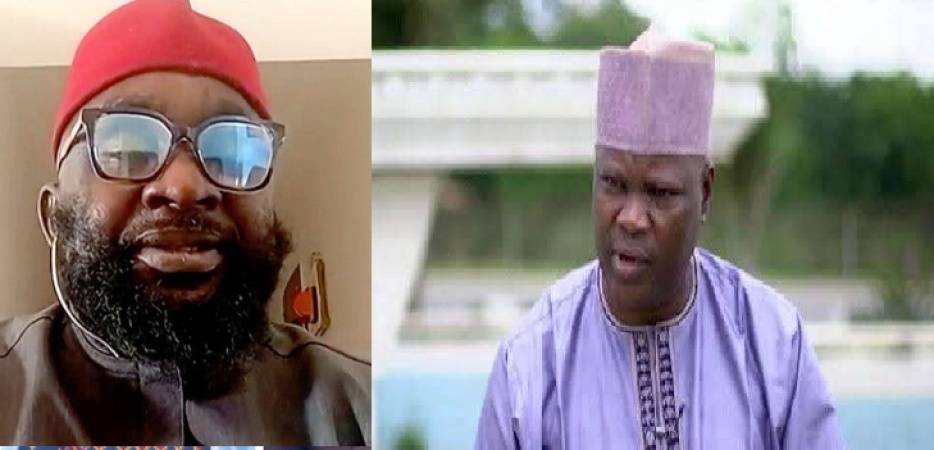
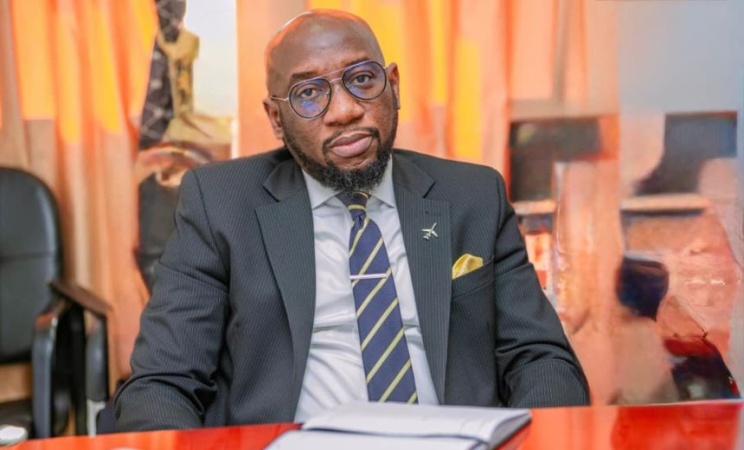
Capt Bishop Johnson retd and Yahuza Getzo
US Army veteran, Capt Bishop Johnson (retd) and Intelligence and Security Consultant, Yahuza Getzo, were panelists on Channels TV. In this joint interview monitored by Vanguard, they spoke about insecurity in the country and what the government must do to tackle the challenge even as they agree with Islamic scholar, Sheikh Abubakar Gumi that the government knows the terrorists but lack the political will to confront them frontally.
Excerpts:
The death toll due to terrorism keeps escalating and we have been having what you call wartime numbers. From what you know, what are we not doing well? Are we just talking without acting? Is intelligence not sufficient? Is our capacity inadequate? Are the men poorly motivated? What exactly is happening?
Bishop Johnson: I think it’s a combination of all the things that you have so eloquently stated. We are ill-equipped. We are not prepared. We have not really sat down and taken some time to try to understand what is happening to us. What are the remote causes? What are the immediate causes? Who is involved? If you look at what is going on in Northern Nigeria, with respect to these terrorists, which you rightly pointed out, you will discover that it is a combination of factors. We have a very porous border, where you have all these four militant Islamic countries that are surrounding Nigeria. You have people pouring in from those countries to a place they consider Eldorado. Just like those in Latin America consider the United States Eldorado, and they believe that when they get there, their life will change. This is how Nigeria is viewed in these countries. If you come into Nigeria and you are able to kidnap people, they will pay you ransom and your life and the lives of your entire family is changed. You have people, you have top government officials, you have business people, all of them are partaking in this commercialised criminal enterprise.
You have a porous border. You also have mineral resources that all of them are after, including some foreigners who are providing them with technical expertise to mine all these mineral resources. All of them have come together with their host communities, some of them, to create this upheaval of insecurity around these mineral sites. What is driving this terrorism in Northern Nigeria is Nigeria’s mineral resources.
So, the kidnappings you see is a diversionary tactic for us to focus on terrorism while some individuals are busy mining our mineral resources without following legal framework, without the state benefiting from the mineral resources that it has been endowed with. Anywhere you have illicit mining or illicit crude oil production, whatever it is, anywhere there is illicit anything, like Mexico and Colombia, you will see what is happening there, it is because they have all these illicit things as well. Anywhere you have these illicit activities, there’s always going to be insecurity in those areas because the major activity will all be battling for control of territory, who is in charge of this and who is in charge of where. In doing so, it will create this atmosphere of insecurity. Unfortunately, our country has not really been prepared to deal with it. We have been dealing with it in a haphazard manner. We respond, we withdraw, we pull back, we go forward and we have just been dealing with this thing in a very haphazard manner.
For us to curtail this, we have to look at this problem holistically. Start from the border and work our way back into the country. Eliminate external factors so that we know those who are within our country who are terrorising us and then we can adequately deal with the internal factors at the same time.
We are still seeing insecurity escalating. What is your take?
Yahuza Getzo: The trajectory of the security challenges that we have in the country has a lot of factorial influence related to our neighbourhoods such as the border between Nigeria and Niger, the border between Nigeria and Benin, Nigeria and Cameroon, Nigeria and Chad and, even by extension, the far countries that Nigeria has trans-Sahara trade activities with. We may have the equipment and gadgets, but the question is, are we really holding ourselves accountable and holding our personnel accountable for utilising those equipment and so on and so forth? What efforts are we making in order to checkmate the activities of trans-Sahara trade activities, the porous border? Of course, the only area that I may disagree with is the fact that Nigeria has not done the root cause analysis. We know the root cause. We know who the guys are. Nigeria has the capacity to deal with the situation. But intentionally, we are refusing as a country to address the key issues inwards and the key issues related to our bilateral relations and also the key issues of identifying, addressing and checkmating the border activities as well as looking into the logistics activities.
When you look at the arguments from some of the personnel and the information generated from some of them on the field, they are not being provided with the right logistics and equipment, even though Nigeria may have those things. Even though the command and units may have those gadgets and equipment, they are not being provided. When you look at the North-Central and North-West, the Lakurawa are focusing on institutional attack. They are trying to dismantle the customs, the police, immigration base and police stations even though there are a lot of evidence-based facts that Lakurawa are providing support to some of the illegal miners among the Chinese. Some of the borders are really contributing to the influx of arms and ammunition and other illegal activities. Looking at all these things, we can say we have a combined challenge that we have refused to address. It is not that we don’t have the right information, intelligence and personnel. Of course we may not have the numbers, but the numbers we have can do wonders if we were holding people accountable for what they are assigned to, if we didn’t display an inability to check the system, hold people accountable and handle conflict.
Sheikh Gumi, in a most recent interview, told Nigerians that the Nigerian government knows the terrorists by name and by location and when he goes to interact with the bandits, he doesn’t go alone, he goes with security agents. How are you processing this revelation by Gumi and based on the invitation that the administration extended to him in 2024. What question should we be asking the federal government?
Bishop Johnson: First, when I talk about the remote cause of these problems, it is not that the government does not know about the root of the problem, it’s that they are not dealing with the root cause, they are just taking reactionary measures. Anytime people are kidnapped, we negotiate their release. When there is an ongoing attack, we respond. We are not preempting these things the way we are supposed to preempt them. Speaking of Gumi, he is not the first person that has admitted that the government is aware of all these people. When El Rufai was the former governor of Kaduna State, he also mentioned that they knew these people. And even after that, there have been some government officials, even in this present administration, that have admitted that they know these people. Since this government has been onboard, there have been negotiations that have led to the release of people who were kidnapped. Such negotiations cannot go on successfully without knowing who is responsible for the kidnapping. It is not that we don’t know the people behind this problem, we have been intentionally complicit in trying to deal with this problem. And maybe it is because of the people behind it, who may be the most powerful people in the country, probably more powerful than the president. I take a contrary position to those calling for the arrest of Gumi. I don’t think that’s the way to deal with him. I think the best way is to invite him so he can provide us with more intelligence. He has been very unequivocal that the government knows the people behind these attacks, and I can’t agree any less with him. Government cannot say they don’t know these people. If they don’t know these people, why do we have all these intelligence agencies in our country? What is their job? What’s the job of the DSS and NIA? Why is it that these people are carrying out these attacks on a regular basis, and the intelligence agencies don’t know about them, or haven’t done anything behind all these attacks. I would find it very difficult to believe, and I know that most Nigerians would also find it very difficult to believe that we have not been able to identify this group of people that have terrorised our country for nearly two decades now.
If you disagree with those calling for his arrest, is there a danger in that?
Bishop Johnson: The man is a Nigerian citizen. He is entitled to every right and privilege enjoyed by Nigerians. Whatever he says is his opinion, and doesn’t mean that the government must grant amnesty to bandits. The area I am coming about is that this man has a lot of information about the bandits. Instead of throwing him into jail, I think that the best thing to do is to get the information from him. This is how intelligence agencies work. I was a military intelligence officer. FBI and CIA recruit the worst in society to work with them in taking down some other people.
Do you think that the discordant posturing in terms of whether we go conciliatory or by might, with the people in charge of our security, is part of why we are dealing with the problem and we are not getting the kind of results we should be getting?
Yahuza Getzo: I don’t really believe in anything conciliatory. As far as I am concerned, that is deceit. If the government has any policy talking about that, I think we will be very disappointed with the people we are leading. Years before Gumi talked about the agreements, I had made mention of it in various international and national interviews and in the articles I presented at various conferences. I believe that waiting for any reconciliation or rehabilitation, I think we are deceiving ourselves. Like I said, the Nigerian government is intentionally refusing to address insecurity in Nigeria because we know those who are complicit, we know the criminals and we know their location. You can profile them by polling units, by political wards, by local government constituencies, by state assembly constituencies. I have made a submission to eight, ninth and 10th assemblies, providing relevant information about those who are terrorising most areas of the North-West and North-Central. To some extent, in recent time, I was in 48 local governments in seven states of most of the North-East. I believe that most of the locations of Boko Haram and their hideouts, and even the so-called mountains, can be profiled and can be handled. I think we need to be very careful. We need to be honest. President Bola Tinubu has promised Nigeria that his government will provide security. Now, I am sending a reminder to President Bola Tinubu to revisit that policy. I don’t think we are honest when we talk about reconciliation. Are we really talking sense? We have records that even some governments are providing logistics support. I have evidence where one of them provided 25 motorcycles to the vigilante and also 25 motorcycles to the criminals after the so-called dialogue here and there.
Which government are you talking about?
Yahuza Getzo: When it is very necessary, I am ready to mention it.