
ADVERTISEMENT

ADVERTISEMENT

ADVERTISEMENT

ADVERTISEMENT






















Loading banners


NEWS EXPRESS is Nigeria’s leading online newspaper. Published by Africa’s international award-winning journalist, Mr. Isaac Umunna, NEWS EXPRESS is Nigeria’s first truly professional online daily newspaper. It is published from Lagos, Nigeria’s economic and media hub, and has a provision for occasional special print editions. Thanks to our vast network of sources and dedicated team of professional journalists and contributors spread across Nigeria and overseas, NEWS EXPRESS has become synonymous with newsbreaks and exclusive stories from around the world.
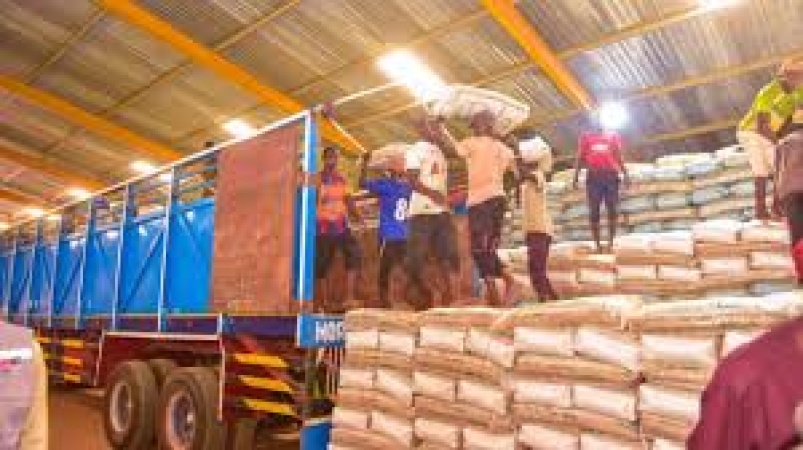
The ongoing conflict in the Middle East is disrupting global fertiliser supplies and raising fresh concerns about food security, as production in Gulf countries slows and a key maritime route for agricultural inputs remains largely closed.
The crisis could have significant implications for countries that rely heavily on imported fertilisers, including Nigeria, where farmers are already grappling with insecurity and rising input costs.
In Nigeria, the Middle East crisis—combined with escalating conflict in parts of the North—has already disrupted farming activities and reduced food production. Attacks during the 2025 harvest season significantly affected output, forcing many households to rely more heavily on market purchases.
Globally, a substantial portion of fertiliser trade passes through the Strait of Hormuz. However, the strategic waterway has effectively been shut following escalating hostilities involving Iran and its regional rivals.
Analysts estimate that about one-third of fertiliser shipped by sea originates from Gulf nations, meaning large volumes of supply are currently unable to reach global markets.
According to AFP, the disruption has sent fertiliser prices sharply higher, prompting warnings from the United Nations about the potential consequences for agricultural production, particularly in developing countries that depend heavily on imported fertilisers.
The Gulf region is a major hub for fertiliser manufacturing due to its abundant natural gas reserves, a key feedstock used in producing nitrogen-based fertilisers.
Industry analysts say the region accounts for nearly half of the sulphur sold worldwide and about one-third of global urea production. Urea is the most widely traded fertiliser and a critical input for crop cultivation.
The region also produces roughly a quarter of the world’s traded ammonia, another essential component used in fertiliser manufacturing.
Sarah Marlow, AFP reported, global editor for fertilisers at Argus Media, said the Gulf’s dominant role in fertiliser supply chains makes the current disruption particularly significant for global agricultural markets.
Major agricultural producers depend heavily on fertilisers from the region. Countries such as the United States and Australia source large portions of their urea and phosphate supplies from Gulf nations.
Brazil, the world’s largest soybean producer, imports most of its urea from Qatar and Iran, while India relies heavily on phosphate supplies from Saudi Arabia.
Asia is especially dependent on the region. According to commodity analytics firm Kpler, the continent imports about 64 percent of its ammonia and more than half of its sulphur and phosphate fertilisers from Gulf producers.
However, the escalation of hostilities has forced several fertiliser plants in the region to halt operations. Facilities in Qatar are among those affected as tensions triggered retaliatory strikes and heightened security concerns.
Shipping disruptions have compounded the problem. Although a Chinese vessel carrying sulphur managed to leave the region earlier this month, roughly 20 other ships were still stranded near the Strait of Hormuz as of mid-week, according to Kpler data.
Even regions less directly dependent on Gulf fertiliser exports are expected to feel the impact through higher prices and tighter supplies.
Europe, for example, sources only about 11 percent of its urea directly from the Gulf. However, Morocco, a major supplier of phosphorus-based fertilisers to Europe, relies on sulphur from Gulf producers for manufacturing.
The European Union also imports around 26 percent of its urea from Egypt. But fertiliser output there has been constrained after natural gas supplies from Israel were halted due to the ongoing conflict.
Arthur Portier, a consultant with Argus Media, said the disruption has already pushed prices significantly higher.
“Egyptian urea has gone from about $500 per tonne at the start of the war to more than $650,” he said, noting that the increase is beginning to affect European farmers.
Elsewhere, countries that rely on Middle Eastern gas to produce fertilisers domestically are also facing difficulties. India has reportedly begun rationing gas supplies to fertiliser plants, while Bangladesh has temporarily shut down five of its six factories.
The United Nations has warned that the price surge and supply disruptions could limit fertiliser access in some of the world’s poorest countries, potentially undermining agricultural output in the coming planting seasons.
Fertilisers are essential for modern agriculture, providing key nutrients such as nitrogen, phosphorus and potassium needed for crop growth.
Any prolonged disruption to global fertiliser supplies could therefore translate into lower crop yields and higher food prices worldwide.
In countries already grappling with food insecurity, the impact could be particularly severe.
Humanitarian agencies warn that millions of Nigerians are at risk of worsening food insecurity as the lean season approaches.
According to the Famine Early Warning Systems Network (FEWS NET), between 21 million and 22 million people in Nigeria are expected to require humanitarian assistance during the peak of the June–August lean season.
The agency said the situation is being driven by ongoing conflict, reduced household food production and limited access to markets, particularly in parts of the North East where displacement and movement restrictions remain widespread.
Analysts say that if fertiliser shortages persist, the resulting decline in agricultural productivity could further intensify both global and regional food security challenges. (Nigerian Tribune)


