











.webp&w=256&q=75)

Loading banners


NEWS EXPRESS is Nigeria’s leading online newspaper. Published by Africa’s international award-winning journalist, Mr. Isaac Umunna, NEWS EXPRESS is Nigeria’s first truly professional online daily newspaper. It is published from Lagos, Nigeria’s economic and media hub, and has a provision for occasional special print editions. Thanks to our vast network of sources and dedicated team of professional journalists and contributors spread across Nigeria and overseas, NEWS EXPRESS has become synonymous with newsbreaks and exclusive stories from around the world.

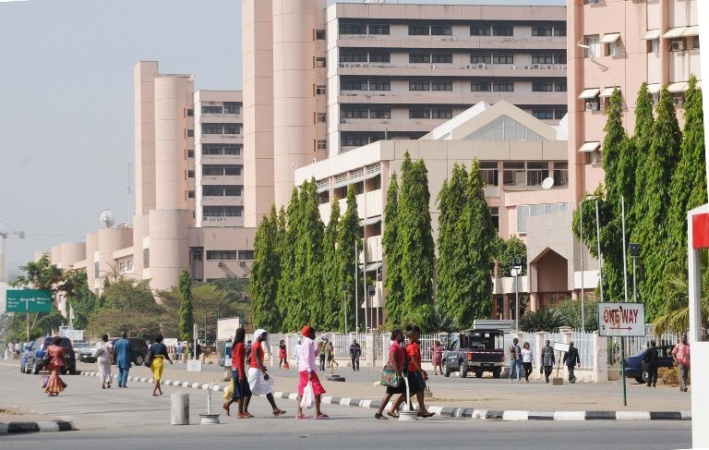
Driving through Abuja Municipal Area Council (AMAC) streets during the recent Federal Capital Territory (FCT) elections, I witnessed what members of the political class seem uninterested in hearing. Polling units that should have buzzed with civic energy were attended by more party agents and security personnel than actual voters. With 65,676 votes recorded for all the candidates, out of 837,338 registered voters, it means just about 8 percent of AMAC residents bothered to exercise their franchise. And since some have started rushing to judgement about voter apathy, let me offer a modest defence of the Abuja non-voter.
Let us begin with the most basic question: Who were the candidates at the election? I ask this literally. If you stopped a hundred residents in Maitama, Wuse II, Gwarinpa, Jabi or Apo (where I reside), in the days preceding the election and asked them to name even one candidate contesting the chairmanship of their area council, I suspect you would struggle to fill a single hand’s worth of correct answers. This is not because Abuja residents are uninformed or indifferent by nature, but rather that the candidates simply did not bother to introduce themselves. There were the familiar scenes, of course. Videos circulated on social media of aspirants dancing through markets with heavyweight political figures in tow, surrounded by the choreographed enthusiasm of mobilised supporters.
But here is the point. The local government is the tier where the conversation is not about foreign policy or macroeconomic indices but the refuse bin at the end of your street, the public school your children (or your neighbour’s children) attend; the pothole on the road leading to your house that has swallowed countless tyres, the healthcare centre that has become an eyesore, etc. These are the issues that properly raised and sincerely addressed, would have encouraged a woman in Guzape or a man in Garki to cast their vote on election day.
If you can excuse his scorched-earth politics, the FCT Minister, Nyesom Wike, has done commendably well in the area of road infrastructure, especially within the Abuja municipality. But every day comes with the kind of problems that a competent, motivated, community-rooted area council administration could also begin to address. That is currently not the case. Walk through parts of Abuja today, even the so-called highbrow areas, and these ‘little problems’ stare you in the face. Waste management has become a scandal. Refuse festers at corners of estates where residents pay significant levies and expect basic sanitation in return. Beggars are everywhere.
I will confess something that may sound immodest. But I offer it in the spirit of making a point: If I were to contest the chairmanship election in AMAC, I believe I would win. Not because of party affiliation or the patronage of powerful godfathers, but because the strategy is not complicated. It has simply never been tried. Every estate in AMAC has a residents’ association with officials. These associations hold meetings. They are, in effect, ready-made civic infrastructure. As a candidate, I would write to the executive of every estate and request a meeting. I would sit with them, and ask two simple questions: what are your challenges, and what do you need from a local government that works? I would listen, take notes and make commitments. And I would ask them to hold me to those commitments. I would also make them partners in the campaign rather than spectators of it. At another level, I would canvass door-to-door in every neighbourhood and ask for support on the basis of specific, documented problems that I would promise to resolve. That is how you win a local election. More importantly, that is how you deserve to win one.
In AMAC and the five other area councils in Abuja, none of this happened. In the Sunday preceding the election, Pastor Evaristus Azodoh of the Everlasting Arms Parish (TEAP) of the Redeemed Christian Church of God (RCCG) asked us to come for the weekly evangelism that Saturday. When told that there would be council elections, he expressed surprise before adding, ‘But nobody has campaigned for my vote.’ Almost everybody at the meeting echoed his position: ‘Nobody has campaigned for my vote either’! Instead, the political class offered Abuja residents the same tired menu: the big man’s endorsement, market dance etc. And residents responded the only way a self-respecting electorate should when it is not taken seriously: They refused to show up.
Yes, there is value in participation. But civic duty is a two-way covenant. The man in Gwarimpa or Mabushi who cannot name the candidate on the ballot so decided to stay away from voting is not apathetic. He is rational. He sees no difference between the parties, because, on the evidence before him, there is none. He sees no specific promise that speaks to the broken road that leads to his residence or the insecurity that has begun to disturb his sleep. Why then, they ask themselves, should they take the trouble to affirm this? It is a fair question. And the political class, not the non-voter, owes us an answer.
Now, the main concern is that this is not a local problem. This is precisely the same disposition that results in many voters staying away from our elections at every level, including during the gubernatorial and presidential polls. That explains why nobody should downplay the challenge of voter apathy and the dire implications of a pervasive lack of interest to participate in our elections. From disillusionment with the performance of public officials to the growing perception that their votes may not count, there are justifiable reasons why many Nigerians are staying away from the polling booths at election time. And such electoral indifference bodes ill for our democracy.
The situation is compounded by the lack of any credible opposition. By playing their role effectively, opposition parties are expected to put the people in power on their toes. But the current opposition, exemplified by the Peoples Democratic Party (PDP) and African Democratic Alliance (ADC), is not only weak and uncoordinated, many of their leaders also seem highly compromised. Since they can not articulate clear roadmaps with which to envision the country, they criss-cross from one party to the other. Expectedly, this dysfunctionality is being exploited by the ruling All Progressives Congress (APC) with Nigerians as the ultimate losers. While we will come back to this issue one day, our politicians should be worried about growing voter apathy.
When substantial segments of the population abstain from voting, the legitimacy of the democratic process is called into question. This deliberate disengagement impacts not just electoral outcomes but also the entire system. Therefore, it is important for people in government and those waiting in the wings to replace them, to work towards not only delivering the public good but also ensuring that when the next election comes, more Nigerians would be interested enough to cast their ballots. It is in the enlightened interest of members of the political elite.
Meanwhile, the FCT elections have come and gone. Area council chairmen and councillors have been returned or newly installed. Congratulations are being offered to the re-elected Christopher Maikalangu of AMAC and others. But if the winners are serious about governance, and one must always hold on to the possibility that some of them are, they would do well to begin with a sober reckoning. The low turnout is a verdict of its own. It says: ‘You have not earned our mandate yet. But you can, if you apply yourself to the job and do well in office.’
I hope they have the presence of mind to get the message.
The Choice Before Tunji Disu
“…I was once called to a scene where a young man had been beaten. His elderly mother saw my uniform and refused to speak to me. She told neighbours she didn’t trust police, that we would take money from the attackers and do nothing. One neighbour who knew me had to vouch for me before she recounted what happened. I wasn’t angry at her. I understood. I had seen what some colleagues had done. I had witnessed corruption, brutality, indifference. Her disgust wasn’t paranoia. It was learned caution based on experiences. My job was to earn her trust through my actions, not demand it because of my uniform…”
The foregoing is from a yet-to-be-published book by Olatunji Rilwan Disu, who was on Monday confirmed the Inspector General of Police (IGP). It is titled, ‘What They Didn’t Teach at the Police College: A Veteran’s Honest Guide to Navigating the Nigeria Police Force’. Considering that the whispers in Abuja had been that Kayode Egbetokun would be around for a long time as IGP, I doubt if Disu imagined he would be where he is today. But Egbetokun’s sudden ‘resignation’ paved the way. Although Disu sent me a dummy copy of the book (which reads like a post-retirement memoir) last December to help look at, I never got around to reading it until I heard about his appointment last week. The fact that he sent someone to my office yesterday to retrieve the copy indicates the publication has been ‘overtaken by events’.
Drawing from his own experience and that of colleagues, Disu addressed several personal and institutional challenges facing the police in the ‘book’. But what I find most interesting are the anecdotes. Sample this: “Years ago, one of my officers came to me troubled. His cousin, whom he loved like a brother, had gotten involved with a robbery gang. The cousin confided in him, saying he wanted out but feared the gang would kill him. He asked my officer for help. The officer wanted to know what to do. Report his cousin to the Police, knowing this might lead to arrest or death? Help his cousin escape and relocate, making himself complicit in helping a criminal? Try to convince cousin to turn himself in and cooperate? Ignore the whole situation and pretend he didn’t know? …every option led somewhere painful.”
Readers interested in the counsel our new IGP gave his officer and what eventually happened to the confessed criminal would have to wait for Disu’s book should he still decide to publish it one day. But now that he is at the helm of affairs at the Police, I hope Disu will put into practice many of the lofty ideals that have shaped his career thus far, some of which are also highlighted in his unpublished book.
Meanwhile, the new IGP is coming to office at a period when there is a national consensus for the establishment of state police. Most of his predecessors opposed the idea, essentially to protect their turf. To succeed, Disu must put the security of the country over and above retaining the power and privileges of his current office. When that transition comes, he also must work for the reform of the federal police so that its personnel become more professional and are able to effectively discharge their duties.
As the principal custodian of peace, order and security in a constitutional democracy, no institution is arguably more important than the police whose primary duties include preventing, detecting, and investigating crime, protecting lives and property and bringing criminals to justice. But as I surmised in a recent column, Mr President, Police May Not Obey You! – THISDAYLIVE, it is evident that the NPF can no longer effectively meet public expectations. Which then means that Disu’s job is well cut out for him.
In the message I sent to him last week, I told Disu that I don’t congratulate people I consider my friends when they are appointed to public office. But I do pray for their success. On that note, may God help Olatunji Rilwan Disu in his new assignment.
•You can follow Segun Adeyemi on his Twitter handle, @Olusegunverdict and on www.olusegunadeniyi.com