
Updating your news feed...
NEWS EXPRESS is Nigeria’s leading online newspaper. Published by Africa’s international award-winning journalist, Mr. Isaac Umunna, NEWS EXPRESS is Nigeria’s first truly professional online daily newspaper. It is published from Lagos, Nigeria’s economic and media hub, and has a provision for occasional special print editions. Thanks to our vast network of sources and dedicated team of professional journalists and contributors spread across Nigeria and overseas, NEWS EXPRESS has become synonymous with newsbreaks and exclusive stories from around the world.


























Loading banners
Loading banners...

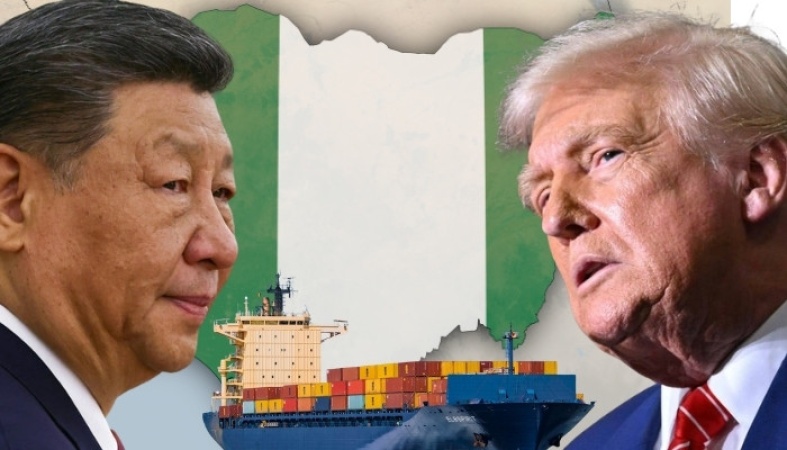
Nigeria’s non-oil exporters see China as a promising new market after the country announced it will eliminate tariffs on a wide range of African goods, offering a rare chance to expand amid growing uncertainty in the United States.
The zero-duty arrangement, expected to take effect from May 1, will cover agricultural and mineral products, lowering entry costs for Nigerian exporters seeking alternatives to traditional Western markets.
While Beijing moves to open doors, Washington is tightening them. President Donald Trump recently imposed a blanket tariff that jumped from 10 percent to 15 percent under 24 hours, activating emergency trade powers after the supreme court struck down earlier measures.
“We are going to see more of those particular products that China imports to move a lot more to China than elsewhere,” Obiora Madu, an exports analyst, told BusinessDay. “Every businessman is in business to make profit. It is inevitable. We have to divert.”
Trade data suggests the foundations for such a shift may already exist. In 2025, Nigeria’s exports to the US dropped 14 percent to $4.9 billion from $5.7 billion in the previous year, erasing the gains from 2023 when exports value stood at $5.2 billion, according to data from the U.S. Census Bureau.
Export goods remain heavily concentrated in energy products, which account for over 90 percent of total shipments, but smaller shipments of fertilisers, lead, oil seeds and cocoa beans still make their way in.
Meanwhile, Nigeria’s export relationship with China has recorded steady growth. Exports have risen by 81 percent in three years to $3.17 billion in 2025 from approximately $1.6 billion in 2022, according to data from China’s General Administration of Customs.
Some exporters say official figures may understate Nigeria’s trade with China because tariff differences have historically encouraged traders to route goods through neighbouring countries before shipping them onward.
Kola Awe, chairman of the Nigerian Association of Chambers of Commerce, Industry, Mines, and Agriculture (NACCIMMA) Export Group told BusinessDay that about 80 percent of Nigeria’s sesame exports were routed through the Niger Republic, a landlocked country which had lower tariffs to China.
“That trade pattern is not being captured as Nigerian exports,” he said. With tariffs now lowered, China becomes a direct trading partner for most non-oil exports. “What it simply means is that…rather than us trying to export from Niger, which is what a lot of people do, everybody can export from Nigeria,” he said.
Awe said products like tiger nuts, and baobab will find new markets as many agricultural products require cleaning and sorting before processing, a step that is often cheaper in China than in Western economies where labour costs are higher.
“China is currently importing some of the agro-produce that Nigeria is exporting to the U.S.,” Madu said. “The market may have remained as it is because the opportunity was not there. If you have a zero-duty situation, then you are definitely going to see changes.”
Despite rising tariffs, the United States remains an important destination for Nigerian exports, manufacturers told BusinessDay, particularly for higher-value manufactured and specialised goods that may command premium prices.
Segun Ajayi, secretary general of the Manufacturers Association of Nigeria said exporters may still find opportunities in niche segments of the American market where quality and branding matter more than price alone.
Preferential access under the African Growth and Opportunity Act (AGOA) remains an African advantage in the US market, and of Trump’s wildcard to attract African businesses.
The scheme allows eligible goods from African countries to enter the United States duty-free and is currently expected to remain in place until its scheduled expiration in December 2026, though its long-term future remains uncertain.
Ajayi said Nigeria has historically underutilised AGOA and warned that new tariffs could reduce its effectiveness if they are applied broadly across product categories.
“Whether or not this 15 percent is going to affect AGOA-eligible goods is left to be seen,” he said. “Trump is one of the most unpredictable leaders in the world.”
Muda Yusuf of chief executive officer of the Centre for the Promotion of Private Enterprise (CPPE), however, said AGOA itself is unlikely to be directly overridden because it was enacted by the US Congress, but noted that broader policy uncertainty could still discourage exporters from relying too heavily on the American market.
The US had, from January 1, suspended visa issuance to nationals of 19 countries including Nigeria. Yusuf said the “visa problems” complicate things. “You want to trade and they give you a three-month single-entry visa. How do you trade with that?” he asked.
Yet, with all the promise, manufacturers said the shifting trade patterns will not be easy or immediate.
Entering the Chinese market requires understanding consumer preferences, meeting product standards and navigating unfamiliar distribution networks, all of which require investment and planning, Ajayi said.
He said manufacturers would need to carry out detailed market research and adapt their products before they could compete effectively in China, noting that lower tariffs alone would not guarantee success.
“It is not just that tariffs are low and you go and dump your products in that country,” he said. “You must be able to compete with similar products and understand the consumer preferences.”
Madu said, “There’s two sides to it. There’s the supply side and there’s the demand side. If the demand side increases as anticipated, are we going to be able to increase the supply side?
That’s the million-dollar question,” he said.
“That means that the Nigerian Export Promotion Council and the relevant authorities need to be working on the competitiveness of export products in Nigeria. We need to strengthen our quality infrastructure to ensure that as a result of that very particular opening, that people do not ship any rubbish that they like to China.” (Business Day)