 ADAD
ADAD
Updating your news feed...
NEWS EXPRESS is Nigeria’s leading online newspaper. Published by Africa’s international award-winning journalist, Mr. Isaac Umunna, NEWS EXPRESS is Nigeria’s first truly professional online daily newspaper. It is published from Lagos, Nigeria’s economic and media hub, and has a provision for occasional special print editions. Thanks to our vast network of sources and dedicated team of professional journalists and contributors spread across Nigeria and overseas, NEWS EXPRESS has become synonymous with newsbreaks and exclusive stories from around the world.










Loading banners
Loading banners...

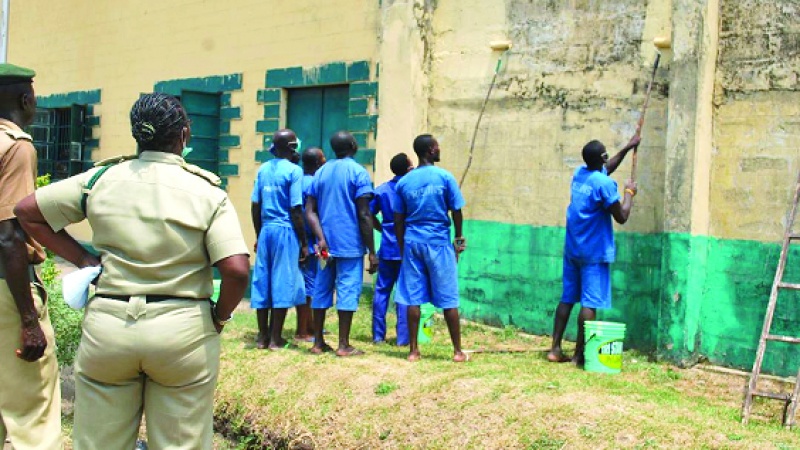
Inmates
Joy Ekanem was just 22 when Nigeria’s criminal justice system closed in on her. A domestic worker in Abuja, her life took a brutal turn in 2024 after her Lebanese employer accused her of stealing ordinary household items—bedsheets, spoons and a flashlight. Joy said the allegation surfaced only after she rejected his sexual advances.
What should have raised red flags about abuse instead triggered her arrest.
With no lawyer or anyone to speak for her, Joy spent 10 days in police custody, where she was beaten and intimidated. Her accuser made a single statement and vanished. With no family support and no money for bail, she was remanded at Keffi Correctional Centre and left to wait.
For over four months, nothing happened. Her case, however, resurfaced during a routine prison visit by the Chief Judge of the Federal Capital Territory, Justice Husseini Baba-Yusuf. When Joy stood up to speak, the room went quiet. She narrated a shocking story of how wrong accusation robbed her of her freedom, human dignity through unconscionable abuse and the endless waiting for a trial that never came. Moved by the piteous tale, the Chief Judge ordered her immediate release.
Joy spent just a few months in prison awaiting trial, but another victim, Shehu Adam, spent years. A 100-level Mass Communication student at the University of Jos, Adam was arrested in 2016 while visiting his elder brother’s phone accessories shop in Guru, Yobe State. He had unknowingly bought a second-hand Nokia phone linked to a robbery and murder case. Though he insisted he had never been to Kano before, he was taken there and detained.
For nine years, Shehu Adam remained an awaiting trial inmate in Kano prison. His case drifted through the system, moving between courts without resolution. When he finally regained his freedom last year, he emerged with a chilling account of life behind bars.
Another victim, Idris Musa, endured even longer awaiting trial. Arrested in Lagos in 2010 over the murder of one Ali Kolo, Musa was arraigned before a Magistrate Court on a holding charge and remanded in Kirikiri prison pending legal advice. The advice later came, and the trial began. Then it collapsed after a prosecution witness testified that Musa was not the killer.
The state simply abandoned the case. For 14 years, Idris Musa remained in prison without trial or conviction. Prison records later showed he developed a mental disorder in custody. In 2018, a High Court controversially ruled that his prolonged detention was not unconstitutional, merely urging the Lagos Attorney-General to hasten prosecution. Nothing changed. It took an appeal to the Court of Appeal, led by Dr Charles Mekwunye, SAN, for Musa to regain his freedom last year, 16 years too late.
Systemic failure: Victims of delay
These stories are not isolated tragedies. They reflect a systemic failure that keeps thousands of Nigerians locked away as awaiting trial inmates—victims not of crime, but of delay, indifference and a justice system that too often forgets the human beings caught in its grip.
Alarming statistics
A National Bureau of Statistics, NBS, report on the NCoS from 2017 to the second quarter of 2025, released on January 13, paints a stark picture of a justice system where detention comes quickly but judgment comes slowly, if at all.
Vanguard analysis of the NBS report revealed that nationally, as at Q2 2025, Nigeria had about 81,710 inmates in facilities officially designed to hold 65,035 inmates, meaning the system is running about one quarter above its intended capacity.
Beneath that overcrowding lies a more disturbing fact: roughly 53,790 of those 81,710 inmates were classified as unsentenced persons on remand, awaiting trial, or otherwise yet to receive a final court decision.
In percentage terms, 65.8 per cent of all inmates in Nigeria as at second quarter of 2025 had not been sentenced by any court. The same pattern appears in previous years. Awaiting trial inmates were 68.9 per cent in 2023 and 66.7 per cent in 2024, showing that this is a structural feature of the system, not a short-term spike.
Slight reduction in 2026
Giving an update on prisons population earlier this month, Controller-General of NCoS, Sylvester Nwakuche, acknowledged the problem of overcrowding in the correctional facilities across the country but indicated there has been a slight reduction in the numbers. According to Nwakuche, the total inmate population as of February 9, 2026, stood at 80,812, including 51,955 awaiting trial and 24,913 convicted.
Lagos: Megacity of pre-trial detention
Lagos State is the symbol of Nigeria’s pre-trial detention crisis, and the numbers, according to Vanguard’s analysis of NBS 2025 data, are blunt.
As of Q2 2025, Lagos correctional centres had a capacity for 4,167 inmates but were holding 9,209. This represents more than double what they were built for.
Behind those figures is an even more telling statistic: 6,548 of those 9,209 inmates were unsentenced/awaiting trial.
Lagos alone holds about 11.3 per cent of the entire prison population in Nigeria and has become the country’s largest warehouse of inmates whose legal status has not been settled by any court.
South-West: Overcrowded cells, unfinished cases
The crisis is not limited to Lagos; it stretches across the entire South-West. In Ogun State, prison capacity stands at 2,625, but there are 4,939 inmates. Out of these, 2,738 inmates are awaiting trial.
Oyo State shows an even clearer imbalance. Its prisons can officially hold 630 people, yet 1,831 are inside. Osun, with a capacity of 746, holds 1,150 inmates, and 926 are awaiting trial.
Ekiti’s capacity is just 324, yet 791 people are locked up, and 523 of them are awaiting trial.
Ondo’s capacity is 891, with 1,446 inmates, and 1,060 of these are awaiting trial.
Across the South-West, the pattern is consistent. Every state in the zone has more inmates than available space and more awaiting-trial inmates than sentenced ones.
South-East: Where “awaiting trial” is the norm
The South-East presents some of the most extreme figures in the entire country.
In Abia, prison capacity is 1,500, and the population is 1,874. Yet 1,623 of those 1,874 inmates are awaiting trial.
Ebonyi is similar but with even smaller physical space. It has a capacity for just 587 people but holds 1,266 inmates—more than double its limit. Within that, 1,096 are awaiting trial.
Enugu State prison combines both high numbers and high ratios. Its capacity is 1,266, but 3,536 inmates are inside. A total of 2,861 inmates are awaiting trial.
Anambra prisons have a capacity of 1,250 and a population of 1,827 inmates. Among them, 1,334 are unsentenced.
Imo is one of the few states in the region where prison capacity and population are close. It has a capacity of 1,512 and 1,484 inmates. But even there, 1,216 of those 1,484 inmates are unsentenced.
South-South: Double pressure of remand, crowding
The South-South zone repeats this dangerous mix of high inmate numbers, high overcrowding and high proportions of awaiting trial inmates.
Akwa Ibom prisons have a capacity of 1,366 and hold 2,937 inmates. Of these, 2,456 are unsentenced.
Delta’s capacity is 1,218, but its prisons hold 2,496 inmates. Unsentenced inmates number 1,319.
Edo State has a capacity of 2,226 and a prison population of 3,068. The state has 2,151 unsentenced inmates.
Rivers has a capacity for 2,350 but holds 3,214 inmates. Within that population, 2,274 inmates are unsentenced.
Bayelsa has one of the smallest prison capacities in the country, at 300, but holds 696 inmates. Of those, 428 are unsentenced, which is 61.5 per cent of Bayelsa’s prison population.
Across the South-South, there is no state where unsentenced inmates are a minority; in every case, they are more than half of the total.
North-West: High remand in some, underused space in others
The North-West presents a mixed picture: some states are under capacity, but the share of unsentenced inmates remains persistently high.
Kano has the largest capacity in the zone, at 6,279 places, and holds 4,667 inmates. Yet 2,986 of those inmates are unsentenced.
Kaduna’s capacity is 3,021, and it has 3,198 inmates, slightly overcrowded at 106 per cent. Unsentenced inmates total 1,886.
Katsina prisons have a capacity for 1,407 inmates but hold 3,329, yielding 237 per cent occupancy. Among them, 2,810 are unsentenced.
Sokoto, with a capacity of 1,434, holds 1,710 inmates, of whom 1,082 are unsentenced. By contrast, Jigawa has a capacity of 2,930 and 2,219 inmates, with 1,287 unsentenced. Kebbi has 1,880 capacity and 2,145 inmates, with 1,416 unsentenced.
In short, even in states where prisons are not yet bursting at the seams, more than half of the inmates are unsentenced.
Where overcrowding exists in this zone, such as in Katsina and parts of Kaduna and Kebbi, it is accompanied by very high shares of awaiting trial inmates.
North-East: Unused spaces, unresolved cases
The North-East zone is home to some of the lowest occupancy rates in the country, but unsentenced inmates remain a significant share.
Borno’s capacity is 4,035, with 1,332 inmates. Its unsentenced population stands at 236, which is one of the lowest ratios nationwide.
Taraba’s capacity is 2,040, and its inmate population is 1,119. Yet 681 of these 1,119 inmates are unsentenced. Yobe, with a capacity of 763, holds 1,166 inmates, giving 153 per cent occupancy. Unsentenced inmates number 413.
Adamawa, Bauchi and Gombe sit between these extremes, often with moderate occupancy but unsentenced shares hovering between roughly half and two-thirds.
The North-East highlights an important truth: national prison overcrowding is not just about total capacity; it is also about where the state chooses to hold people and how long it keeps them before or during trial.
North-Central, FCT: Remand pressure at the centre
The North-Central zone and the FCT mirror the national pattern: strong remand pressure, with some states underused and others overstretched.
The Federal Capital Territory has a capacity for 960 inmates but holds 1,508. Of these, 1,116 are unsentenced, so three out of every four prisoners in the capital city are awaiting trial.
Nasarawa’s capacity is 1,190, and it holds 1,843 inmates, with 1,327 unsentenced, giving a 72 per cent unsentenced share.
Kwara has a capacity for 831 but has 1,458 inmates, with 816 unsentenced.
Benue and Kogi stand out because they are under capacity but still have high unsentenced shares. Benue has a capacity of 1,367 and holds 777 inmates, yet 610 are unsentenced.
Kogi has a capacity of 910 and a population of 530, with 325 unsentenced.
This zone underlines the point that even where cells are not full, the dominant experience for inmates is still that of waiting for the courts, not serving a sentence handed down after trial.
Admissions data: Remand drives front door
The NBS report not only looks at who is in prison on a particular day, it also shows who is coming in. In 2024 alone, there were 176,536 admissions into Nigerian correctional facilities across various offences.
Remand and awaiting trial cases accounted for 94,614 of these admissions—more than half of all people entering the system that year. By contrast, condemned (death sentence) cases accounted for just 2,883 admissions in 2025. This means the system’s main focus is not processing the worst offenders to final judgment but taking in huge volumes of inmates whose cases have not been concluded.
Offences breakdown
Looking at offences, stealing had 55,722 admissions and “other offences” 46,043, while armed robbery recorded 10,090. The smallest admission counts came from bribery and corruption (27), cybercrime (48) and smuggling (118). These figures show that awaiting trial detention in Nigeria is driven largely by commonplace property and general offences, not just by high-profile or complex crimes.
The blame game
Findings by Vanguard showed that responsibility for this scandalous population of awaiting trial inmates is widely shared across the criminal justice chain, but the heaviest blame rests with the police and state justice institutions.
From the point of arrest, the police often act as the first violators, detaining suspects beyond constitutional limits, filing holding charges where they lack prosecutorial power, and failing to conclude investigations promptly.
Many detainees are arrested on flimsy allegations and abandoned in custody, their case files left to gather dust. The prosecution authorities, particularly state ministries of justice, compound the injustice through chronic delays, poor case review, and a culture of indiscriminate charging rather than diligent screening of cases.
Courts, weighed down by congested dockets, frequent adjournments and procedural bottlenecks, also fail to rise to their constitutional duty as guardians of liberty.
The slow pace of trials, incessant transfer of judges and poor use of non-custodial measures mean that accused persons spend years behind bars for offences that carry lesser sentences or may never be proven.
Trauma of wrongful incarceration
Freedom, for many awaiting trial inmates, does not mark the end of punishment. Release often comes without closure, compensation or support, leaving former detainees to confront the heavy aftermath of incarceration for which they were never convicted.
In the case of Joy, who was released by the FCT Chief Judge, freedom offered her little comfort. She walked out of prison with nowhere to go, no job and no support until an NGO, the Public and Private Development Centre, PPDC, stepped in to help her piece her life back together.
For many not lucky enough to get help like Joy, stigma follows them home. Communities, employers and even family members frequently view them through the lens of criminality, making reintegration difficult. Many return to find jobs lost, businesses collapsed, and savings exhausted, pushing them into poverty.
For those who spent months or years in detention, psychological scars—anxiety, anger and deep mistrust of authorities—linger long after the prison gates open.
Family ties are often strained or broken, while health problems picked up in custody go untreated. Worse still, many remain trapped in legal uncertainty, with cases still pending and repeated court appearances draining scarce resources.
With no structured reintegration or rehabilitation support, former awaiting trial inmates are released into freedom stripped of dignity, stability and hope—silent victims of a justice system that punishes first and explains later.
Lagos facing peculiar awaiting trial challenges but tackling the situation—Pedro, Lagos AG
While admitting the enormity of the awaiting trial crisis and general prison congestion in Lagos, the state Attorney-General and Commissioner for Justice noted that the state government has introduced a number of justice sector reforms aimed at discouraging custodial sentences or remand of suspects by the police.
He, however, said that meaningful decongestion of custodial centres can only be achieved by tackling delays within the criminal justice system, particularly prolonged trials and poor case management.
“You cannot talk about decongesting our prisons without first addressing the reasons people are there in the first place. The major problem Is the delay in prosecution and conclusion of cases,” he said.
He disclosed that the state has expanded the use of plea bargaining to fast-track criminal trials, noting that “cases that would ordinarily last five to seven years are now concluded within months where plea bargaining is properly applied.”
Pedro further highlighted the state’s Criminal Information System, describing it as “a game-changer that ensures no defendant is lost in the system or kept in custody simply because files are missing or cases are stalled.”
According to him: “Prison decongestion is not about freeing criminals, but about ensuring justice is timely, fair and humane,” warning that prolonged detention undermines confidence in the justice system.
Police inefficiencies exacerbating awaiting trial crisis—Ojukwu, Executive Secretary, NHRC
Weighing in on the issue, the Executive Secretary of the National Human Rights Commission, NHRC, Mr Tony Ojukwu, SAN, put the blame squarely on the police, insisting that the Nigeria Police must become born again, rebaptised, re-oriented, retrained, reorganised and have bad eggs weeded out, surgically cleaned out, re-equipped and rebranded.
He said: “The existing institution and structure of the police cannot resolve the administration of justice mess they have created with the tacit support of the judiciary at the magistracy level.
“This means that the arrests and prosecutions by the police are focused on the wrong persons for personal aggrandisement rather than to curb crime. Fewer people are convicted despite the fact that many people are arrested and kept in prolonged detention.
“The judiciary at the magistracy level is complicit in this malaise with the police, prosecution and investigation officers.”
On how the awaiting trial crisis can be tackled, Ojukwu said there is a need to scrap the existing federal police structure and form a three-tier policing system of new federal police, state police and local government police, each with distinct jurisdiction and clear guidelines where there is overlap.
“No person who has served in the existing federal police structure should go near the new police to be formed at the federal, state and local government levels unless such people are seen by citizens as being above reproach and corruption and never involved in human rights violations,” he suggested.
“The entire policing system and the judiciary at the magistracy level need to be surgically operated upon, cleaned out and replaced to move forward on prison congestion and reduce long awaiting trial percentages in the criminal justice system,” he added.
Deep structural failures behind awaiting trial crisis —RULAAC
Responding to Vanguard’s inquiry, Okechukwu Nwanguma, Executive Director of the Rule of Law and Accountability Advocacy Centre, RULAAC, said the surge in awaiting trial inmates is “not accidental” but “the predictable outcome of deep structural failures within Nigeria’s criminal justice system,” particularly at the policing and prosecutorial levels.
He said officers frequently “arrest first and investigate later,” leading to arbitrary detentions and, in some instances, complainants being turned into suspects when disputes escalate or when corruption is involved.
Weak investigations, he added, result in poorly prepared case files and prolonged adjournments once suspects are arraigned. “Once arraigned, adjournments begin, and pretrial detention becomes prolonged,” he noted.
Nwanguma also condemned the continued monetisation of bail despite official directives that it is free. “Where suspects cannot pay, they are kept in detention longer than necessary,” he said, alleging that some officers deliberately frustrate bail processes. (Vanguard)



