ADAD
ADAD
Updating your news feed...
NEWS EXPRESS is Nigeria’s leading online newspaper. Published by Africa’s international award-winning journalist, Mr. Isaac Umunna, NEWS EXPRESS is Nigeria’s first truly professional online daily newspaper. It is published from Lagos, Nigeria’s economic and media hub, and has a provision for occasional special print editions. Thanks to our vast network of sources and dedicated team of professional journalists and contributors spread across Nigeria and overseas, NEWS EXPRESS has become synonymous with newsbreaks and exclusive stories from around the world.


Loading banners
Loading banners...

THE arrival of a senior United States Treasury official in Abuja to strengthen cooperation on countering terrorist financing has coincided with allegations that the Federal Government paid millions of dollars to Boko Haram to secure the release of abducted schoolchildren.
Jonathan Burke, the U.S. Assistant Secretary for Terrorist Financing, is in Nigeria for talks focused on disrupting illicit financial flows linked to extremist groups.
However, intelligence sources told AFP that during negotiations over the November 21 abduction of pupils and staff of St Mary’s boarding school in Niger State, the government allegedly handed over a “huge” ransom running into millions of dollars to the insurgents.
Two commanders of Boko Haram were also reportedly freed as part of the arrangement.
Nigeria’s law prohibits ransom payments to kidnappers.
According to three intelligence sources, the money was flown by helicopter to the group’s stronghold in Gwoza, Borno State, near the border with Cameroon. It was allegedly delivered to a militant commander identified as Ali Ngulde.
The sources said that owing to poor communications coverage in the remote area, Ngulde crossed into Cameroon to confirm receipt of the ransom before the first batch of 100 children was released.
Government officials have, however, denied paying any ransom to the armed group that abducted nearly 300 pupils and staff from St Mary’s boarding school in Papiri, Niger State, on November 21. At least 50 of the victims reportedly escaped.
Although Boko Haram had not previously been linked to the abduction, sources told AFP that one of its most feared commanders, known as Sadiku, masterminded the attack. Sadiku is also suspected of leading a 2022 gun and bomb attack on a train travelling between Abuja and Kaduna, during which several passengers were kidnapped and ransoms allegedly paid.
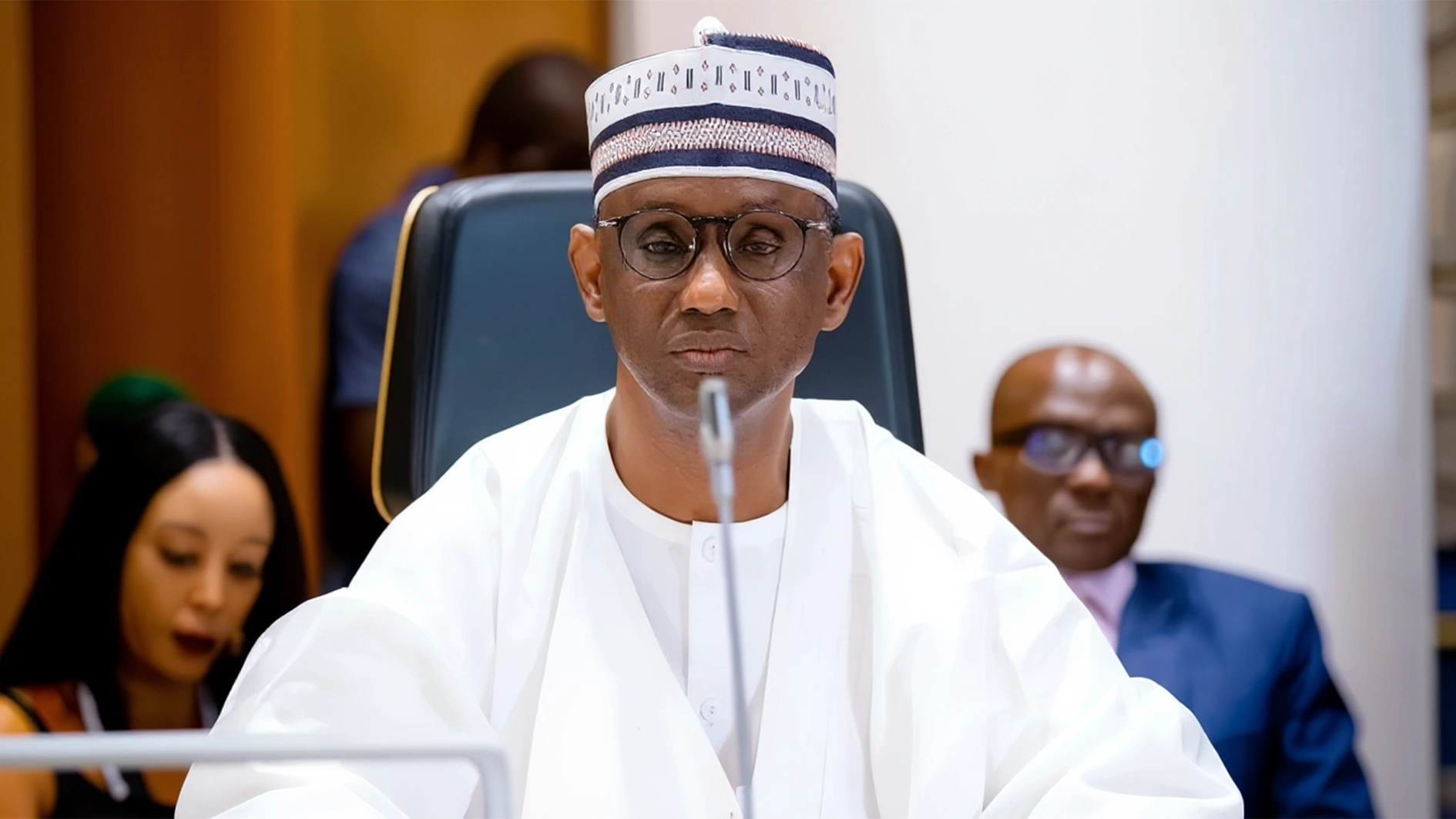
The pupils and staff of St Mary’s were released after two weeks of negotiations, reportedly led by the National Security Adviser, Nuhu Ribadu. The government maintained that no ransom was paid.
However, four intelligence sources familiar with the negotiations claimed that a substantial sum was handed over. One source estimated the ransom at about N40 million, amounting to roughly $7 million, while another put the overall figure at N2 billion.
Ribadu did not respond to multiple requests for comment from AFP.
Nigeria’s Department of State Services denied that any money was paid, stating: “Government agents don’t pay ransoms.” A spokesperson added, however, that families who wished to secure the release of relatives could not be prevented from doing so.
Boko Haram, which has waged an insurgency since 2009, remains most active in northeastern Nigeria, though a faction reportedly operates in Niger State under Sadiku’s leadership. Intelligence sources said the abducted children were held in a camp in Borgu Local Council, about 370 kilometres from the state capital, Minna.
A conflict specialist with France’s National Centre for Scientific Research, Vincent Foucher, told AFP that evidence pointed to Sadiku’s involvement.
“It makes total sense, given Sadiku’s history,” Foucher said.
The November 21 abduction occurred amid diplomatic tensions, with US President Donald Trump alleging persecution of Christians in Africa’s most populous country.
Washington also announced that it had killed “multiple” Islamic State militants in air strikes in northwestern Nigeria on Christmas Day.
Analysts and Nigerian authorities have rejected suggestions that the country’s security challenges are driven solely by religious persecution, noting that Muslims account for a significant proportion of kidnap victims.
Nigeria continues to grapple with widespread abductions by criminal gangs and insurgent groups seeking ransom payments. Despite laws criminalising such payments, the practice persists.
According to the U.S.-based monitor Armed Conflict Location & Event Data (ACLED), 828 abductions were recorded in the past year, many involving multiple victims — more than the combined figures for Mexico and Colombia. Only neighbouring Cameroon and Myanmar recorded higher numbers, according to senior ACLED Africa analyst Ladd Serwat.
Foucher added that the St Mary’s abduction followed reports that Sadiku’s faction had relocated from its stronghold in Shiroro and required funds to support the move.
“Their task has always been to get money for Boko Haram’s leadership in the northeast,” he said.
As part of the alleged deal, sources claimed that the militants demanded that the military permit residents of Audu Fari village in Borgu to return after being displaced by troops. The village reportedly served as a supply and transit route for Sadiku’s fighters and their families travelling between camps and northeastern strongholds.
In 2022, Nigeria passed a law criminalising ransom payments, prescribing jail terms of up to 15 years for offenders.
However, individuals continue to pay to secure the release of relatives, often while authorities appear to look the other way.
The crisis has “consolidated into a structured, profit-seeking industry” that generated about $1.66 million between July 2024 and June 2025, according to a recent report by SBM Intelligence, a Lagos-based consultancy.
Armed groups and criminal gangs have increasingly turned to kidnapping as a source of quick income in a country where millions live in poverty amid widening inequality.
In a recent kidnapping in Kaduna, where scores of Christian worshippers were abducted last month, the state governor ruled out the payment of ransom. The victims were later released, but details of the negotiations were not made public.
Security sources said authorities have also paid ransoms in other cases involving mass abductions and high-profile hostages.
In December 2020, authorities in Katsina State reportedly paid N30 million — the equivalent of $78,000 at the time — to secure the release of 340 schoolchildren abducted from a boarding school in Kankara town.
Bandit leader Awwalun Daudawa, who masterminded the attack, later confirmed the payment in a leaked recording of a telephone conversation with an intermediary.
The office of the National Security Adviser, Nuhu Ribadu, has maintained that he has on several occasions secured the release of victims from bandits without any ransom being paid.
Another state security spokesperson dismissed as “fake news” claims that the ransom for the St Mary’s pupils was delivered by helicopter.
“Let’s be rational about this. This is a fallacy. It’s laughable. It’s almost unimaginable,” the spokesperson said.
However, an analyst in the kidnap-prone northwestern state of Zamfara, who requested anonymity, argued that “there is no way bandits can keep releasing people they kidnapped to the government without getting payment in return.”
“The government is denying what we all know — that it pays ransom when schoolchildren and high-profile victims are involved,” he said.
In some instances, families told AFP that security personnel act as intermediaries in delivering ransom payments to kidnappers.
Abubakar Abdulkarim, a resident of Minna, said he sought the assistance of security personnel to deliver $4,000 to bandits who abducted his elder brother while he was working on his farm in Kontagora.
Families unable to raise the demanded sums often resort to crowdfunding.
One recent online appeal displayed the photograph of a traditional chief in ceremonial attire from southwestern Nigeria who was abducted on New Year’s Eve. The appeal sought donations to raise the $11,400 demanded by his captors.
U.S. Treasury official visits Nigeria to boost counter-terror financing cooperation
IN a media advisory issued on Sunday night by the United States Diplomatic Mission to Nigeria, Burke’s visit was described as part of President Donald Trump’s efforts to reduce violence against Christians and other vulnerable groups.
According to the advisory, Burke is expected to hold meetings with government officials and private sector stakeholders during his two-day visit.
The discussions will focus on identifying and addressing vulnerabilities within Nigeria’s financial sector that could be exploited to fund terrorist activities.
The Treasury official will also engage his counterparts on measures to strengthen financial safeguards and enhance collaboration in disrupting illicit financial flows linked to extremist groups.
Burke is the second senior U.S. official to visit Nigeria this year.
A month ago, a high-level U.S. delegation led by Under Secretary of State Allison Hooker visited the country. During the visit, the officials held the first session of a joint working group with Nigerian authorities focused on addressing terror attacks against Nigerian Christians.
Last year, a Congressional delegation visited Abuja and met with Nigeria’s National Security Adviser, Nuhu Ribadu.
There was also a visit by a Nigerian delegation led by Ribadu, which met with senior US officials, including Secretary of Defense Peter Hegseth.
The series of high-level visits between Nigeria and the United States began following verbal criticism of Nigeria by Trump and the subsequent designation as a Country of Particular Concern.
In December, the US carried out strikes on suspected terrorists in northwestern Nigeria, with Trump stating that the action was part of efforts to curb the operations of radical Islamic groups in the country.
Two weeks ago, three US aircraft arrived in Nigeria, alongside about 100 US military personnel, in what appeared to be the first phase of a planned deployment of 200 troops to support Nigerian forces in counter-terrorism operations. (Guardian)