




Loading banners


NEWS EXPRESS is Nigeria’s leading online newspaper. Published by Africa’s international award-winning journalist, Mr. Isaac Umunna, NEWS EXPRESS is Nigeria’s first truly professional online daily newspaper. It is published from Lagos, Nigeria’s economic and media hub, and has a provision for occasional special print editions. Thanks to our vast network of sources and dedicated team of professional journalists and contributors spread across Nigeria and overseas, NEWS EXPRESS has become synonymous with newsbreaks and exclusive stories from around the world.
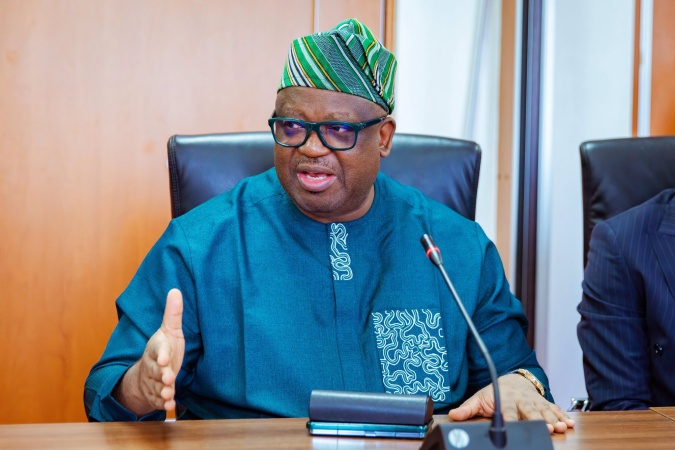
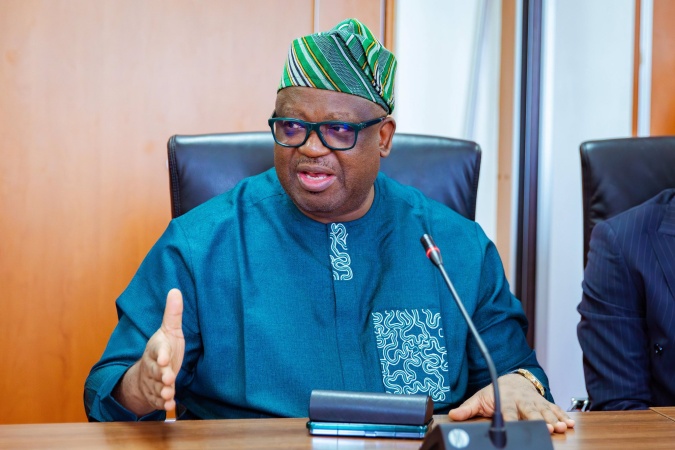
Governor Mutfwang
By EMMANUEL AZIKEN
For much of its modern political history, Plateau State has been a theatre of intense elite rivalry—shifting alliances, partisan battles, and political fault lines that often mirrored the state’s complex social fabric. But in early 2026, a quiet but significant political moment unfolded when Governor Caleb Mutfwang crossed from the Peoples Democratic Party (PDP) to the All Progressives Congress (APC), triggering debates far beyond partisan lines.
To many observers, the move represents more than political migration. It signals the gradual emergence of an elite consensus—an alignment of political forces around a shared vision of stability, security, and development for the North-Central state.
A Calculated Political Turn
Governor Mutfwang’s defection came at a time when Nigeria’s political elite are increasingly recalibrating alliances ahead of the 2027 electoral cycle. But unlike routine defections that are often dismissed as opportunistic, Mutfwang’s move has been framed by supporters as strategic and state-centric.
By aligning Plateau with the ruling party at the centre, the governor is positioning the state closer to federal power structures—an advantage that historically translates into stronger federal presence, improved security collaboration, and accelerated development projects.
In political circles in Jos and Abuja, the move is seen as part of a broader elite strategy to strengthen Plateau’s voice in national decision-making.
Reconciliation Among Political Heavyweights
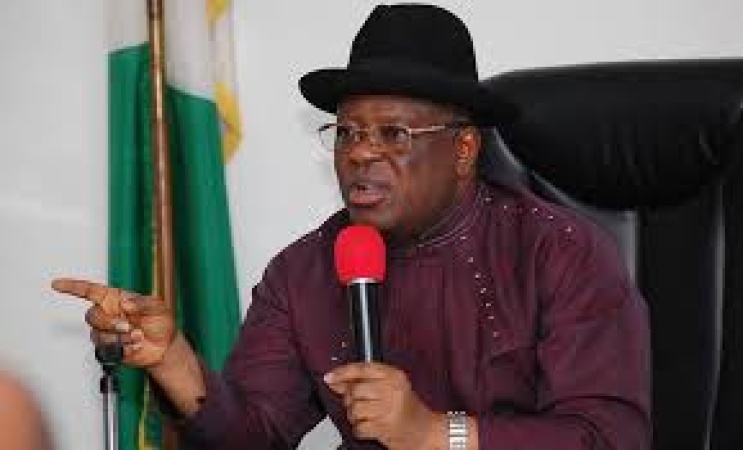
Perhaps the most symbolic aspect of Mutfwang’s political shift is his rapprochement with former governor and APC stalwart Simon Lalong. For years, Plateau politics was shaped by rivalry between political camps, often reflecting deeper factional divides.
The convergence of these two political blocs suggests a maturing political class willing to prioritise collective interests over personal rivalries. Analysts say such elite cohesion could stabilise Plateau’s political environment and reduce the elite fragmentation that historically weakened governance outcomes.
“Plateau is witnessing a rare moment where political elites are speaking in one voice,” a political analyst familiar with the politics on the plateau observed. “That unity can be transformative if sustained.”
Elite Unity and the Security Imperative
Security remains Plateau’s most pressing challenge. Communal violence and farmer-herder conflicts have periodically destabilised communities, undermining economic activity and social cohesion.
Political analysts believe that elite consensus is critical to addressing these challenges. With a governor firmly aligned with the federal ruling party and security establishment, there is renewed optimism that Plateau could benefit from enhanced federal security coordination and resources.
Elite unity also reduces political distractions that often hamper coordinated responses to crises.
Development Politics in a Strategic State
Beyond security, Plateau holds enormous economic potential—agriculture, solid minerals, tourism, and a temperate climate that positions it as a potential hub for agribusiness and eco-tourism.
With his integration into the APC’s national political architecture, Mutfwang is better placed to lobby for federal infrastructure investments, policy support, and private sector partnerships.
Political elites in the state increasingly speak of a “development consensus,” where partisan differences are subordinated to economic growth objectives. The governor’s outreach to the diaspora and investors underscores this new development narrative.
Grassroots Expectations and Public Mood
Among ordinary citizens, reactions have been measured but hopeful. In markets in Jos, Barkin Ladi, and Mangu, conversations reflect a pragmatic mood.
Many residents say political labels matter less than tangible improvements in security, roads, and livelihoods. The expectation is that being aligned with the centre could fast-track projects that have lingered for years.
Civil society groups have also called on the governor to translate political alignment into social dividends, warning that elite consensus must be matched by inclusive governance.
The National Political Chessboard
Nationally, Mutfwang’s move strengthens APC’s hold on the North-Central region and consolidates President Bola Tinubu’s coalition of governors. For Plateau, this positioning enhances its strategic relevance in national politics and policymaking.
For the PDP, the defection underscores the party’s internal challenges and the need for renewal. But for Plateau, analysts argue, the priority is less about party fortunes and more about governance outcomes.
A Turning Point for Plateau Politics?
Whether Mutfwang’s defection will mark a lasting turning point depends on how the emerging elite consensus is managed. Unity among political elites offers a rare opportunity to stabilise governance, deepen reforms, and deliver development.
If sustained, this convergence could redefine Plateau’s political culture—from rivalry-driven politics to consensus-driven governance.
In a country where political fragmentation often undermines progress, Plateau’s evolving political alignment may offer a case study in pragmatic elite consolidation—one that places state interest above partisan loyalty.
As the road to 2027 unfolds, many are hopeful that this elite consensus translates into peace, prosperity, and inclusive growth for the people of Plateau State.