






















Loading banners


NEWS EXPRESS is Nigeria’s leading online newspaper. Published by Africa’s international award-winning journalist, Mr. Isaac Umunna, NEWS EXPRESS is Nigeria’s first truly professional online daily newspaper. It is published from Lagos, Nigeria’s economic and media hub, and has a provision for occasional special print editions. Thanks to our vast network of sources and dedicated team of professional journalists and contributors spread across Nigeria and overseas, NEWS EXPRESS has become synonymous with newsbreaks and exclusive stories from around the world.
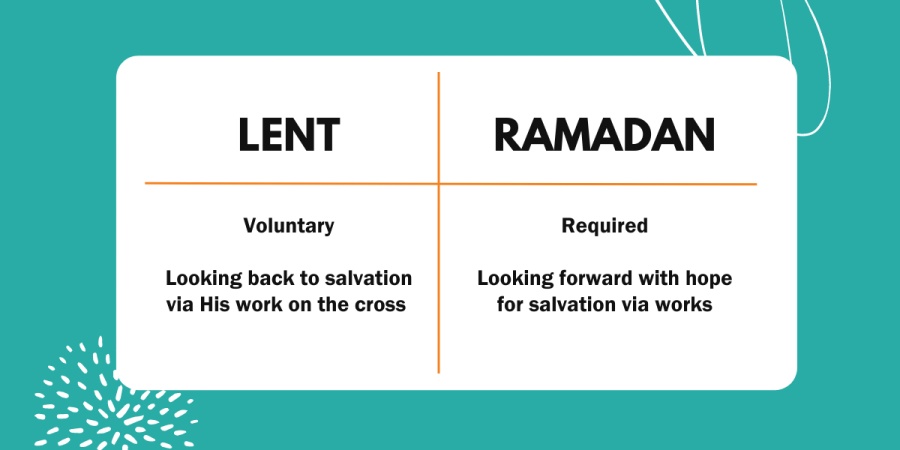
Ramadan and Lent season
By JEFF GODWIN DOKI
As a matter of fact, nothing in Nigeria’s political history captures her problem of national integration more graphically than the chequered fortune of the two words: religion and tribe. In Nigeria, tribe and religion have been used especially by the political class as instruments of mobilization especially during elections. Nigerian citizens know the power of religion. Nigerians know that religion has a double-edged sword because of its ability to trigger conflict as well as to serve as an instrument for peace. But, only this year a huge coincidence has occurred as both Nigerian Muslims and Christians began fasting on the same day. Now, what is the significance of this coincidence? Does Almighty God or Allah has a purpose for such a coincidence? How religious are Nigerian citizens? What lessons can Nigerians learn from this coincidence? Many questions could be asked but only a few answers could be gotten.
To the main point. Islam and Christianity are undeniably the world’s most popular religions. In a similar manner, they all form part of identity like regionalism and ethnicity. In Nigeria, Islam arrived before Christianity and spread quickly to different parts of the country especially in 1804 during the jihad of Usman Dan Fodio, a Fulani cleric from Sokoto. Christianity, on the other hand, arrived West Africa through a combination of many factors prominent among them the abolition of the Atlantic Slave trade, and the desire to promote conditions necessary for legitimate trade. Generally speaking, the missionaries made a lot of converts, they also established schools that taught literacy and practical skills. It is left to be said that Christian missionary activity arrived Northern Nigeria during the amalgamation of the north and south protectorate in 1900. But from very early times both religions, though foreign, had certain values in common namely: trade, education, conversion and, over and above all, the propagation of love and peace.
Let us turn to the doctrines and observances of these two Religions. Common to both Christianity and Islam is fasting also known as Lent and Ramadan which is a spiritual practice. Both religions use fasting for spiritual growth and self-reflection. Both religions use fasting as a period to seek a closer connection with God. In both faiths fasting involves abstaining from food and drinks. Fasting in both faiths also involves alms-giving and most fundamentally, fasting is a period to share love and peace. In a nutshell, both faiths are erected on the foundation of love. So, to the question: why the hate among these two groups? Again, let me provide some insights about peace and love.
The first similarity Is the treatment of strangers, aliens or non-believers. The Christian holy Book, the Bible, recognizes the need for mutual co-existence, togetherness and how to treat non-Christians. Moses gave very clear guidelines about how to treat aliens in the books of Exodus and Leviticus:
The alien living with you must be treated as one of your native- born. Love him as yourself, for you were aliens in Egypt. I am the Lord your God (Exodus 22:21). Similarly, the holy Book of Islam, the Quran, also recognizes this kind of unity and the spirit of togetherness. Oh mankind! We created you from a single (pair) of male and female and made you people (or nations) and tribes that you may know one another. (Quran Surah Al- Hujurat 49:13).
Apart from this Quranic verse one of the other core values that underpins the Islamic conception of peace is known as Tawhid. It seeks primarily to emphasize the principle of unity of God and all beings.
The second principle common to these two religions is that of forgiveness. Forgiveness is of primary centrality in both holy books. It is also a core value and tenet of both religious. The Quran for example, calls on all Muslims to forgive in order to reconcile. Very many verses in the Quran indicate that there is a clearly articulated preference in Islam for non-violence over violence and for forgiveness (afu) over retribution. But whoever forgives and thereby brings about a reestablishment of harmony, his reward is with God and God loves not the wrong doer. (Quran 42:37).
The whole of the New Testament and for the most part, the teachings of Jesus Christ emphasize the idea of forgiveness and no verse starkly brings out this idea more than the one known as turn the other cheek and the golden rule found in the Gospel of Luke: If someone strikes you on one cheek, turn to him the other also. If someone takes you cloak, do not stop him from taking your tunic… do to others as you would have them do to you. (Luke 6: 27-30). Most importantly, the principle of forgiveness finds memorable expression in the encounter between Peter and Jesus as rendered in the gospel of Matthew: Then peter came to Jesus and asked “Lord how many times shall I forgive my brother when he sins against me? Up to seven times?” Jesus answered, “I tell you, not seven times but seventy-seven times.” (Matthew 18:21-22).
Besides, Islam and Christianity are all united on the issue of Compassion and mercy. As a matter of fact, the concepts of compassion and mercy occupy a prominent place in both Christianity and Islam. One of the fundamental Christian principles is to assist the weak, helpless and vulnerable in society. In this regard, it is instructive to note that the first actions of the first church outside of Jewish territory was to send aid to the people in Jerusalem who were suffering from a famine. This same principle finds adequate expression in the Book of James. The Religion that God our father accepts as pure and faultless is this: to look after orphans and widows in their distress and to keep oneself from being polluted by the world (James 1:27).
This trend runs through in the book of John who is reputed to have written the last of the New Testament document: If anyone has material possessions and sees his brother in need but has no pity, how can the love of God be in him? (1 John 3:17). In a similar manner, one of the core values of Islamic tradition of Peace is known as Rahmah (compassion) and Rahim (mercy). So central are these two terms in Islamic religion that they are invoked by every Muslim before they take any action by reciting: Bi Ism- I Allah al- Rahman Al -Rahim, meaning (in the name of Allah who is Compassionate and merciful.). Also, in the Hadith (another source of Islamic principles and values) Allah States unambiguously that “without doubt my mercy precedes my wrath”. Again, the Quran refers to Prophet Mohammed as “Mercy of the World” (Quran 21:107): meaning that as a messenger of God, Prophet Mohammed represents Universal Mercy.
Furthermore, both Islam and Christianity have enormous respect for Humanity. The concept of humanity as conceived by the two religions is meant to influence attitudes towards those who are non-believers. The first book of the holy Bible is very explicit about this principle: So God created man in his own image, in the image of God he created him, male and female He created them (Genesis 1:27). The obvious implication of this passage is that God made human beings in some way after the pattern of his life.
The deeper meaning is that if human beings are made in God’s own image, every human therefore has absolute value irrespective of what religion they practice.
In Islamic religion this principle of humanity is known in Arabic as Fitrah and it is also one of the core Islamic values that underpin the Islamic conception of peace. According to the principle of Fitrah every human being is created in accordance with “the form and image of God. Again, just like in Christianity, the principle of Fitrah acknowledges the fact that all human beings are good in spite of differences in religion, ethnic, racial background or gender. These principles therefore serve as a safe guard against dehumanizing the other. Other approaches to peace common to both Christianity and Islam include the recitation of beads (rosary) during prayers, love, kindness, benevolence, wisdom and knowledge, dignity of human life, sacredness and sanity of human life, quest for peace and harmony, patience, collaboration, solidarity, participation and unity, among others.
Finally, it could be perceived that the similarities between Islam and Christianity are so obvious. In this year, therefore, the coincidence of fasting by these two faiths is an act of God. It is a call for all adherents to reflect deeply about these similarities Another way of putting this is that the Holy books are similar. Our problem in Nigeria is our spiritual leaders who have developed a strong habit of reading the Holy books upside -down. It is this misinterpretation of the holy books that is responsible for religious violence in Nigeria. During this period of Lent/Ramadan, our creator is asking us to spread love. Love is the bridge that connects hearts and unity is the strength that binds us. Love, respect and unity are the keys to a peaceful world. Let us celebrate our diversity and stand together as one. One Love.
•Jeff Godwin Doki is a Professor of Comparative Literature at the University of Jos (UNIJOS), Nigeria.