 ADAD
ADAD
Updating your news feed...
NEWS EXPRESS is Nigeria’s leading online newspaper. Published by Africa’s international award-winning journalist, Mr. Isaac Umunna, NEWS EXPRESS is Nigeria’s first truly professional online daily newspaper. It is published from Lagos, Nigeria’s economic and media hub, and has a provision for occasional special print editions. Thanks to our vast network of sources and dedicated team of professional journalists and contributors spread across Nigeria and overseas, NEWS EXPRESS has become synonymous with newsbreaks and exclusive stories from around the world.










Loading banners
Loading banners...

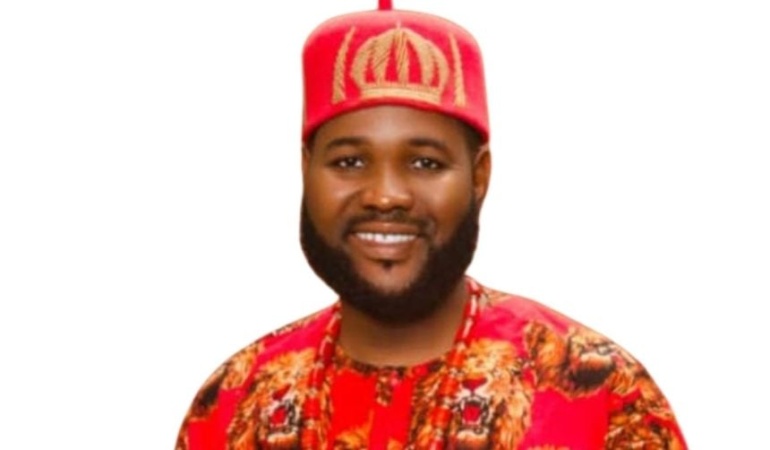
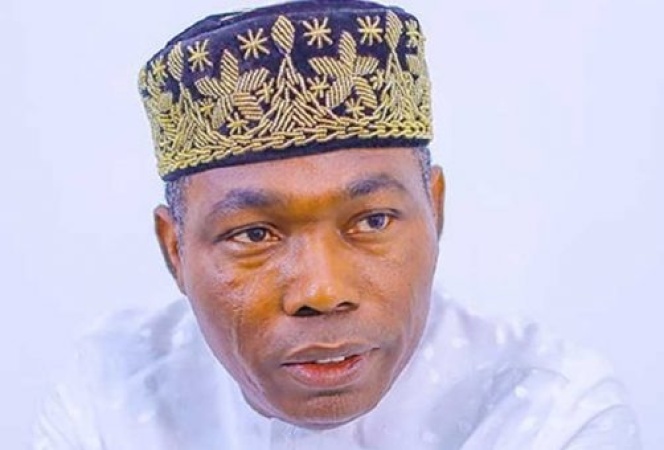
The National Coordinator of the Igbo Presidency Project (IPP), Hon. Chinedu Nsofor, has stated that the demand for an Igbo President is not a plea for favor, but a legitimate call for justice, equity, and national stability.
He emphasized that Nigeria cannot continue to progress while one of its most significant nation-building groups remains permanently excluded from the highest office.
In his address at the National Unveiling of the Igbo Presidency Project (IPP), the Coordinator asserted that it is time to correct this imbalance in a peaceful, constitutional, and democratic manner—by ensuring the Igbo people receive their rightful place in the leadership of their homeland, Nigeria.
He said: “Beyond questions of ethnic sentiment, the demand for an Igbo President must be understood as a legitimate national necessity rooted in Nigeria’s history, contributions, sacrifices, and the principles of equity that sustain stable federations”.
He said that the Igbo Presidency Project (IPP) is not an agitation against Nigeria, but rather a call for Nigeria to finally reflect its own democratic ideals through inclusive leadership representation.
He said: “The Igbo people are among the original occupants of their homeland long before colonial amalgamation created modern Nigeria”.
Nsofor recalled that since the colonial union, the Igbo have demonstrated an enduring instinct for national development, contributing immensely across all spheres of human endeavour—agriculture, commerce, industry, education, health, sports, and civic life.
He pointed out that their presence has never been limited to the Southeast; rather, the Igbo are uniquely pan-Nigerian in settlement, enterprise, and integration.
He said: “A defining characteristic of the Igbo is their uncommon openness to other ethnic nationalities. They are widely known for hospitality, inter-ethnic coexistence, and cross-cultural family ties”.
He recalled that in many cases, Igbo families living outside their homeland adopt names and identities from host communities, reflecting deep social integration adding that even Dr. Nnamdi Azikiwe, Nigeria’s foremost nationalist, gave Yoruba names to his first children born in Lagos—symbolic of the Igbo spirit of belonging everywhere in Nigeria.
According to him Igbo communities also record the highest patterns of inter-tribal marriages across Nigeria, producing generations of Nigerians whose identities embody unity itself.
He said that this makes the Igbo question not merely regional but fundamentally national: no group has more invested emotionally, socially, and economically in Nigeria’s collective survival than the Igbo.
The National Cordinator pointed out that since the early formation of political parties in Nigeria in the 1940s, the Igbo have been deeply active in the struggle for self-government and eventual independence.
He said that Notably, Igbo-led political movements viewed Nigeria as one indivisible entity and deliberately embraced inclusiveness, accommodating Nigerians of all tribes, religions, and ethnic backgrounds in leadership structures.
Nsofor revealed that this spirit was exemplified under the leadership of Dr. Nnamdi Azikiwe, whose NCNC reflected equitable representation across the North, West, and East.
He insisted that te struggle for equitable rights and representation for the Igbo people is therefore non-negotiable, irreversible, and essential for national peace, cohesion, justice, and sustainable development.
He said: “this project calls upon Igbo communities in Southeast Nigeria, throughout the Nigerian federation, and across the global diaspora to unite in a common civic purpose: the restoration of dignity, representation, and rights through constitutional means.
He described the Igbos as one of Nigeria’s three largest ethnic groups, concentrated in the southeastern region of the country, including Abia, Anambra, Ebonyi, Enugu, Imo, and parts of Delta and Rivers States which placed the Igbo population at roughly 45 million people today, with vibrant diaspora communities across Europe, North America, the Caribbean, and West Africa.
He said: “Unlike many West African societies, traditional Igbo political organization was decentralized, rooted in autonomous villages and republican consensus systems rather than centralized kingdoms. This indigenous tradition fostered entrepreneurship, achievement through individual merit, and a culture of civic engagement” (TRIBUNE)



