 ADAD
ADAD
Updating your news feed...
NEWS EXPRESS is Nigeria’s leading online newspaper. Published by Africa’s international award-winning journalist, Mr. Isaac Umunna, NEWS EXPRESS is Nigeria’s first truly professional online daily newspaper. It is published from Lagos, Nigeria’s economic and media hub, and has a provision for occasional special print editions. Thanks to our vast network of sources and dedicated team of professional journalists and contributors spread across Nigeria and overseas, NEWS EXPRESS has become synonymous with newsbreaks and exclusive stories from around the world.





















Loading banners
Loading banners...

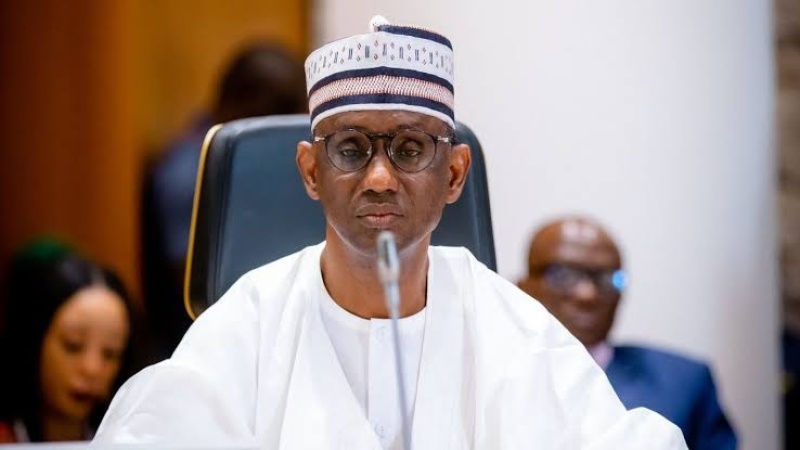
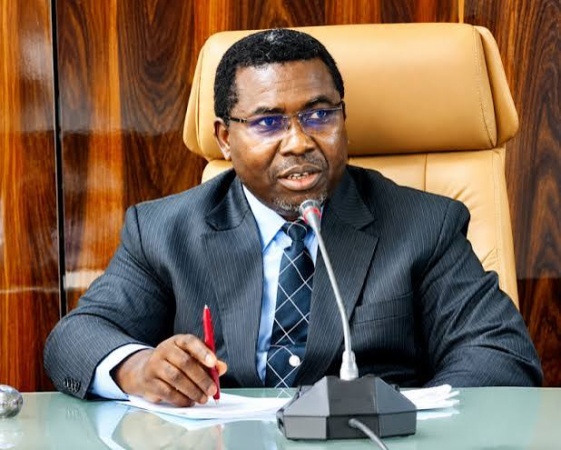
NUC Executive Secretary, Prof Abdullahi Ribadu
Nigeria is set to introduce micro-credentials into its university system as part of ongoing reforms aimed at modernising higher education and aligning academic offerings with evolving labour market demands.
The initiative, driven by the National Universities Commission (NUC), in collaboration with the Commonwealth of Learning COL, Canada, seeks to develop guidelines for the integration of short, skill-based certifications into existing academic programmes.
The Guardian reports that micro-credentials are short courses designed to equip learners with specific skill, competencies in areas like digital technology, entrepreneurship, Artificial Intelligence, renewable energy and project management. Unlike traditional degree programmes that span several years, micro-credentials are typically completed within weeks or months and are tailored to meet industry needs.
Dozens of countries worldwide across Europe, Asia, the Americas, Africa, and Oceania are actively adopting, piloting or legitimizing micro-credentials in their higher education systems. In West Africa, Sierra Leone is the first to advance its national education strategy by developing a draft national micro-credential framework.
Declaring open a two-day stakeholders workshop in Abuja on Monday on development of ‘micro-credential framework for Nigerian Universities, Executive Secretary, National Universities Commission, Prof. Abdullahi Ribadu, eemphasized that micro-credentials are not intended to replace degree programmes but provide flexible learning pathways that can enhance access, support skills development, and strengthen the linkage between higher education and the world of work.
Represented by the Director, Research, Innovation and Information Technology at the NUC, Lawal Faruk, the Executive Secretary, said the workshop will deliberate on key issues, including the conceptualization of micro-credentials within Nigeria’s higher education framework, quality assurance considerations, credit accumulation and transfer, institutional readiness, and the contribution of micro-credentials to skills development, employability, and lifelong learning.
According to Prof. Ribadu, the development of a national framework for micro-credentials is a strategic response to the fast-changing demands of the 21st-century economy, where specialised skills are increasingly valued alongside traditional academic qualifications.
He noted that Nigerian universities must remain dynamic and forward-looking to stay relevant in a competitive global education landscape.
He added that the Commission would work closely with institutions to ensure that the certifications are credible, verifiable, and aligned with national development priorities.
“For Nigeria, the introduction of micro-credentials must be carefully guided to ensure alignment with the National Policy on Education, coherence with existing qualification structures, and consistency with the regulatory oversight responsibilities of the NUC.
“Micro-credentials are therefore not envisaged as replacements for degree programmes, but as flexible learning pathways that can enhance access, support skills development, and strengthen the linkage between higher education and the world of work.
“This workshop is thus convened to support the development of a National Micro-Credential Framework that is firmly grounded in national education policy objectives, supports the NUC’s quality assurance mandate, and provides clear guidance on design, delivery, assessment, recognition, and progression pathways for micro-credentials within the Nigerian higher education system,” he said.
In his goodwill message, the President, Commonwealth of Learning, Prof. Peter Scott, commended Nigeria for taking proactive steps toward integrating micro-credentials into its university system.
Prof. Scot described the initiative as timely and consistent with global trends in higher education, where institutions are increasingly embracing flexible, skills-oriented learning models to respond to rapid technological change and shifting labour market demands.
According to him, micro-credentials have emerged worldwide as powerful tools for widening access to education, promoting lifelong learning, and supporting workforce development.
The COL President was upbeat that Nigeria’s effort, led by the National Universities Commission, would serve as a model for other countries in the region seeking to modernise their higher education systems while expanding opportunities for learners.
In her welcome remarks, the Director of Open and Distance Learning at theCommission, Dr. Funmilayo Morebise, described the workshop as a significant step toward strengthening innovation and flexibility within Nigeria’s university system.
Dr. Morebise emphasized the need for a clearly defined framework that will guide universities on standards, delivery modes, assessment mechanisms and quality assurance processes. She added that stakeholder collaboration remains critical to ensuring that micro-credentials are credible, industry-relevant and widely accepted.
She urged participants to contribute actively to discussions, stressing that the outcome of the workshop would shape policy direction and position Nigerian universities to respond more effectively to emerging skills demands in both local and global economies.
Participants drawn from regulatory agencies, public and private universities, development partners among others, are expected to create a draft framework tailored to national realities and labour market needs, with a focus on making micro-credentials credible. (The Guardian)



