ADAD
ADAD
Updating your news feed...
NEWS EXPRESS is Nigeria’s leading online newspaper. Published by Africa’s international award-winning journalist, Mr. Isaac Umunna, NEWS EXPRESS is Nigeria’s first truly professional online daily newspaper. It is published from Lagos, Nigeria’s economic and media hub, and has a provision for occasional special print editions. Thanks to our vast network of sources and dedicated team of professional journalists and contributors spread across Nigeria and overseas, NEWS EXPRESS has become synonymous with newsbreaks and exclusive stories from around the world.


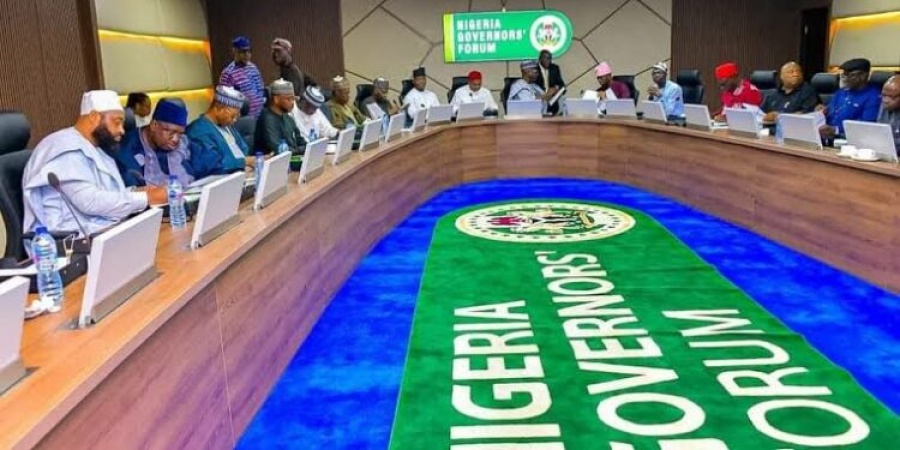
State Governors
In the space of two years, Nigeria’s state governments have witnessed one of the sharpest revenue expansions in recent history. The Federation Account Allocation Committee (FAAC) allocations surged on the back of fuel subsidy removal, foreign exchange reforms and stronger oil receipts, pushing trillions of naira into subnational accounts.
Yet, as allocations climb to record levels, so too does the portion siphoned off for debt servicing, particularly foreign loans, while spending on healthcare and other human development priorities remains stubbornly low. The result is a widening gap between fiscal abundance and everyday reality in a country where poverty continues to rise.
A growing debt burden In the midst of plenty
According to BudgIT’s State of States report 2025, states collectively spent N2.11 trillion on debt servicing in 2024, accounting for 26.45 percent of their cumulative expenditure. In other words, more than one-quarter of what states spent last year went to paying back creditors rather than building infrastructure, strengthening healthcare systems, or investing in education.
Total debt stock for 35 states rose by 6.87 percent, from N10.01 trillion in 2023 to N10.57 trillion in 2024. While domestic debt declined significantly by N1.99 trillion (35.98 percent) to N3.54 trillion, foreign debt edged upward by 1.66 percent, increasing from $4.50 billion to $4.58 billion.
The composition of that debt is even more revealing. Twenty-four states now have more than half of their debt denominated in US dollars. Kaduna leads with 97.39 percent of its debt in foreign currency, followed by Jigawa at 96.42 percent and Ondo at 90.04 percent. With exchange rate volatility persisting, such exposure heightens fiscal vulnerability.
Per capita debt also rose, from N40,469 in 2023 to N41,766 in 2024. Twelve states exceeded the national average, with Lagos topping the list at N166,253 per person.
Beyond formal debt stock, states are weighed down by legacy liabilities: contractor arrears of N434.87 billion; pension and gratuity arrears of N626.8 billion; salary and staff claims of N33.73 billion; judgment debts of N64.44 billion; and other liabilities totalling N79.91 billion.
These obligations underscore that the fiscal stress goes deeper than headline borrowing figures.
Foreign debt service: A growing drain
The strain intensified in 2025. Data from the National Bureau of Statistics, based on FAAC figures, show that states paid N455.38 billion in foreign debt service in 2025, up from N362.08 billion in 2024.
In practical terms, a larger portion of FAAC inflows was deducted at source to service external loans before funds even reached state coffers.
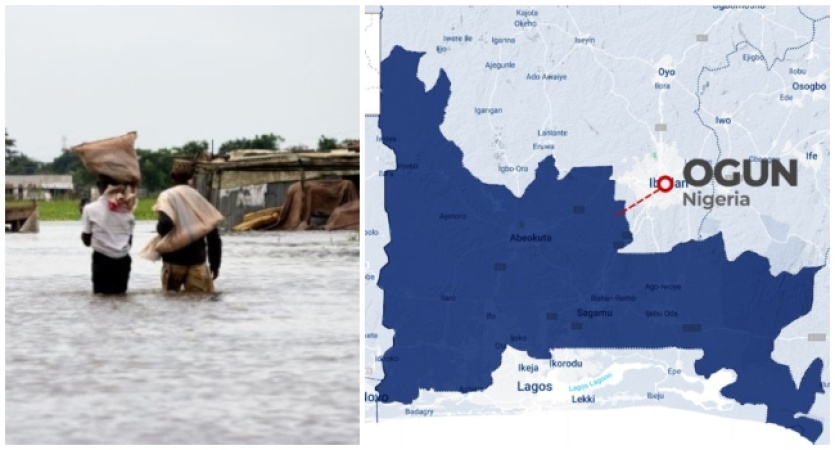
Lagos recorded the highest foreign debt service deductions at N92.80 billion in 2025, up from N72.32 billion the previous year. Rivers followed with N48.58 billion, nearly doubling its 2024 figure. Kaduna ranked third at N47.93 billion, while Ogun and Cross River completed the top five.
Regionally, the South-West accounted for N162.77 billion, 35.74 percent of total foreign debt service in 2025. The South-South followed with N100.37 billion (22.04 percent), while the North-West recorded N81.97 billion (18 percent). The North Central posted the lowest at N27.65 billion.
Record revenues, limited social investment
The debt story becomes more striking when placed alongside the surge in FAAC allocations. According to data from the Nigeria Extractive Industries Transparency Initiative (NEITI), total FAAC disbursements rose from N8.21 trillion in 2022 to N10.14 trillion in 2023, and then to N15.26 trillion in 2024, a 66.2 percent increase in just two years. In 2025, FAAC reportedly disbursed about N33.27 trillion, nearly double the 2024 figure, buoyed by subsidy removal, FX reforms, and improved oil remittances.
But BudgIT’s 2025 report shows that human development remains under-prioritised. States spent an average of just N3,483 per person on healthcare in 2024. Not a single state reached N10,000 per capita in health spending. Only Lagos, Bayelsa, Edo, Abia, Kwara, Niger and Delta exceeded N5,000 per capita.
For a country battling rising disease burdens and fragile primary healthcare systems, the figure is telling.
Poverty deepens despite fiscal expansion
According to the World Bank’s estimates, poverty levels climbed to 61 percent in 2025, about 139 million Nigerians living on less than $3 per day, up from 129 million in 2024. PwC projects that the poverty rate could reach 62 percent in 2026, affecting roughly 141 million people.
This trajectory suggests that increased public revenues have not translated into broad-based welfare gains.
Projects over people
Public finance analysts argue that political incentives may partly explain the disconnect.
“Many governors prefer ribbon-cutting projects; roads, bridges, and flyovers, which are more politically visible than the long-term, invisible work of training teachers or stocking primary health centres with drugs,” Kabir Isah, an Abuja-based public affairs analyst, said in an earlier conversation with BusinessDay.
He noted that human capital investments take years to yield results. “Human capital development (education and health) takes a decade to show results. Because governors operate on four-year cycles, they often lack the incentive to invest in reforms that will only benefit their successors.”
For Vahyala Kwaga, BudgIT’s deputy country director, the responsibility does not lie solely with governors. Citizens must demand more. “Citizens should ensure that as we prepare for elections, they demand and insist on candidates that will act differently,” he said in an earlier conversation with BusinessDay.
“Citizens should insist on political aspirants making credible commitments to how they will govern differently and accountably if they are elected.”
The development question
Nigeria’s states are not short of revenue in nominal terms. Nor are they short of borrowing.
The challenge lies in the intersection of rising debt service, currency risk, and spending patterns that favour visible infrastructure over long-term human capital development. With over a quarter of expenditures devoted to servicing debt and foreign obligations rising, the fiscal room for transformative social investment narrows.
As FAAC allocations reach historic highs, the central development question persists: can states convert revenue windfalls into measurable improvements in citizens’ welfare, or will mounting debt and political incentives continue to crowd out inclusive growth? (BusinessDay)
.webp)