Updating your news feed...
NEWS EXPRESS is Nigeria’s leading online newspaper. Published by Africa’s international award-winning journalist, Mr. Isaac Umunna, NEWS EXPRESS is Nigeria’s first truly professional online daily newspaper. It is published from Lagos, Nigeria’s economic and media hub, and has a provision for occasional special print editions. Thanks to our vast network of sources and dedicated team of professional journalists and contributors spread across Nigeria and overseas, NEWS EXPRESS has become synonymous with newsbreaks and exclusive stories from around the world.














Loading banners
Loading banners...

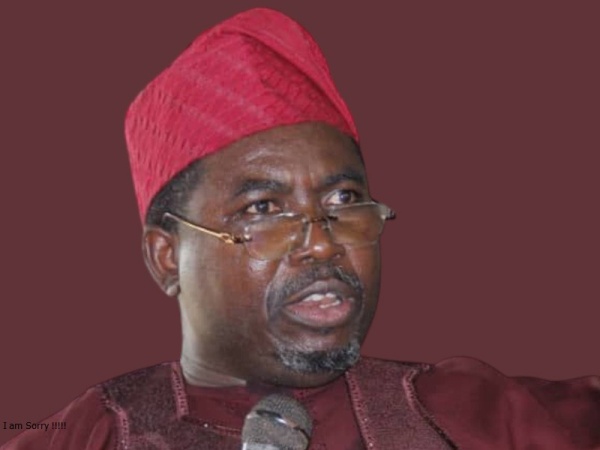
INEC Chairman, Professor Amupitan
By ODIMEGWU ONWUMERE
Professor Joash Ojo Amupitan, Senior Advocate of Nigeria and Chairman of the Independent National Electoral Commission, has declared his commitment to conducting elections that Nigerians can trust, insisting that no election can be described as credible if citizens feel unsafe or excluded from the process.
Since assuming office in October 2025, Amupitan has repeatedly placed emphasis on transparency, security, professionalism, and constitutional order, positioning himself as a reform-minded electoral umpire ahead of the 2027 general elections.
Amupitan was appointed by President Bola Ahmed Tinubu after the expiration of the two-term tenure of Professor Mahmood Yakubu. His nomination followed the constitutional process: approval by the National Council of State, confirmation by the Senate after screening, and eventual swearing-in at the State House in Abuja on October 23, 2025.
The process was public, rigorous, and inclusive, involving leaders from different regions and faiths. At no point during this process was religion raised as an issue against him.
A respected professor of law from the University of Jos and a Senior Advocate of Nigeria, Amupitan came into office with a reputation for scholarship and professional integrity. His mandate is clear: strengthen Nigeria’s electoral process, build on existing reforms such as the use of technology, and restore public confidence in elections.
Within months of assuming office, he initiated a comprehensive audit of the logistics and processes of the 2023 general elections, a move widely seen as a serious attempt to learn from past challenges and avoid their repetition.
In public engagements, Amupitan has consistently spoken about elections in practical and inclusive terms. At a meeting of the Inter-Agency Consultative Committee on Election Security in Abuja, he stressed that elections cannot be credible if voters are afraid to come out and participate.
According to him, ballot papers, technology, and timetables mean little if ordinary Nigerians feel threatened at polling units. He called on security agencies to see election duty as a national responsibility that goes beyond routine deployment, urging professionalism and neutrality, especially in flashpoint areas.
He also described 2026 as a busy electoral year, with area council elections, bye-elections, and off-cycle governorship polls ahead of the 2027 general election. In his words, the scale and complexity of these elections demand early planning, intelligence gathering, and cooperation among all agencies.
His leadership during the Anambra off-cycle governorship election in November 2025 was often cited as an early test. Despite the state’s history of election-related violence and tension, the poll was conducted peacefully, and a winner was declared on the first ballot. Amupitan openly commended security agencies for their professionalism, while also making it clear that such standards must be sustained nationwide.
Against this background of administrative focus and constitutional conduct, calls for Amupitan’s resignation by the Supreme Council for Shariah in Nigeria triggered intense national debate. The Council, during its Annual Pre-Ramadan Conference in January 2026, adopted a resolution calling for his removal and prosecution. The decision immediately drew attention because of its political sensitivity and the fact that it came under the umbrella of a religious body.
Following public reactions, the Council issued a statement denying that its position was driven by religion. It claimed its concerns were about institutional integrity, national cohesion, and alleged bias.
It argued that Muslims In Nigeria had never opposed electoral commission chairmen on the basis of religion and noted that most past heads of electoral bodies were Christians. According to the Council, what distinguished Amupitan’s case was an alleged record of views expressed before he became INEC chairman.
Central to the Council’s argument is a 2020 legal brief reportedly linked to Amupitan, which it claims contains prejudicial statements about Nigerian Muslims and Northern Nigeria. The Council argued that such views, if truly held, are incompatible with the neutrality required of an electoral umpire. It also alleged that the claims were presented to foreign actors, exposing Nigeria to negative international attention and forcing the government into diplomatic damage control.
However, many legal experts, civil society actors, and political observers have questioned not only the substance of the Council’s claims but also the method and timing. Critics argue that resurrecting alleged past opinions, whether proven or not, and using them to demand the removal of a constitutionally appointed officer sets a dangerous precedent. They note that Amupitan was screened, cleared, and confirmed by institutions that reflect Nigeria’s religious and regional diversity, including the National Council of State and the Senate.
Senior Advocate of Nigeria, Professor Sebastine Hon, was among those who strongly faulted the call for Amupitan’s removal. In a detailed legal opinion, Hon described the demand as constitutionally untenable and amounting to blackmail. He reminded Nigerians that the Constitution clearly states how an INEC chairman can be removed from office. According to Section 157 of the Constitution, removal can only occur if the President acts on an address supported by a two-thirds majority of the Senate, and only on specific grounds such as inability to perform the functions of office or misconduct while in office.
Hon emphasized that none of the reasons advanced by the Sharia Council meets these constitutional requirements. He argued that personal opinions allegedly expressed before assumption of office do not amount to misconduct under the Constitution, nor do they show inability to discharge official duties. To interpret the law otherwise, he warned, would do serious damage to constitutional democracy.
He also recalled the process that led to Amupitan’s appointment. The nomination was made by a President who is a Muslim. It was unanimously approved by the National Council of State, which includes Muslim and Christian leaders, former heads of state, the Chief Justice of Nigeria, and state governors from across the country. The Senate, with a large number of Muslim members, also unanimously confirmed the appointment after hours of screening. At no point during these processes was Amupitan’s integrity questioned.
For many observers, this raises an important question: why the sudden outcry now? They argue that if there were genuine concerns about Amupitan’s suitability, they should have been raised during the screening and confirmation stages. Bringing them up months after he assumed office, and doing so through a religious platform, gives the impression of politicizing faith and risks deepening divisions in an already fragile society.
Whether or not Amupitan ever made statements about religious extremism in Nigeria, critics of the resignation call argue that those demanding his removal under the banner of religion have themselves displayed a form of religious extremism. By framing a constitutional and administrative issue in religious terms, they risk encouraging the very intolerance and suspicion they claim to oppose. In a plural country like Nigeria, where religion is deeply personal and politically sensitive, such actions can inflame tensions and undermine national unity.
Amupitan himself has not publicly engaged in religious polemics since assuming office. Instead, his public statements have focused on election planning, voter safety, logistics, technology, and inter-agency cooperation. He has spoken about voter revalidation, continuous voter registration, and the need to protect electoral personnel and materials, particularly in volatile areas. These are the practical concerns of an electoral administrator, not the rhetoric of a partisan or sectarian actor.
During preparations for the Federal Capital Territory Area Council elections scheduled for February 21, Amupitan outlined detailed readiness measures, including the distribution of non-sensitive materials, training of electoral officers, and mock accreditation exercises. He also announced bye-elections in Rivers and Kano states to be held on the same day, demonstrating INEC’s capacity to manage multiple polls simultaneously. Throughout these briefings, his message was consistent: administrative readiness must be matched with effective security and public trust.
Security agencies have echoed this tone. Representatives of the Office of the National Security Adviser and the Nigeria Police Force publicly commended INEC under Amupitan for the peaceful conduct of recent elections and pledged continued support. Such cooperation suggests institutional confidence in his leadership and contradicts claims that he lacks the credibility to oversee elections.
Beyond the legal and administrative arguments, there is a broader concern about the implications of targeting public officials based on alleged beliefs rather than proven actions. Nigeria’s democracy depends on strong institutions, not on pressure from interest groups seeking to impose their views outside constitutional channels. Allowing calls for resignation based on untested allegations risks weakening independence of institutions like INEC, which the Constitution explicitly shields from external control.
Supporters of Amupitan argue that demanding his resignation without evidence of misconduct in office undermines due process. They note that accountability mechanisms exist and should be used appropriately. If an INEC chairman commits misconduct, the law provides clear steps for investigation and removal. Bypassing these steps and resorting to public campaigns framed in religious language threatens the rule of law.
There is also concern about the message such calls send to future office holders. If past writings or opinions, taken out of context, can be weaponized after appointment, qualified professionals may be discouraged from public service. This would be a loss for a country that already struggles to attract and retain competent leadership.
Amupitan’s insistence on credible elections is not merely a slogan. It is reflected in his emphasis on security, planning, and institutional learning. By ordering an audit of previous election logistics, he signaled willingness to confront uncomfortable truths rather than ignore them. By engaging security agencies early, he acknowledged that elections are not just administrative exercises but social events that require trust and safety.
In the end, the debate over Amupitan’s chairmanship goes beyond one individual. It touches on how Nigeria manages diversity, disagreement, and dissent. Criticism of public officials is legitimate and necessary in a democracy, but it must be grounded in facts, law, and good faith. When criticism is framed in ways that divide citizens along religious lines, it risks becoming a form of extremism itself.
•Onwumere is Chairman, Advocacy Network On Religious And Cultural Coexistence (ANORACC). He can be reached via Email: anoracc(at)rescueteam(dot)com