Updating your news feed...
NEWS EXPRESS is Nigeria’s leading online newspaper. Published by Africa’s international award-winning journalist, Mr. Isaac Umunna, NEWS EXPRESS is Nigeria’s first truly professional online daily newspaper. It is published from Lagos, Nigeria’s economic and media hub, and has a provision for occasional special print editions. Thanks to our vast network of sources and dedicated team of professional journalists and contributors spread across Nigeria and overseas, NEWS EXPRESS has become synonymous with newsbreaks and exclusive stories from around the world.

















Loading banners
Loading banners...

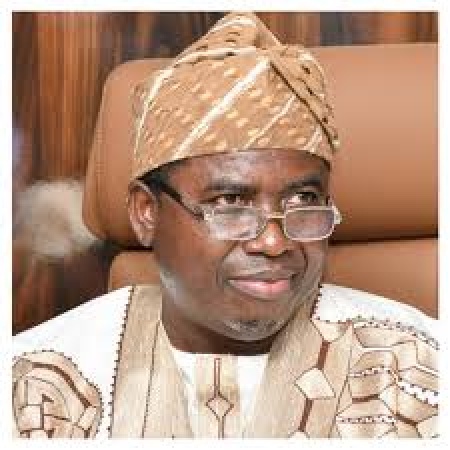
INEC Chairman, Prof Amupitan
Chairman of the Independent National Electoral Commission (INEC), Prof Joash Amupitan, has responded to concerns about the commission’s ability to deploy electronic transmission nationwide, admitting that building a self-sustaining infrastructure would be costly but unavoidable if INEC is to be fully accountable.
“We do not even have a network of our own. Assuming we control the network system and are not dictated to by primary and secondary providers, then INEC should be held 100 percent responsible for whatever happens. But, the cost of establishing such infrastructure is enormous,” he said.
He made the clarification during the Commission’s presentation of a proposed budget of N873.78 billion for the conduct of the 2027 general elections. He insisted that early and adequate funding was critical to protecting the integrity of Nigeria’s democracy.
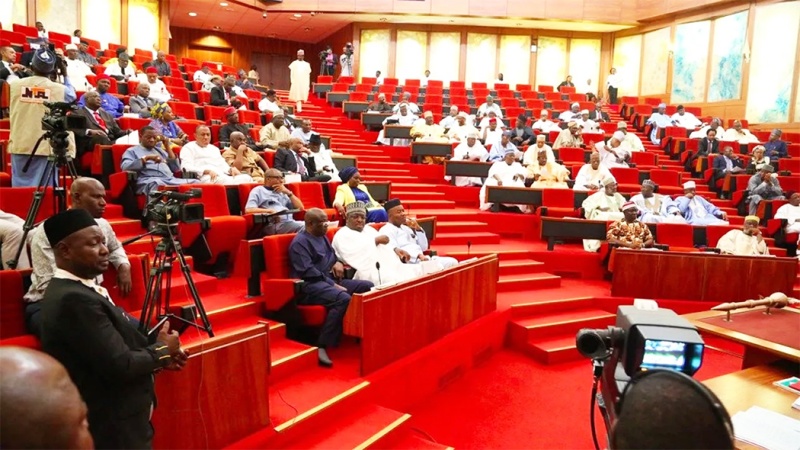
Presenting the estimates before the Joint Committee of the National Assembly on Electoral Matters yesterday, he said the scale and complexity of modern elections demand careful planning and substantial investment, especially as the country moves deeper into technology-driven electoral processes.
“If you want to predict the future, it is necessary to create it early. Preparation for the 2027 election has already started,” Amupitan told lawmakers, stressing that the Electoral Act 2022 mandates that election funding be appropriated 360 days before polling day to avoid operational crises.
“The wisdom of the National Assembly in making provision 360 days before the election date is to ensure that we do not run into avoidable crises,” he added.
Breaking down the proposal, the INEC chairman said the budget was structured under four broad components, comprising election operations cost – N375.75 billion; election administrative cost – N92.31 billion; election technology cost – N209.21 billion and election capital cost – N154.90 billion. A miscellaneous provision of N41.01 billion brings the total to N873,778,401,602.08.
Amupitan explained that the capital allocation appeared significantly higher because several items that could not be accommodated in previous budgets had now been incorporated into the 2027 framework.
A major chunk of the funding, he explained, is targeted at technology deployment, reflecting INEC’s readiness to implement electronic transmission of results in line with ongoing amendments to the Electoral Act.
He also criticised the current budgetary “envelope system” operated by the Ministry of Finance, arguing that it undermines INEC’s financial autonomy and operational efficiency.
“The envelope system is not good for the running of INEC if INEC must be truly independent,” Amupitan told the committee, urging lawmakers to exercise their constitutional powers to adjust the proposal where necessary.
Still on election, he informed the committee that the commission had proposed a substantial increase in allowances for National Youth Service Corps (NYSC) members and other ad hoc staff who serve as presiding and polling officers from N17,000 to N127,000 for election duties, covering five days of training and two days of polling. The package includes N50,000 as election duty allowance, N5,000 for training, and about N9,500 for feeding, among other components.
With an estimated 450,000 corps members expected to be deployed nationwide, the projected cost stands at approximately N32 billion.
Responding, lawmakers acknowledged that the credibility of elections largely depends on the conduct of officials at the polling units, describing them as the weakest link. Chairman of the House of Representatives Committee on Electoral Matters, Adebayo Balogun, added, “The pyramids of elections are the polling units and the masters of the polling units are the presiding officers.”
He warned that poor remuneration could expose election officials to inducement and compromise.
Amupitan agreed, noting that personnel costs account for a large portion of election expenditure. “If they must perform their duties creditably and with integrity, we cannot lose our eyes to such demands,” he said.
Speaking further, the INEC boss also defended questions on the proposed procurement of ballot boxes and redesigned voting cubicles. He explained that although Nigeria currently has 176,846 polling units, INEC proposed to purchase about 130,000 new ballot boxes following an audit which showed that many existing ones remain serviceable.
On the voting cubicles, he said the decision was influenced by reports from local and international observers highlighting the menace of vote buying, saying, “The cubicles we are using now are too small. If you expand them to accommodate the ballot box inside, voters will not need to step out to drop their ballots. That reduces the possibility of vote confirmation and vote buying,” he explained.
Lawmakers also raised concerns over funding provisions for by-elections and off-cycle governorship elections scheduled for 2026, warning that overloading capital expenditure into 2027 at the expense of imminent electoral activities.
In response, he acknowledged the financial strain caused by frequent by-elections, often resulting from the death of lawmakers, stressing that the commission must continually make provisions for such contingencies, “even when we pray that such events do not occur.”
In his remarks, the Chairman of the Senate Committee on Electoral Matters, Senator Simon Lalong, assured INEC of continued legislative backing and announced that the conference committee on the Electoral Act (Amendment) Bill would begin sittings on Monday to harmonise the versions passed by the Senate and the House of Representatives.
He urged the commission to brace for intense public scrutiny as preparations for the 2027 elections accelerate, saying, “INEC is now the main institution between now and next year. It is going to get tougher. We will continue to give you all necessary support legislatively, but Nigerians are watching.”
He further disclosed that the Senate would ensure funding provisions are adjusted to reflect changes introduced in the Electoral Act amendment, particularly those relating to technology deployment and result transmission.
The joint committee also considered a motion urging the full implementation of INEC’s first-line charge status, aimed at strengthening the commission’s financial independence and insulating it from bureaucratic delays. (The Sun)