 ADAD
ADAD
Updating your news feed...
NEWS EXPRESS is Nigeria’s leading online newspaper. Published by Africa’s international award-winning journalist, Mr. Isaac Umunna, NEWS EXPRESS is Nigeria’s first truly professional online daily newspaper. It is published from Lagos, Nigeria’s economic and media hub, and has a provision for occasional special print editions. Thanks to our vast network of sources and dedicated team of professional journalists and contributors spread across Nigeria and overseas, NEWS EXPRESS has become synonymous with newsbreaks and exclusive stories from around the world.














Loading banners
Loading banners...

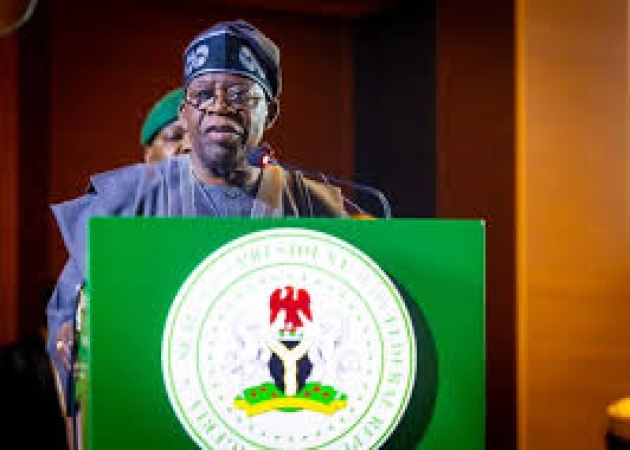
President Tinubu
President Bola Tinubu has called for the audit of Nigerian roads and the development of a robust data management.
The president, who stated this yesterday at the Federal Roads Maintenance Agency (FERMA) 2026 Road Summit in Abuja, stressed that sustainable infrastructure management begins with knowing the true condition of assets.
Tinubu, who was represented by the Secretary to the Government of the Federation, Senator George Akume, at the opening ceremony of the summit, added that FERMA must continue to strengthen routine road condition audits, safety audits and post-failure assessments across the federal road network.
“More importantly, the development of a comprehensive, geo-referenced national database of failed and failing federal roads is imperative. Such a database should clearly document the causes of failure, whether due to design limitations, construction quality, axle overloading, drainage challenges, climate impacts or maintenance lapses. With accurate and up-to-date data, Nigeria can move decisively from emergency repairs to predictive and preventive maintenance planning,” the president said.
Tinubu also directed FERMA to strengthen routine road condition audits, safety audits and post-failure assessments across the federal road network.
He emphasised that the development of a comprehensive geo-referenced national database of failed and failing federal roads was imperative.
According to the president, a credible road asset database would enhance budgeting accuracy, prioritisation of interventions, contractor accountability and research collaboration with institutions, such as the Nigerian Building and Road Research Institute (NBRRI).
He added that it would also align Nigeria with global best practices in road asset management, where infrastructure decisions are guided by lifecycle costing, performance indicators and resilience standards.
“Equally important is the need for institutional clarity and mandate discipline. Sustainable road governance thrives where roles are clearly defined and respected. The Federal Ministry of Works remains the lead institution for policy formulation, standards, design, construction and major rehabilitation of federal roads, while FERMA’s statutory responsibility is the maintenance, preservation and protection of completed federal road assets. These mandates are complementary, not competitive,” Tinubu stressed.
In his remarks, the Minister of State for Works, Bello Muhammad Goronyo, bemoaned the abuse of Nigerian roads, saying that the situation remains a critical challenge and pointing out that such abuses include overloading and reckless driving.
These, he said, shorten the lifespan of investments.
His words: “Practices such as overloading, reckless driving and unauthorised road use, shorten the lifespan of our investments. The consequence is a heavy drain on the government’s resources, forcing repeated repairs instead of allowing us to expand and modernise our network.
“Tackling road abuse is, therefore, essential to protecting public funds and ensuring lasting value for the Nigerian people.”
Also speaking, the Managing Director and Chief Executive Officer (CEO) of FERMA, Dr Emeka Agbasi, maintained that roads facilitate the movement of farm produce to urban markets, enabling industrial goods to connect to ports and citizens having access to education and healthcare.
“However, despite their importance, roads face persistent challenges which include deteriorating assets, maintenance backlogs, climate-induced damage, funding constraints and road safety concerns
“These challenges impose significant economic costs, higher vehicle operating expenses, longer travel times, reduced competitiveness (due to higher transport cost) and most importantly, risk to human lives,” Dr Agbasi noted. (The Sun)



