ADAD
ADADUpdating your news feed...

NEWS EXPRESS is Nigeria’s leading online newspaper. Published by Africa’s international award-winning journalist, Mr. Isaac Umunna, NEWS EXPRESS is Nigeria’s first truly professional online daily newspaper. It is published from Lagos, Nigeria’s economic and media hub, and has a provision for occasional special print editions. Thanks to our vast network of sources and dedicated team of professional journalists and contributors spread across Nigeria and overseas, NEWS EXPRESS has become synonymous with newsbreaks and exclusive stories from around the world.

Loading banners
Loading banners...

On January 30, 2026, Favour Nwaso (not her real name), a 28-year-old woman battling ovarian cysts and fibroids, was in severe pain when she visited the University College Hospital (UCH), Ibadan. After consulting a senior medical specialist, she was informed that she would need surgery.
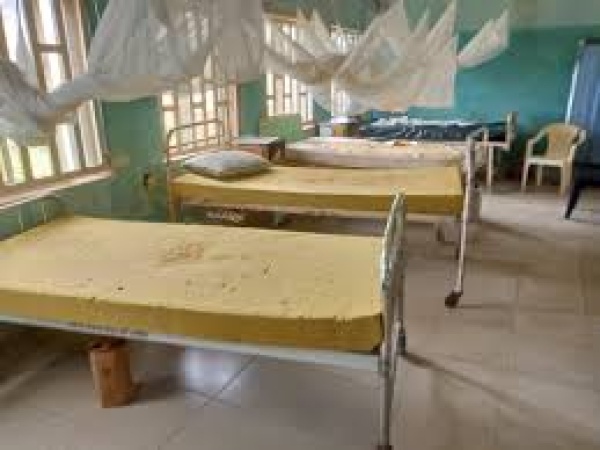
However, Nwaso’s situation took a distressing turn when the doctor explained that essential hospital services, including laboratory tests, pharmacy, radiology, and emergency units,were not functional due to the ongoing JOHESU strike. As a result, the procedure would have to be outsourced to a private health facility, where she would pay more than double the original cost.
Overwhelmed by the news, Nwaso returned home dejected, knowing she would have to wait longer to raise funds for treatment at a private hospital.
“I am in serious pain, but at the moment I can’t afford the bills at a private facility. I have to source for more funds, which means waiting even longer,” she said.
In a related incident, a user on X (formerly Twitter), @popoolaadaniel, who identified himself as a medical doctor, recounted how an accident victim who is also a high-profile security personnel, lost his life due to non-functional hospital services in Plateau State.
“A high-profile security agency team was involved in a ghastly road accident while on duty in Plateau State, resulting in multiple casualties. One of the officers was rushed to the emergency unit in critical condition. However, there was no oxygen, no pharmacy services, no blood bank, and no laboratory personnel to help resuscitate him due to the JOHESU strike,” Popoola wrote.
“In an attempt to resuscitate the officer, intravenous fluids had to be sourced from outside the hospital. Unfortunately, by the time desperate arrangements were made, it was already too late, and the officer later died,” he added.
These incidents underscore a decades-long crisis in Nigeria’s health sector, where healthcare professionals grapple with poor remuneration, inadequately equipped facilities, and weak emergency response systems, challenges that have culminated in the ongoing strike by the Joint Health Sector Union (JOHESU), now in its third month, having begun on November 14, 2025.
Increased fatalities due to the strike
JOHESU has reported increased fatality rates, higher maternal mortality and morbidity, as well as significant revenue losses within the last 80 days as a result of the ongoing strike.In a crucial conversation with Kabiru Minjibir, national president of JOHESU, the association shared alarming statistics linked to the strike with this reporter.
“Maternal mortality has increased by about 23 percent, morbidity by over 18.5 percent, while fatalities have risen to an alarming 16.75 percent in the last 80 days,” Minjibir said.“I am sure you are familiar with the avoidable death of an innocent Nigerian due to a snake bite a few days ago at the Federal Medical Centre (FMC), Abuja. This is just one among many cases,” he added.
Abdulazeez Olumoyo, JOHESU president, University of Benin Teaching Hospital (UBTH) chapter, also highlighted other challenges currently affecting hospitals.“I can tell you for sure that hospitals are operating far below capacity as a result of the strike, and there is no end in sight,” he noted.
The association also projected over N650 billion in internally generated revenue (IGR) losses nationwide, alongside poor hospital waste management, as major consequences of the strike.“Healthcare services are In limbo and have almost collapsed, even as authorities pretend all is well. Even inpatient services are no longer sustainable because the personnel who support critical care,including medical waste evacuation,are unavailable,” Minjibir said.
Reasons for the strike
JOHESU embarked on an indefinite strike on November 14, 2025, following the suspension of an earlier warning strike, over long-standing unmet demands by the federal government.
According to Felix Odusanya, president of the Nigeria Society of Physiotherapy and a JOHESU member, the dispute stems from deep-rooted disparities in remuneration and conditions of service.
“JOHESU salary structure (CONHESS) has not been reviewed since 2014, while that of medical doctors (CONMESS) has been reviewed three times,” Odusanya said.
“While our workload is the same, there are clear disparities in salary structures and retirement age between JOHESU members and medical doctors,” he added.
Way forward
JOHESU leaders say the strike can only end if the federal government adjusts salaries to match medical doctors’, ensuresan equitable retirement age, and addresses other longstanding demands.
“The only way forward is a presidential prerogative that gives immediate approval to the demand of JOHESU, which is CONHESS adjustment as done to CONMESS, to demonstrate responsiveness and inclusiveness that ought to be the hallmark of a multidisciplinary sector like the health sector in public interest,” said Minjibir.
“Governments must appreciate that a health system is emblematic of an array of strategic workers who are all germane to attaining the goals of successful health care. The moment a delicate balance is struck in the management of all interests on the table, the health sector will flourish,” he added.
Other members emphasised that dialogue, rather than a no-work, no-pay approach, is the solution.
“JOHESU forms the backbone of the health workforce. They are the lab scientists, physiotherapists, anesthetics, pharmacists, psychiatrists and many more,” said Stephanie Omoarebun, national secretary of the Young Medical Laboratory Scientists Forum.
“Embracing dialogue is certainly the right way to go, so as to ensure that the strike is called off while lifting the burden off of patients,” she added. (BusinessDay)