Updating your news feed...
NEWS EXPRESS is Nigeria’s leading online newspaper. Published by Africa’s international award-winning journalist, Mr. Isaac Umunna, NEWS EXPRESS is Nigeria’s first truly professional online daily newspaper. It is published from Lagos, Nigeria’s economic and media hub, and has a provision for occasional special print editions. Thanks to our vast network of sources and dedicated team of professional journalists and contributors spread across Nigeria and overseas, NEWS EXPRESS has become synonymous with newsbreaks and exclusive stories from around the world.


























Loading banners
Loading banners...

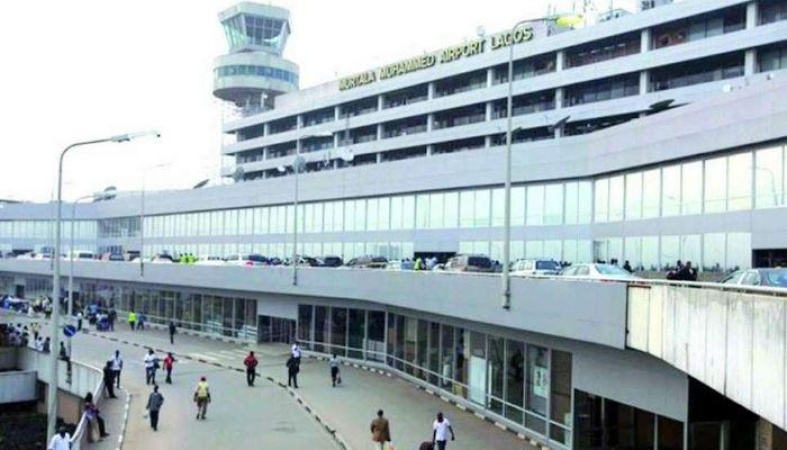
Cargo agents operating at the Murtala Muhammed Airport (MMA), Lagos, have raised alarm over an alleged plan by the Federal Airports Authority of Nigeria (FAAN) to demolish their secretariats, describing the move as unlawful, provocative and a breach of long-standing agreements.
The agents, operating under the umbrellas of the National Association of Government Approved Freight Forwarders (NAGAFF), the Association of Nigerian Licensed Customs Agents (ANLCA), the Africa Association of Professional Freight Forwarders and Logistics (APFFLON) and the National Association of Freight Forwarders and Consolidators (NAFFAC), have petitioned the Inspector General of Police (IGP), the Comptroller General of the Nigeria Customs Service (NCS), the Director-General of Civil Aviation (DGCA) and other security agencies and stakeholders over the development.
The protest came amid FAAN’s plan to implement a reviewed cargo tariff across all its airports nationwide, with effect from Monday, February 2, 2026.
Under the new regime, the cargo levy is expected to rise from N7 per kilogramme to N25 per kilogramme, a move the agents have strongly rejected.
According to the associations, the planned demolition of their secretariats is linked to their refusal to accept the proposed tariff hike, which they insist violates the recommended practices of the International Civil Aviation Organisation (ICAO).
ICAO guidelines stipulate that any increase in charges or levies in the aviation sector must be preceded by stakeholder consultations, with the majority of affected parties agreeing to the new charges before implementation.
In a letter titled “Immediate Notice to Quit MMA Premises,” dated January 27, 2026, and signed by the Airport Manager and Regional General Manager (Southwest), FAAN, Olatokunbo Arewa, the authority directed the associations to vacate the premises they currently occupy, warning that enforcement would follow without further notice if they failed to comply. The letter referenced an earlier notice allegedly issued on April 30, 2025.
Part of the letter read: “The authority directed that you vacate the premises currently occupied by you. You have failed to comply with the directive. Accordingly, by this notice, you are required to vacate the said premises with immediate effect, failing which the authority shall proceed to enforce compliance without further notice.”
However, the cargo agents insist that their occupation of the premises is legitimate and based on agreements reached with FAAN about 15 years ago.
They argued that the authority had allocated the secretariats to them with an understanding that a permanent cargo village would be provided before any relocation or eviction.
In a joint letter dated January 30, 2026, and signed by the chairmen of the associations—Temitope Akindele (ANLCA), Udo Udoka (NAGAFF), Quadri Olorunfunmi (APFFLON) and Abu Abdul (NAFFAC)—the bodies formally rejected the tariff increment and accused FAAN of acting in bad faith.
They said ongoing discussions within the cargo segment of the aviation industry were meant to provide a platform for consensus-building, but alleged that FAAN had frustrated efforts at dialogue. According to them, a request for a meeting with FAAN’s Directorate of Cargo on January 30 was declined, allegedly through a telephone conversation.
“This attitude negates the spirit of peaceful co-existence and undermines the principles of official business conduct,” the associations stated, urging FAAN to halt the implementation of the new tariff in view of the operational and economic challenges it could trigger.
Beyond their petitions to security agencies such as the Nigeria Police, Department of State Services (DSS), Airport Military Command and Customs Area Comptroller, the agents also notified key private-sector stakeholders, including the Manufacturers Association of Nigeria (MAN), the Lagos Chamber of Commerce and Industry (LCCI) and the Nigerian Association of Chambers of Commerce, Industry, Mines and Agriculture (NACCIMA).
Speaking at the weekend, a leading cargo operator, Dr. Segun Musa, described the planned demolition as a clear violation of the agreement between FAAN and the freight forwarders.
He said FAAN had officially allocated the secretariats to the associations pending the provision of a permanent location.
“There is nothing like illegal stay as claimed by FAAN,” Musa said. “FAAN allocated this place to us officially, with the promise that a permanent cargo village would be provided before we could be asked to leave. That has not happened.”
He added that operating as a cargo agent within an airport environment requires a designated cargo village, stressing that the current ultimatum to vacate without an alternative amounted to administrative high-handedness.
… FAAN defends tariff hike
FAAN had defended the proposed tariff hike, saying for decades, Nigeria’s aviation industry has been weighed down by outdated airport charges, rising operational costs, and the need for modern infrastructure that keeps pace with global aviation standards.
In a statement over the weekend, FAAN said, “The Federal Airports Authority of Nigeria (FAAN), which manages 22 airports across the country, has long operated under financial constraints caused largely by tariffs and fees that have remained stagnant for years—even as inflation, security demands, and infrastructure pressure continue to rise.
“Today, the conversation on the imperative of new FAAN airport charges is not merely a revenue argument. It is a national aviation safety, sustainability, and modernization argument. The reality is simple: Nigeria cannot build world-class airports on 2002 prices while running a 2026 aviation system.
Therefore, the decision by FAAN to embark on upward review of its airport charges is necessary, timely, and beneficial for the entire aviation ecosystem. Let’s take a look at some indices.”
According to the authority, airport charges have remained “unchanged for over 20 years.”
“During that same period, the global aviation industry has transformed, fuel prices have skyrocketed, security requirements have intensified, Inflation has eroded revenue value while maintenance and technology costs have doubled or tripled. Yet FAAN’s charges—many of which were set in the early 2000s—have not been adjusted to reflect new realities. This means FAAN has been using outdated revenue structures to fund modern airport operations,” it added.
it stated the new airport charges “are to enhance safety, to modernize infrastructure, to improve service quality, to meet global standards and to make Nigerian airports competitive again.” (Daily Trust)