 ADAD
ADAD
Updating your news feed...
NEWS EXPRESS is Nigeria’s leading online newspaper. Published by Africa’s international award-winning journalist, Mr. Isaac Umunna, NEWS EXPRESS is Nigeria’s first truly professional online daily newspaper. It is published from Lagos, Nigeria’s economic and media hub, and has a provision for occasional special print editions. Thanks to our vast network of sources and dedicated team of professional journalists and contributors spread across Nigeria and overseas, NEWS EXPRESS has become synonymous with newsbreaks and exclusive stories from around the world.
.webp)



















Loading banners
Loading banners...

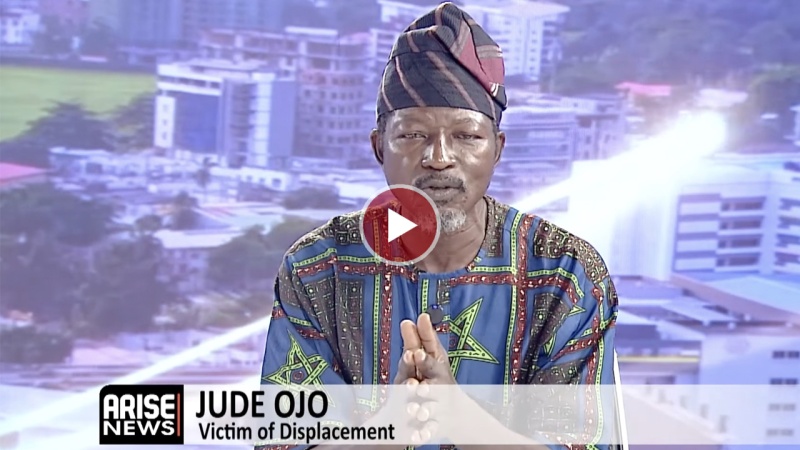
Victims of forced evictions in Makoko and adjoining waterfront communities have described the demolitions as traumatic, illegal and deadly, with allegations that due legal process was ignored despite existing court protections.
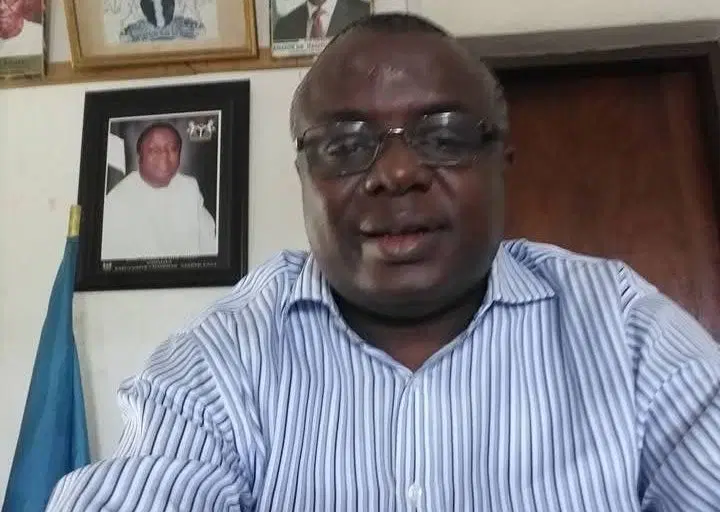
Speaking on ARISE News on Saturday, Jude Ojo, who represents displaced residents from the Ilaje Otumara community, said the demolitions followed earlier engagements with the Lagos State government on regeneration and development but later escalated unexpectedly into destruction of homes and livelihoods.
“Talking about the experience, the experience wasn’t a pleasant one at all. Very, very traumatic and horrible experience,” Ojo said.
He said residents were initially engaged by government agencies on regeneration plans and were under the impression that development would be carried out with community involvement.
“A situation where you have government discussing regeneration, upgrading and development with members of the community suddenly turned out into demolition, an unexpected demolition,” he said.
Ojo said the demolitions extended beyond Ilaje Otumara to Oworonshoki and Makoko, leaving residents traumatised and resulting in multiple deaths.
“It’s not a pleasant experience at all. And looking at people dying, people are traumatised, shocked, and a lot of people have died,” he said.
According to him, some residents died during the demolitions, while others died in the aftermath.
“Some died instantly, some died along the process as a result of the inhuman and illegal demolition and forceful eviction from the communities,” Ojo said.
He cited incidents in Makoko and Obodo Duni, where he said deaths were linked to the use of tear gas and forced evictions.
“Like we have seen in the case of Makoko, a lady of about three months, a lady who gave up the ghost under the intense smoke of tear gas,” he said.
“And even Owode Onirin, where about six people are still lying down in the mortuary now, killed as a result of an illegal and forceful eviction from Owode Onirin,” Ojo added.
Ojo accused the state authorities of failing to follow due legal process before carrying out the demolitions, noting that residents were entitled to statutory notices and court orders.
“Before government can carry out demolition, I’m not a lawyer, but I’ve been privileged to discuss with some lawyers,” he said.
“There must be what we call a contribution notice. After the contribution notice, you should come with a quick notice. After the quick notice, you must come with a demolition order from the court,” Ojo said.
He added that affected communities were not given the opportunity to be heard before any demolition orders were allegedly issued.
“But in this case, the process was not being followed,” he said.
Ojo also claimed that several waterfront communities had existing court judgments protecting them from eviction.
“Most of these communities are having court judgments from the Court of Competent Judiciary in Lagos City, the High Court of Lagos City, that protected these communities from these such barbaric acts,” he said.
On government engagement, Ojo said discussions were initially held with the Lagos State Urban Renewal Agency, LASURA, following public statements by the Commissioner for Physical Planning on regeneration plans.
“We were invited through Lansura,” he said.
“Having discussion with Lansura on how to regenerate our community, what kind of buildings are going to be built, how are we going to benefit, what preference is going to be given to the indigent and the occupier of the community as we speak,” Ojo said.
However, he said the situation changed on 11 February when officials of the Lagos State Building Control Agency, LASBCA, arrived in the community with security operatives.
“That was never in the discussion, was never in the picture, came into the community in large numbers with some staff and policemen wearing masks, carrying vaccines, carrying guns,” he said.
Ojo said residents protested the action and wrote letters to several authorities, including the governor, the House of Assembly and federal institutions, seeking intervention and protection.
“The letters were, number one, calling the attention of the governor and asking us to what has happened. We’ve seen something different from our previous discussion,” he said.
“Secondly, you cannot ask us to leave this place without making some provisions for us as far as the Nigerian constitution is concerned,” Ojo added.
He criticised compensation reportedly offered to displaced residents, questioning whether it addressed losses suffered.
“You can’t tell me you are offering compensation of 2,500,000 to people, are you compensating for the lives lost? Are you compensating for the trauma? Are you compensating for the building? Are you compensating for the land?” he said.
Ojo said key community infrastructure, including religious, educational and commercial facilities, were destroyed during the demolitions.
“You demolished my church, I’m a parish pastor, you demolished my family’s house, you demolished my wife’s school, you demolished my in laws’ houses, you demolished the community market,” he said.
Responding to comments by the governor defending the demolitions, Ojo said there were better approaches to urban development in a democratic system.
“If you are going to demolish, this is a democratic set of government system. We are not under military,” he said.
He said vulnerable residents, including the elderly, were severely affected.
“Baba Agbede in Otumara is about 91 years old. He worked in Nepal for about 35 years and retired honourably. The Baba houses have been demolished. His years of livelihood have been destroyed,” Ojo said.
Ojo also spoke on the arrest of activist Kamorudeen Sanusi, describing the period as difficult for affected residents.
“It has not been comfortable since that arrest because he was my handled, detained in police custody,” he said.
He expressed appreciation for legal support received during the crisis.
“I really want to use this opportunity to appreciate a senior advocate of Nigeria, Femi Falano, who personally appeared for us,” Ojo said.
The Lagos State government has maintained that the demolitions were carried out in the public interest, citing safety, urban planning and environmental concerns. (Arise news)



