Updating your news feed...
NEWS EXPRESS is Nigeria’s leading online newspaper. Published by Africa’s international award-winning journalist, Mr. Isaac Umunna, NEWS EXPRESS is Nigeria’s first truly professional online daily newspaper. It is published from Lagos, Nigeria’s economic and media hub, and has a provision for occasional special print editions. Thanks to our vast network of sources and dedicated team of professional journalists and contributors spread across Nigeria and overseas, NEWS EXPRESS has become synonymous with newsbreaks and exclusive stories from around the world.






Loading banners
Loading banners...

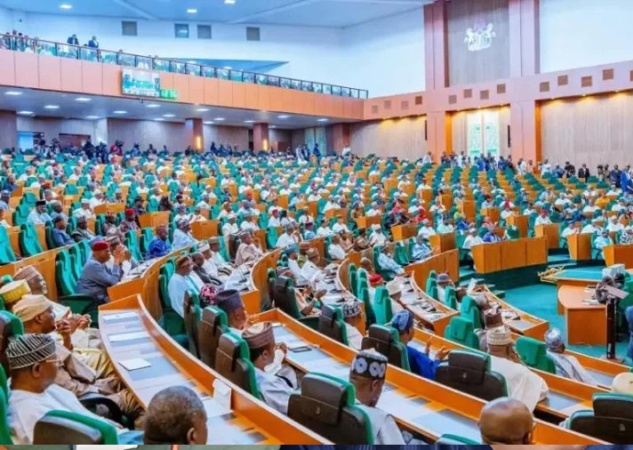
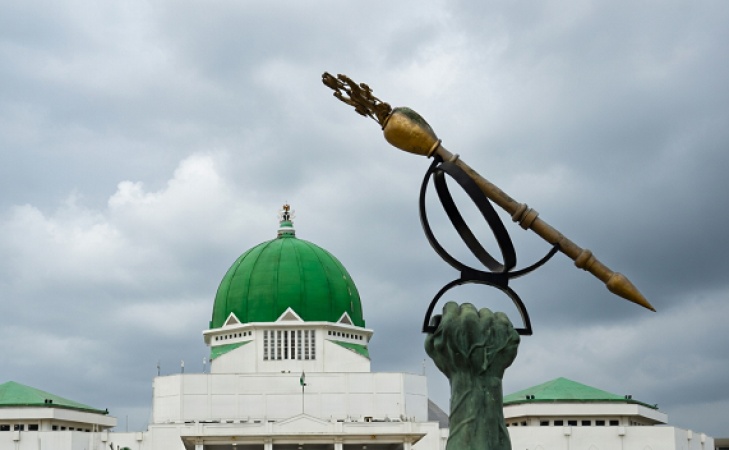
House of Representatives during plenary
The House of Representatives on Thursday passed for second reading the 2026 appropriation bill presented to the National Assembly by President Bola Ahmed Tinubu on December 19, 2025, while adjourning plenary for two weeks to allow for budget defence by MDAs.
The appropriation bill, which was scheduled for debate on Wednesday but was deferred to Thursday, was unanimously passed by the House after an executive session by members.
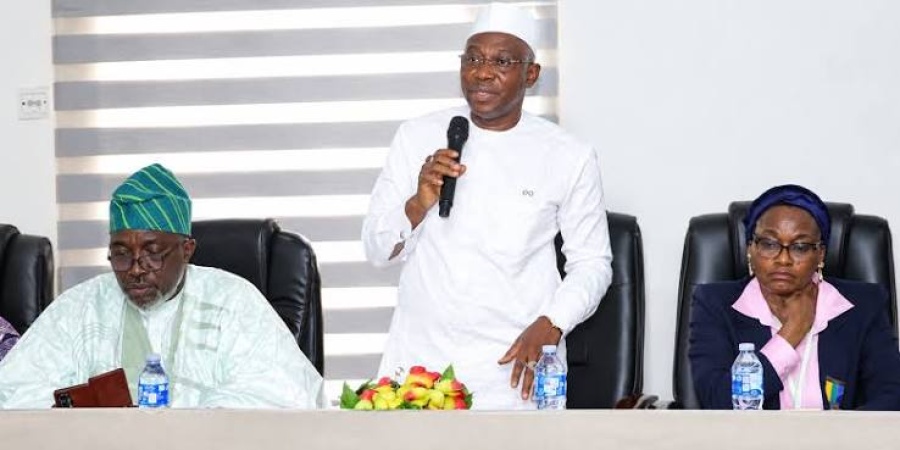
The only debate on the document was presented by the House Leader, Prof. Julius Ihonvbere, who echoed the words of the President, who described it as a defining moment in the national journey, a journey to peace, growth, stability, and sustainable development.
Ihonvbere said, “Development that is not sustainable is only temporary, it’s not development at all, and you cannot have development without growth. The process of promoting growth is very challenging, difficult, and painful.
“That is what we are going through. It can be more painful if we inherited distorted and disarticulated institutions and structures of our politics and economy, which was exactly the case with the present administration.
“Nobody has ever promised that the journey of restructuring, repositioning, and refocusing our political economy will not be painless. Nobody has ever made that promise. Nobody assumed that the present administration went to space to bring a new set of Nigerians to join it in making Nigeria a better place. It is the same Nigerians who have been here since Shagari, Obasanjo, Jonathan, and Buhari, who precipitated the situation that was inherited.
“So it’s a challenge, and I’m saying this so that we all put ourselves in the shoes of those trying to manage the economy. I’m not saying they are saints or that they are perfect. It is our job as a national assembly, representing 360 constituencies, fully elected by the people, to guide them to do the right things at all times.
“Statistics can be good. Sometimes they can mislead, and sometimes they may not reflect our dreams and hopes. But we can’t run away from statistics. We say that the economy before the 2026 budget grew by 3.98 percent. A decent figure compared to many other developing countries.
That inflation is down to 14.45 percent from about 25 percent, all revenues increased, exports grew, and direct foreign investment expanded. I think we all see the activities of the president. From one country to another, in the midst of winter, trying to sign this rich understanding with other countries. The recent visit to Turkey is an example.
“I will encourage my colleagues to Google Turkey, and you will discover it’s one of the most developed countries in Europe. But it doesn’t get credit. It gets more international visitors and more international investment than many countries in Europe, including Britain, France, and Belgium.
“So Turkey is a good country that we can partner with in many ways to move our world forward. The Dollar has remained stable. We promised in the last budget to bring it down to 1,400 from over 1,800. We have not printed a single Naira since this government came into office.
“It has helped us to stabilise. Our external reserve is at a seven-year high of 47 billion US dollars, sufficient to provide over 10 months of aid.
This is the background of the 2026 budget. But what are the promises that will be made? To give us a stronger discipline in budget execution and to improve revenue performance.
We all join hands to give them the new tax laws to ensure revenue generation. We block leakages and generate revenue enough to support their budget and consolidate macroeconomic stability.
“I know the President is committed. I know that many in his team are committed. I also know that those of us in the National Assembly, especially the House of Representatives, are committed to ensuring that these promises are implemented.
“What then are our expectations of the 2026 budget as presented? Total revenue expectation is N34.33 trillion from the total expenditure of N58.18 trillion, with a deficit of N23.85 trillion and recurrent non-debt of N15.25 trillion, while capital expenditure will be N26.08 trillion.
“I think this is a mark of commitment to sustainable development, where your capital is higher than recurrent. But what you find in many instances is that recurrent outweighs capital expenditure. Most of the money goes into salaries and allowances and other costs, whereas capital is not. We have put the oil benchmark at 64.85 dollars. Oil production is at 1.84 million barrels per day.
“The government has prioritised security and defence, and with the current cooperation with other countries, from the EU to the United States, we can rest assured that we will have a whole new era and approach to tackling the issue of security.
“I believe that this administration is committed to ensuring that if we all work together, put ideas together, we commit to a better Nigeria, we build a kind of socio-political economic environment that will encourage Nigerians, in their respective constituencies and communities, to reach the highest points of their creative and productive abilities. Nigeria will be a better place, not just for us, but for generations to come.
“It also encourages those who will come into power well into the future to build on the achievements of the present government, legislators, businessmen, women, and prioritise the welfare, security, and bedrock of the United States.”
Speaker of the House, Abbas Tajudeen, said about 70% of the budget has already been debated earlier, in 2025, adding that “there is very little that is new. If we are comfortable with the professorial introduction of this budget, we can go ahead and ask the question.” (The Nation)