 ADAD
ADAD
Updating your news feed...
NEWS EXPRESS is Nigeria’s leading online newspaper. Published by Africa’s international award-winning journalist, Mr. Isaac Umunna, NEWS EXPRESS is Nigeria’s first truly professional online daily newspaper. It is published from Lagos, Nigeria’s economic and media hub, and has a provision for occasional special print editions. Thanks to our vast network of sources and dedicated team of professional journalists and contributors spread across Nigeria and overseas, NEWS EXPRESS has become synonymous with newsbreaks and exclusive stories from around the world.














Loading banners
Loading banners...

As Nigeria’s economy pivots from stabilisation to growth, PwC outlined seven key themes that will determine whether 2026 is a year of continued stability or the official beginning of sustainable growth.
Nigeria’s macroeconomic indicators are finally beginning to align, as seen with the slowing inflation figures of 15.15 percent as of December 2025, and the economy expanding at 3.98 percent as of the third quarter of 2025.
The World Bank and the International Monetary Fund see the economy growing at its fastest in more than a decade this year. However, on the street, growth hasn’t yet translated into broad-based relief.
“If you look at the direction around the output, it’s all positive, all the numbers sort of stack up on the positive side, ” Olusegun Zaccheaus, chief economist and strategy at PWC said at the PwC and BusinessDay executive roundtable on Nigeria’s 2026 budget and economic outlook on Thursday in Lagos.
Consumer dilemma
While the overall outlook is positive, the individual consumer may still feel a lag due to weakened earnings and still elevated prices. Zaccheaus said that there is a gap between investment and actual consumer recovery.
“While there is an aspiration of consumer spending, the actual recovery is expected to be muted compared to the high-level economic data,” he said.
Uneven sectoral growth dynamics
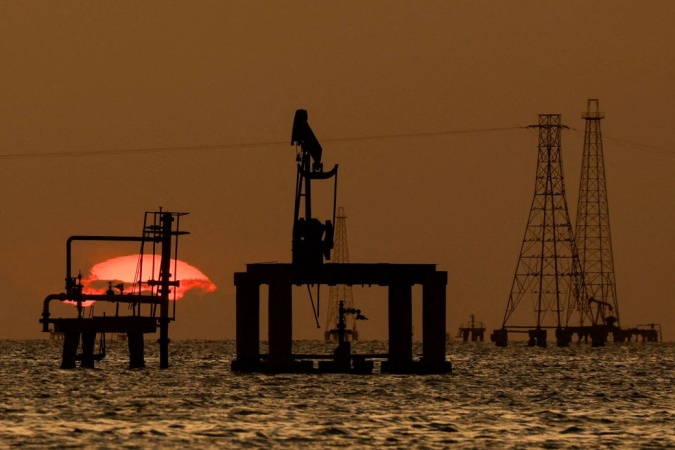
The firm pointed out that growth will not be uniform across all industries, although the energy and services sectors remain outliers. “The sectors that will drive Nigeria include a resurgent oil and gas industry and a robust services sector. Specifically, oil and gas, because of improving investment and services, are expected to lead, while manufacturing will see better, but not dramatic, growth,” Zaccheous said.
He said uneven growth trends, structural bottlenecks, and shifting demand patterns reshape industry outlook
Global dynamics and geopolitics
Zacceheaus stated that the global state is shifting toward fragmentation, which poses a risk to emerging markets, including Nigeria.
He said that the world is now multipolar, and businesses must be wary of trade and the economy being used as a weapon, and must ensure that they do not become collateral receivers of global tensions.
Addressing fiscal sustainability and executing reforms
Elevated debt obligations, deepening revenue mobilisation strategy, and acceleration of reforms are expected to shape policy choices.
Interest rates may remain elevated
Nigeria’s benchmark interest rates may remain elevated despite inflation cooling for most of 2025. Anchoring expectations, inflation risks & external shocks challenge price stability.
“Perhaps not by the 500 basis points some hope for, due to the need to manage liquidity,” he said.
A major focus will be on managing the money supply within the economy. The firm warns that money supply often goes up pre-election, requiring central banks to manage the liquidity so that it does not have a negative effect.
On the foreign exchange front, it is expected to remain a steadying force for the economy. PWC projects a stable environment where FX will continue to be stable. This stability is crucial for decent capital allocation, provided that policy remains planned and consistent.
Digital economy & AI: The shift toward execution
PwC points out that 2026 is the year that innovation moves from hype to a structured economic pillar.
The stronger momentum is driven by the fact that the digital economy now contributes roughly 19 percent of Nigeria’s GDP. PwC notes that the transition is becoming more formal, moving from design to execution.
Domestic security & social stability: The price of growth
Zaccheaus stated that security goes beyond Nigeria and that maintaining stability will be at a price. The PwC report provides the data behind this price.
He notes that prevailing insecurity and land-use conflicts challenge national cohesion. This is not just a social issue but an economic one, as it directly undermines food security and agricultural output, which in turn fuels supply-side inflation. (BusinessDay)



