Updating your news feed...
NEWS EXPRESS is Nigeria’s leading online newspaper. Published by Africa’s international award-winning journalist, Mr. Isaac Umunna, NEWS EXPRESS is Nigeria’s first truly professional online daily newspaper. It is published from Lagos, Nigeria’s economic and media hub, and has a provision for occasional special print editions. Thanks to our vast network of sources and dedicated team of professional journalists and contributors spread across Nigeria and overseas, NEWS EXPRESS has become synonymous with newsbreaks and exclusive stories from around the world.




Loading banners
Loading banners...

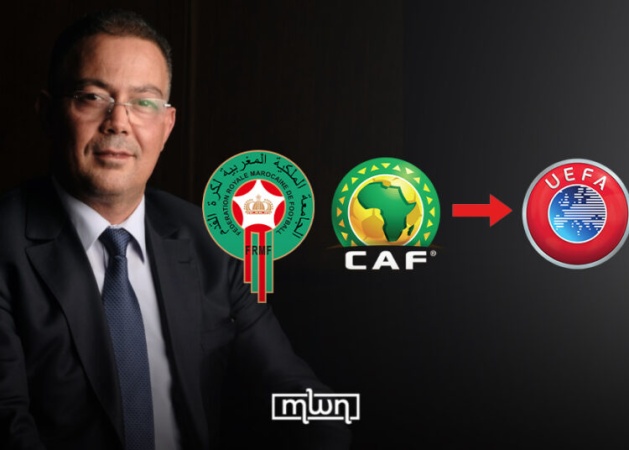
Marrakech – As emotions ran high after the recent Africa Cup of Nations (AFCON) final, social media was quickly saturated not only with misleading claims, but also with narratives deliberately amplified by propagandists who thrive on moments of collective catharsis.
In such moments of frustration and perceived injustice, simplified explanations often find fertile ground. For many Moroccans, the aftermath of the AFCON final reinforced a long-standing feeling of isolation within the very continent to which they belong – one they have consistently engaged with, invested in, and welcomed openly.
This sense of standing apart, while remaining structurally tied to the same African football system, created a psychological space in which withdrawal fantasies, rather than legal realities, have become a form of refuge.
Among the most viral are posts suggesting that Morocco has officially applied to leave the Confederation of African Football (CAF) and join the Union of European Football Associations (UEFA), with some even claiming the country will participate in the next UEFA Euro 2028.
These fake and deceptive posts, sometimes presented as emotional calls by citizens and at other times framed as breaking news, were shared thousands of times and gradually merged sporting frustration with legal misinformation, turning anger into alleged “facts.”
Some elitist narratives went further, lamenting what was described as a growing mismatch between Morocco’s state-of-the-art stadiums and organizational infrastructure and what critics portrayed as an African football habitus still shaped by entrenched behavioral patterns and inherited practices, reflecting modes of conduct that have been slow to evolve alongside material modernization.
In its most extreme formulation, some voices reduced this argument to the claim that Africa, in its current footballing culture and behavioral norms, did not “deserve” Morocco.
Put more bluntly by some commentators, this line of argument viewed that Morocco had raised its standards beyond what the continental environment could absorb, and that elevating those standards was seen – rightly or wrongly – as a mistake.
Hardline Africanist voices also left their imprint on this discourse, going as far as asserting that continental football should remain exclusively Black, and depicting North African presence as an intrusion whose withdrawal – or even outright exclusion – was framed as acceptable, if not preferable and desirable.
So, what’s the truth?
So, is it true that Morocco will leave CAF for UEFA? The short answer is no. There is no official request, no formal process underway, and no confirmation from any competent football authority.
Claims circulating online attribute the story to “Moroccan media,” yet no statement has been issued by the Royal Moroccan Football Federation (FRMF). Major Moroccan newspapers, recognized news agencies, FIFA, and UEFA have all remained silent on any such move. In the absence of official documentation or acknowledgment, the story remains a rumor with no factual basis.
What did happen, however, is often overlooked. Following incidents during the AFCON final against Senegal, the FRMF submitted a formal complaint to CAF and FIFA, requesting an investigation into the events surrounding the match. The online talk about UEFA emerged largely as an emotional reaction among fans, not as an institutional or legal step.
To understand why the rumor lacks credibility, it is essential to look at what football regulations actually say. FIFA statutes establish confederation membership as mandatory, stating, “Membership is only permitted if an association is currently a member of a confederation.”
However, FIFA regulations include an exceptional provision allowing cross-continental moves in extraordinary circumstances. The world governing body may “authorize a confederation to grant membership to an association that belongs geographically to another continent” after consulting the geographically relevant confederation.
This process requires FIFA authorization plus consultation with CAF since Morocco belongs geographically to Africa.
Only a handful of rare confederation shifts exist
UEFA’s membership criteria present additional hurdles, and its own rules further narrow the possibility. Membership is generally limited to national associations located geographically in Europe and recognized internationally. Yet, UEFA statutes include a highly conditional exception permitting non-European associations under specific conditions.
The applicant cannot be a member of another confederation and must receive explicit FIFA approval. Even meeting these requirements doesn’t guarantee acceptance, as UEFA’s Congress holds final authority based on organizational, sporting, and political considerations. The process could take years, even under favorable circumstances.
In other words, moving from CAF to UEFA would require several layers of approval: a domestic decision by the national federation, acceptance by UEFA through its internal bodies, authorization by FIFA, and formal consultation with CAF. It is a political and governance-heavy process, not a symbolic protest or an online demand.
Football history provides rare precedents for confederation switching. Australia successfully moved from the Oceania Football Confederation (OFC) to the Asian Football Confederation (AFC) in 2006, seeking stronger competition and stable qualifying pathways.
Kazakhstan joined UEFA in 2002 after leaving the Asian confederation through extensive approval processes. Israel represents another case, expelled from the AFC in 1974 and gaining UEFA membership in 1994 amid complex geopolitical circumstances and constraints.
These examples confirm that confederation switching remains theoretically possible but practically exceptional and context-related, requiring institutional approvals and specific justifications beyond sporting disappointment.
Morocco’s long-term strategy remains firmly Africa-focused
Current circumstances and genuine national priorities make Morocco’s UEFA switch particularly unrealistic. The country approaches the 2030 World Cup co-hosting with Spain and Portugal, representing the first time Africa and Europe jointly organize football’s premier tournament.
This arrangement’s strength lies in Morocco’s position as a “bridge between continents.” Abandoning African allegiance would undermine this strategic advantage at a crucial moment.
In December last year, FRMF President Fouzi Lekjaa articulated this vision in an interview with France Football, outlining Morocco’s intended role in advancing African football through the transfer of expertise, the circulation of experience, and the promotion of more effective organizational practices.
He proposed thinking beyond traditional boundaries. In the context of the joint 2030 World Cup with Spain and Portugal, he even outlined an alternative approach focusing on Euro-African cooperation rather than separation.
He proposed creating joint Euro-African competitions, arguing the question isn’t “whether it’s possible” but “how to organize it intelligently and balanced.”
Such tournaments could enhance African football’s value, provide higher-level competition for talents, and strengthen inter-continental sporting relationships. This vision aligns with Morocco’s long-term strategy of building cross-continental links rather than abandoning commitments.
Another source of confusion is the difference between switching confederations and participating in competitions outside one’s confederation. FIFA treats these as separate issues, both allowed only under exceptional circumstances and with multiple approvals. Being invited to play elsewhere does not equal a change of confederation membership.
Against this legal and institutional background, the claim that Morocco would appear at UEFA Euro 2028 is unfounded. The tournament is scheduled to take place from June 9 to July 9, 2028, and will be co-hosted by England, Scotland, Wales, and the Republic of Ireland. Participation is restricted to UEFA member associations.
The conclusion is clear. Morocco has not applied to leave CAF. It has not requested to join UEFA. No legal process exists to that effect. What exists is fan anger, amplified by social media, and detached from regulatory reality.
Morocco remains firmly within the African football framework, pursuing its rights through official channels and engaging in broader discussions about cooperation rather than separation, in line with a long-standing royal vision that has consistently positioned Morocco as an active pan-African partner in development, integration, and institutional engagement. (MWN)