
ADVERTISEMENT

ADVERTISEMENT

ADVERTISEMENT

ADVERTISEMENT








Loading banners


NEWS EXPRESS is Nigeria’s leading online newspaper. Published by Africa’s international award-winning journalist, Mr. Isaac Umunna, NEWS EXPRESS is Nigeria’s first truly professional online daily newspaper. It is published from Lagos, Nigeria’s economic and media hub, and has a provision for occasional special print editions. Thanks to our vast network of sources and dedicated team of professional journalists and contributors spread across Nigeria and overseas, NEWS EXPRESS has become synonymous with newsbreaks and exclusive stories from around the world.
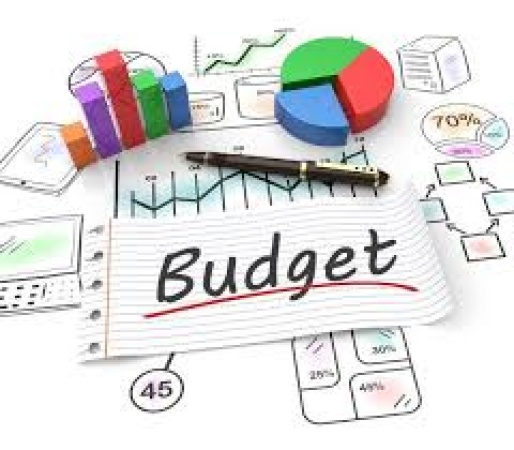
Graphical depiction of budget
Nigeria’s 2026 Appropriation Bill, like many before it, has massive allocations tucked under vague headings. It also has projects that appear misaligned with agency mandates and duplicated spending across ministries and agencies.
Budget analysts warn that unless tightened, the spending plan could weaken transparency, blur accountability and dilute the impact of public funds at a time of acute fiscal pressure.
One of the most striking features of the bill is the scale of funds assigned to extremely broad and poorly defined project descriptions.
At the Federal Ministry of Agriculture and Food Security headquarters, a single line item for Research and Development gulps a whopping N252.2 billion. The allocation stands out not just for its size, but for the absence of any breakdown detailing the specific programmes, institutions, timelines or expected outcomes the funds are meant to support.
A similar pattern was observed at the Federal Ministry of Finance headquarters, which earmarked N197.26 billion for Research and Development. Historically, R&D-heavy budgets are associated with science, health or technology-driven agencies, not a ministry whose core mandate revolves around fiscal policy, revenue management and public finance coordination.
Analysts say the unusually large R&D vote raises questions about whether the heading is being used as a catch-all for expenditures that do not fit neatly elsewhere.
Other agencies also featured hefty R&D allocations with little detail. The Ministry of Communications and Digital Economy sets aside N34.66 billion under the same broad heading, while the National Agricultural Land Development Authority (NALDA) allocates N18.87 billion. Without clear project descriptions, experts argue, lawmakers and citizens alike are left guessing about what these funds will actually deliver.
Within the Presidency, eyebrow-raising figures emerged. The State House headquarters proposes N2.42 billion for wildlife conservation and N1.28 billion for ‘Monitoring and Evaluation.’
While not inherently illegitimate, the size of the allocations relative to the State House’s administrative role has prompted questions about whether such functions would be better housed in specialised environmental or planning agencies.
Beyond vague descriptions, the budget also reveals a growing trend of projects that appear misaligned with the statutory mandates of implementing agencies.
NALDA, established to drive agricultural land development, is allocated N350 million for the construction of churches, mosques and support for religious groups in Gombe State. Observers argue that while social cohesion is important, funding religious infrastructure through an agricultural land agency stretches its mandate beyond recognition.
The National Space Research and Development Agency (NSRDA), tasked with advancing aerospace science and satellite technology, is another prominent example.
In the 2026 bill, NASRDA is slated to spend N2.1 billion on construction and efficiency lighting projects in Ogun State. It is also allocated N350 million to provide fertiliser to farmers in Taraba State and N1.12 billion for research grants for indigent students in Singapore.
While each project may have merit on its own, critics question why they are routed through an agency whose core expertise lies far from lighting infrastructure, agricultural inputs or overseas student support.
Cultural and conflict-resolution agencies are also pulled into social welfare roles. The National Institute for Culture Orientation (NICO) is allocated N140 million for the supply of rice to constituents in Southern Ijaw, Bayelsa State.
Similarly, the Institute for Peace and Conflict Resolution (IPCR) has N1.4 billion earmarked for palliatives and financial grants to vulnerable communities in the North West.
Analysts warn that when agencies drift into welfare distribution without clear coordination, the risk of inefficiency and politicisation rises sharply.
Perhaps most concerning is the extent of duplicated and overlapping expenditures scattered across the budget. Palliative and grain distribution projects recur across multiple agencies operating in the same regions.
The Ministry of Agriculture alone sets aside N3.15 billion for grain supplies, while NALDA handles seeds and fertiliser distribution. NICO and IPCR also run parallel food and cash support schemes. Such fragmentation, experts say, undermines economies of scale and makes it difficult to track who is responsible for outcomes.
Education-related overlaps are equally striking. While the Ministry of Education is charged with funding basic education, the Federal Road Safety Commission Academy receives funds to construct classroom blocks. Even more puzzling, the Nigeria Police Academy is allocated N5.9 billion as a meal subsidy for government schools, an intervention traditionally handled by education or social investment programmes rather than a security institution.
Budget transparency advocates argue that these patterns point to weak central coordination in social and infrastructure spending. They warn that when multiple agencies pursue similar projects independently, monitoring becomes harder, leakages more likely, and impact more diffuse.
Analysts are calling for clearer project descriptions, stricter adherence to agency mandates and stronger coordination mechanisms.
In a climate of tight revenues and rising public expectations, they say, every naira must be traceable, justified and aligned with clearly defined national priorities. (The Sun)


