ADVERTISEMENT

ADVERTISEMENT





Loading banners


NEWS EXPRESS is Nigeria’s leading online newspaper. Published by Africa’s international award-winning journalist, Mr. Isaac Umunna, NEWS EXPRESS is Nigeria’s first truly professional online daily newspaper. It is published from Lagos, Nigeria’s economic and media hub, and has a provision for occasional special print editions. Thanks to our vast network of sources and dedicated team of professional journalists and contributors spread across Nigeria and overseas, NEWS EXPRESS has become synonymous with newsbreaks and exclusive stories from around the world.

I visited Kano in May 2012 at the instance of my friend, Mohammed Jamu, a long-standing disciple of then Governor Rabiu Musa Kwankwaso. On arrival, I went straight for an audience with Kwankwaso whom I had known since the aborted Third Republic in the early nineties when he served as Deputy Speaker of the House of Representatives. In my column on 31st May 2012 titled, ‘My Worry About Kwankwasiyya’, I highlighted what I considered the achievements of Kwankwaso as governor of Kano State. But I ended the piece on this cautionary note:
“…For all his efforts, the cult of personality that Kwankwaso is building around himself in Kano is not only dangerous, but also antithetical to the kind of values he wants to project. Before I left Abuja for Kano, Jamu had implored me to wear a flowing white babariga and a red cap (the signature dress for Kwankwaso and his supporters) and I decided to humour him. Since I had no red cap, Jamu brought one along when he picked me up at the airport and with that I was fully kitted as a ‘Kwankwasiyya’ as the governor’s supporters are called. When I reached the government house, I noticed that almost everyone was dressed like me. There are also some young boys under the auspices of ‘Kwankwasiyya Movement’ who patrol the streets. Given our recent experience as a nation, that could become a breeding ground for something sinister, especially at election times. While I sincerely believe Kwankwaso is doing well in Kano, he stands the risk of subverting all his efforts if he doesn’t tame the ego that brought about the idea of ‘Kwankwasiyya’. Conventional history teaches that leaders who are venerated and idolized while in office are almost always remembered in unflattering terms when they leave, no matter their achievements…”
On Tuesday, Kwankwaso released a short video message through his Facebook page, practically collapsing the structure on which he contested the 2023 presidential election into that of the ruling All Progressives Congress (APC). This dramatic, even curious, capitulation from a street-smart politician can only be surmised as a ‘hostile takeover’ of the ‘Kwankwasiyya Movement’ by the emerging ‘Gandijuyya Movement’, where a certain Abdullahi Ganduje is the supremo. “Several of our supporters who currently hold political appointments, as well as members of the State Assembly, have reached out to me in distress,” Kwankwaso lamented in Hausa, while accusing his estranged former deputy and successor, Ganduje, as the man putting pressure on his supporters to defect to the ruling party. “After consulting closely with my associates, we agreed, purely in the interest of easing tension and protecting the well-being of our supporters, that anyone who is asked to sign such documents should do so.”
That declaration by Kwankwaso opens the door for Governor Abba Kabir Yusuf and many other elected officials in the state to leave the All Nigeria Peoples Party (NNPP) and join the APC. When that happens, the era of ‘Kwankwasiyya Movement’ in Kano politics may have come to an end. Right now, Kwankwaso’s presidential ambition may also be over since his bargaining power is completely eroded should he choose to go with the opposition. But how did ‘Kwankwasiyya’ unravel so quickly?
In his long paper, ‘From Sawaba to Asara: The Evolution of Commercial Politics in Kano,’ Anwalu Anwar—a scholar and political operative in the state who was a special adviser to the late Ghali Umar NaAbba as Speaker of the House of Representatives—dissected the similarities and differences between the Northern Elements Progressive Union (NEPU) and Peoples Redemption Party (PRP)—both led by the late Aminu Kano in the First and Second Republics—and the ‘Kwankwasiyya Movement’. While Aminu Kano’s politics were purely ideological, according to Anwar, Kwankwaso has encouraged the “degeneration of radical traditions into electoral entrepreneurship” that is rooted in creating a cult of personality around himself. In the process, Anwar further argues, Kwankwaso has also replaced the “old slogans of emancipation” with “clientelist chants” that serve his personal/political purpose even when the movement built around his person “has no ideological blueprint or a manual for the transformation of society.”
Anwar likens the ‘Kwankwasiyya Movement’ to “The Buhari Organization (TBO) of yesteryears which had a single indivisible objective: to achieve the exclusive ambition of the leader in total disregard for the aspirations, expectations, and deserved benefits to his followers,” while also arguing that within the group, there are “no open discussions on any subject relating to fairness and justice in the distribution of positions, which are at best allocated arbitrarily (by Kwankwaso) among those whose faith in the charade is not in doubt…”
The trio of Kwankwaso, Ganduje and Ibrahim Shekarau, each of whom served as governor for two terms, “encapsulate the arc of Kano’s transformation from an ideological vanguard to a commercial theatre” under the current dispensation which commenced in 1999. But Anwar also contends that Kwankwaso remains the smartest of them. “He always plans well ahead of others. He is tenacious and persevering. Above all, he is exceptionally grounded in the etiquette of local politics, as a full-time practitioner. He always stoops to conquer whenever necessary, with sufficient ease and fake humility,” Anwar wrote. “His political strategy for mobilization, recruitment, and retention is consistent with his unique character…He is an elite by social status; but speaks and understands the language of peasants; if occasion demands, he easily blends and becomes one.”
As Dr Akilu Sani Indabawa, who served as Director-General of the Kwankwaso/Ganduje re-election campaign during the 2003 general election, told me on Monday, Anwar is now one of the African Democratic Congress (ADC) leaders in Kano State. So, it is understandable that he is very critical of Kwankwaso. But I have only taken the bits from his piece that I consider relevant to understanding contemporary Kano politics. Stripped of all pretences, ‘Kwankwasiyya Movement’ was not found on any ideological grounds. It is another byword for godfatherism. That explains why Kwankwaso surrendered so easily (some would say, cheaply) to the ‘pressure’ from supporters, including his son-in-law he helped instal as governor. But while Abba Yusuf may have joined the APC and is now under the wings of ‘Gandujiyya’—from where dollars can flow freely into his re-election campaigns—this may just be the end of a chapter. Despite his current travails, any politician who writes off Kwankwaso in Kano will be doing so at their own peril.
With all the permutations and calculations going on regarding the 2027 general election amid the unresolved power struggle over the traditional institution, Kano remains a state to watch in the coming weeks and months. I just hope the drama we are about to witness will be devoid of violence.
When Bandits Become ‘Prisoners of War’
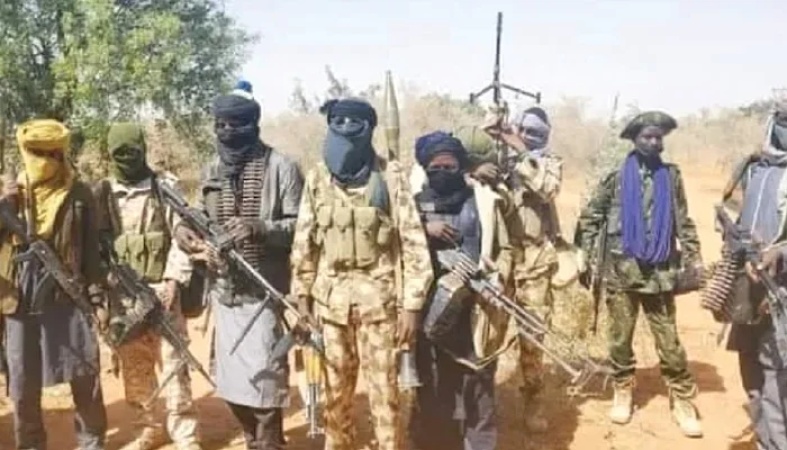
There is something profoundly disturbing about a government that finds itself negotiating the release of accused criminals, including those already standing trial in a federal high court, as a precondition for peace. Yet this is precisely what is going on in Katsina State where 70 suspected bandits facing trial for heinous crimes; including murder, rape, and kidnapping are soon to be released.Because, according to the state commissioner for Internal Security and Home Affairs, Nasir Muazu, “All over the world, after wars, prisoner exchanges usually take place.”
It’s obvious that the commissioner does not understand who a prisoner of war is, as outlined by the Geneva Convention. Neither does the governor who sent him on this dangerous errand. By elevating these opportunistic criminals to the status of negotiating partners, complete with formal peace accords and exchange of ‘prisoners’, we do not merely legitimize their enterprise; we subsidize it with impunity. Besides, is this ‘war’ really over when innocent villagers continue to be abducted and killed every day in the same state?
The men, women and children whose freedoms are being negotiated with pampered criminals who go by the fanciful name of ‘bandits’ were taken from their homes for financial (and sometimes also) sexual exploitation. They were not combatants. So, the notion of them being exchanged for criminals as PoWs is not only warped but dangerous. The government’s defence of this decision is even more troubling. We are told that this release is necessary to sustain peace agreements with “repentant bandits” and that it has already yielded the freedom of 1,000 abducted persons across 15 local government areas. This is nothing but capitulation dressed up in the language of conflict resolution.
Having written several columns on the security challenge in Katsina State and all the futile efforts to reach ‘agreement’ with bandits, including the most recent one, When the State Kneels Before the Gun – THISDAYLIVE, I understand the desperation that may have led to this idea. But I am concerned about the implications of these ‘agreements’. When criminals discover that kidnapping provides leverage to free their captured colleagues, there is no longer any incentive to abandon this nefarious vocation. That perhaps explains why several of the communities are still being attacked.
In May 2024, Governor Radda described the banditry in his state as “a business venture for the criminals and a business venture for some people who are in government and some people who are in the security outfits and some people who are responsible for the day-to-day activities of their people.” It is therefore perplexing that his government is now negotiating with these same criminals despite what he once described as the futility of such exercise. “In Katsina, we have more than 100 different camps that are being led by somebody. So, they have many leaders, many camps and if you’re negotiating with camps A and B and don’t negotiate with camps C and D, it will not bring any lasting peace,” said Radda. “Even if you negotiate with the leaders, the other leaders may not necessarily comply with the directives of the leader. So that is what makes the negotiation very difficult. That is why I said I would never go into negotiations with any criminal at the point of weakness.”
Let me state here for the record that I am open to all options that would bring peace to Katsina State. But the suggestion that anybody can appeal to the conscience of criminals is ludicrous. If they had any, they wouldn’t be in the business. Perhaps more troubling is what this Katsina experiment portends for Nigeria’s security architecture. If other states adopt this model, then we have effectively surrendered the monopoly of violence that defines statehood itself. Besides, the fact that some governors subscribe to this policy of appeasement and others don’t have given these criminals the leverage to divide and plunder as they now do across the country. Then the pertinent questions: What message does it send when courts are asked to release suspects mid-trial because bandits demand it? What becomes of the families who have lost loved ones to these criminals, only to watch the state broker their freedom?
Justice delayed may be justice denied, but justice abandoned for expediency is the death of the rule of law itself. The Katsina State Government cannot have it both ways. Either these 70 individuals are criminals who should face the full weight of the law, or they are legitimate actors in a conflict who deserve negotiated settlement. By choosing the latter, the government has written a blank cheque that every criminal enterprise in Nigeria will be eager to cash.
• You can follow me on my X (formerly Twitter) handle, @Olusegunverdict and on www.olusegunadeniyi.com