ADAD
ADAD
Updating your news feed...
NEWS EXPRESS is Nigeria’s leading online newspaper. Published by Africa’s international award-winning journalist, Mr. Isaac Umunna, NEWS EXPRESS is Nigeria’s first truly professional online daily newspaper. It is published from Lagos, Nigeria’s economic and media hub, and has a provision for occasional special print editions. Thanks to our vast network of sources and dedicated team of professional journalists and contributors spread across Nigeria and overseas, NEWS EXPRESS has become synonymous with newsbreaks and exclusive stories from around the world.
























Loading banners
Loading banners...

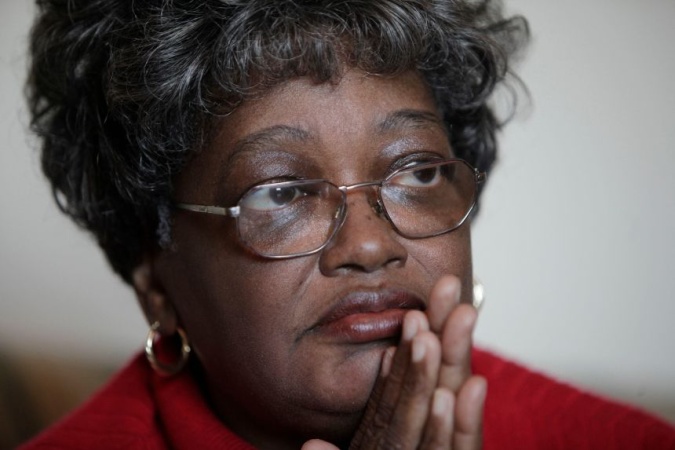
Claudette Colvin, whose 1955 arrest for refusing to give up her seat on a segregated Montgomery, Alabama, bus helped spark the modern civil rights movement, has died. She was 86.
Her death was announced Tuesday by the Claudette Colvin Foundation. Ashley D. Roseboro of the organization confirmed her death.
Colvin was arrested months before Rosa Parks gained international fame before refusing to give up her seat on a segregated bus.
A bus driver called police on March 2, 1955, to complain that two Black girls were sitting near two White girls in violation of segregation laws. One of the Black girls moved toward the rear when asked, a police report said, but Colvin refused and was arrested. She was 15 at the time.
Colvin was charged with two counts of violating Montgomery’s segregation ordinance and one felony count of assaulting a police officer. She was convicted on all counts in juvenile court, and the segregation convictions were overturned on appeal.
Placed on an “indefinite probation” after her conviction on the assault charge, Colvin was never informed her probation had ended, her legal team said.
In 2021, an Alabama judge granted Colvin’s motion to seal, destroy and expunge her juvenile court records for “what has since been recognized as a courageous act on her behalf and on behalf of a community of affected people,” Montgomery County Juvenile Judge Calvin Williams said.
Colvin said she “resisted” and was “defiant” when police arrested her on the bus. An officer wrote in the police report that Colvin kicked and scratched him when they put her in the police vehicle.
“People said I was crazy,” Colvin told CNN. “Because I was 15 years old and defiant and shouting, ‘It’s my constitutional right!’”
In Colvin’s motion to get her record expunged, she said she wanted to see society progress and not regress.
“I want us to move forward and be better,” Colvin said in the filing, obtained by CNN at the time. “When I think about why I’m seeking to have my name cleared by the state, it is because I believe if that happened it would show the generation growing up now that progress is possible and things do get better. It will inspire them to make the world better.”
The expungement was “long-overdue justice,” her attorney, Phillip Ensler, told CNN.
“People think it was just about a seat on a bus, but it was about so much more than that,” he said.
Colvin eventually became one of the plaintiffs in Browder v. Gayle in 1956. The following year, the US Supreme Court upheld the district court’s ruling and ordered Montgomery – and the rest of Alabama – to end bus segregation.
Colvin’s family and legal team said she sought the expungement because she wanted to move to Texas with her family.
Born September 5, 1939 in Birmingham, Colvin was the oldest of eight sisters, according to the foundation that bears her name. She was raised in the rural community of Pine Level, the same town where Rosa Parks grew up.
Colvin worked for 30 years as a nursing assistant at a Catholic nursing home, the foundation said. She had two sons, one of whom died in 1993; the other is a professor.
“To us, she was more than a historical figure,” the foundation said in announcing her death. “She was the heart of our family, wise, resilient, and grounded in faith.
“We will remember her laughter, her sharp wit, and her unwavering belief in justice and human dignity.” (CNN)