Updating your news feed...
NEWS EXPRESS is Nigeria’s leading online newspaper. Published by Africa’s international award-winning journalist, Mr. Isaac Umunna, NEWS EXPRESS is Nigeria’s first truly professional online daily newspaper. It is published from Lagos, Nigeria’s economic and media hub, and has a provision for occasional special print editions. Thanks to our vast network of sources and dedicated team of professional journalists and contributors spread across Nigeria and overseas, NEWS EXPRESS has become synonymous with newsbreaks and exclusive stories from around the world.





















Loading banners
Loading banners...

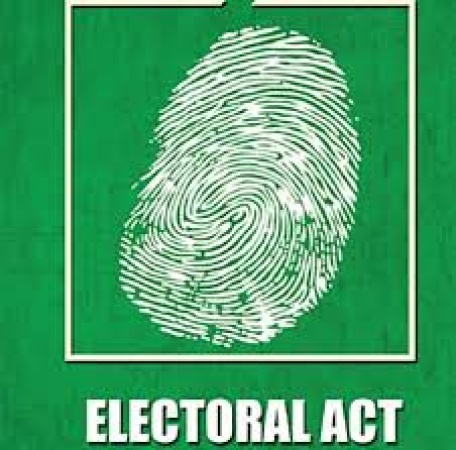
The Nigerian Electoral Act
With barely 14 months to Nigeria’s 2027 general elections, the National Assembly is recalibrating the framework that governs political contests, following the passage of a proposed amendment to the Electoral Act.
Analysts say the reforms could significantly influence how elections are conducted in Africa’s most populous democracy and potentially strengthen confidence in electoral outcomes.
The Electoral Act Amendment Bill has been approved by the House of Representatives and is awaiting concurrence by the Senate before transmission to the president for assent.
But political analysts have expressed concerns that the proposed law still leaves loopholes that could perpetuate elite dominance, discourage inclusive participation, promote vote buying, while puncturing the capacity of the electoral umpire to enforce it.
One key provision of the bill is that it strengthens transparency at the ballot box by mandating electronic transmission of election results, as well as the use of Bimodal Voter Accreditation System (BVAS) or any other technological device prescribed by the Independent National Electoral Commission (INEC).
Under this provision, presiding officers would be required to electronically transmit results from each polling unit to the INEC Result Viewing Portal (IReV) immediately after results are recorded.
Experts note this as an enhanced safeguard against result tampering during collation.
“Mandatory electronic transmission of results is an additional layer of transparency citizens have clamoured for,” said Armsfree Anjaku, executive director, Grassroots Centre for Rights and Civic Orientation.
The reforms come against the backdrop of persistent public concern over electoral fraud and opaque result collation, which have historically undermined trust in Nigeria’s elections.
Innocent Okechukwu, an Abuja-based political analyst, noted that the mandatory results transmission could build public trust if enforced, but raised concerns around infrastructure challenges such as poor internet connectivity and power supply in rural areas, which may hinder real-time transmission.
He also expressed concerns over INEC capacity to address the challenges. According to him, system glitches or cyber vulnerabilities could disrupt elections, and may disenfranchise voters if devices malfunction.
The lawmakers also doubled the campaign spending ceiling for candidates contesting elections. For instance, the ceiling on campaign expenditure for presidential candidates was doubled to N10 billion, while that of the governorship election was increased to N3 billion from N1 billion per candidate.
The maximum amount senatorial candidates are permitted to spend on campaigns was increased fivefold to N500 million, compared with the N100 million earlier. Each candidate contesting for a seat in the House of Representatives can spend up to N250 million, up from N70 million.
Analysts warn that higher spending limits, without rigorous reporting and oversight, risk amplifying the influence of ‘dark’ or untraceable funds, and further tilt politics towards wealthy candidates and entrenched party elites.
“Such an increase equally continues the anomaly of making our political process about the candidates with the deepest pockets. How do we get youths, women and PWDs to compete when the process is priced beyond their reach?” Anjaku asked.
He noted that the increase in the campaign finance thresholds must be supported by strong reporting and oversight mechanisms.
The bill also introduced tougher sanctions for electoral offences. Vote-buying and selling now carry a minimum of two years’ imprisonment, a N5 million fine, or both, alongside a 10-year ban from contesting elections. Forging nomination papers, result sheets or destroying election materials attracts penalties of up to 10 years in prison or fines of N75 million, up from N50 million fine.
Experts say if passed and faithfully implemented, it could reduce the heavy monetisation of the voting process that have become commonplace on the day of election.
Chinedu Obi, director-general of the Inter-Party Advisory Council, commended the provision but expressed concerns that the country already has challenges in tracking those who buy and sell votes.
The bill however stops short of addressing vote-buying during party primaries. Lawmakers rejected a proposed clause seeking to criminalise vote-buying during party primaries. Analysts warn that allowing transactional politics at the primary stage effectively rigs elections before the general vote, undermining the credibility of the broader electoral process.
According to Anjaku, excluding the aspect of vote buying from political party primaries shows a lack of political will to address transactional politics from its root cause.
“If political actors have the freedom to brazenly buy votes at the primaries, they have indirectly rigged the elections,” he said.
For Okechukwu, vote buying at primaries directly affects candidates’ emergence, and entrenches godfatherism.
Obi opined that allowing vote-buying at the primary levels promotes a system that throws up the wrong candidates before Nigerians.
Speaking further, Obi urged the National Assembly to consider electronic voting system, noting that it would go a long way in weakening vote-buying and boosting transparency.
He called for a constitutional amendment to change how the INEC boss and key officials are appointed.
According to him, enabling politicians to nominate INEC leadership does not guarantee independence of the electoral umpire, a key criterion that boosts credibility and public confidence in electoral process. (BusinessDay)