ADVERTISEMENT

ADVERTISEMENT




.webp&w=256&q=75)















Loading banners


NEWS EXPRESS is Nigeria’s leading online newspaper. Published by Africa’s international award-winning journalist, Mr. Isaac Umunna, NEWS EXPRESS is Nigeria’s first truly professional online daily newspaper. It is published from Lagos, Nigeria’s economic and media hub, and has a provision for occasional special print editions. Thanks to our vast network of sources and dedicated team of professional journalists and contributors spread across Nigeria and overseas, NEWS EXPRESS has become synonymous with newsbreaks and exclusive stories from around the world.

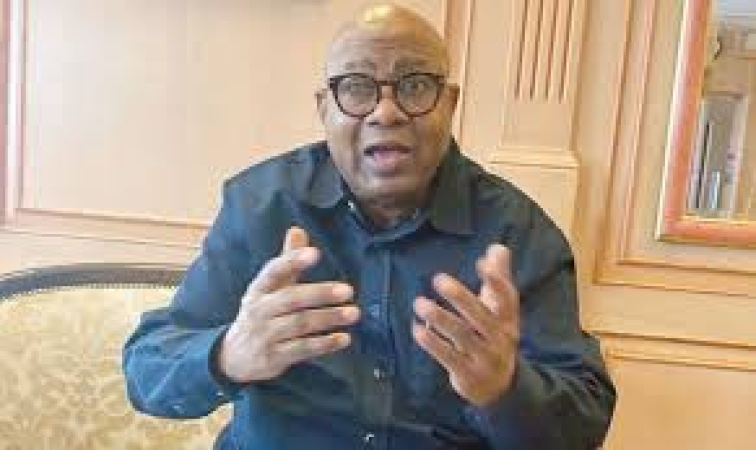
Emenike Ikedichi Ubani, lecturer at the Abia State University
As Nigeria enters 2026, the pre politicking year ahead of general elections year, labour enthusiasts worry that unresolved labour disputes in the tertiary education sector may lead to another shutdown of universities, polytechnics and college campuses. In this interview with CHRISTIAN APPOLOS, Emenike Ikedichi Ubani, a lecturer at the Abia State University and labour relations commentator, speaks on the consequences of governments’ fire-brigade approach in handling labour issues.
What is President Bola Tinubu and state governors’ best option to prevent disputes with tertiary-based unions and avoid industrial actions and shutdown of campuses?
From a labour relations standpoint, the most effective option available to President Bola Ahmed Tinubu and state governors is early, honest and continuous engagement with tertiary-based unions. This is not a courtesy; it is a necessity if Nigeria is to escape the endless cycle of strikes that cripple universities, polytechnics and colleges.
Having closely observed government–labour interactions over the years, one point must be stated clearly: most industrial actions in the tertiary education sector are not products of union impatience or extremism. They are the predictable outcomes of neglect, broken promises and a reactive, fire-brigade approach to governance that worsens whenever elections approach.
Early engagement builds trust, and trust is the most valuable currency in labour relations. When the government initiates dialogue before tensions boil over, it sends a powerful message that workers are respected stakeholders, not obstacles to be managed. Unfortunately, successive governments, including the current one, have often treated unions as irritants. Meetings are delayed, committees are formed without deadlines, agreements are signed under pressure and quietly abandoned once strikes are suspended.
What prevents disputes is implementation of agreements reached and continuous engagement, not emergency dialogue. Labour relations cannot be managed only when strike notices are served. That approach guarantees confrontation. Government silence until campuses are shut reinforces the dangerous perception that strikes are the only language authorities understand. That is not union militancy; it is leadership failure.
The cost of this approach is severe and recurring: disrupted academic calendars, financial and emotional strain on families, declining staff morale and a weakened human capital base. These losses are not accidental; they are foreseeable and entirely preventable through sincere, proactive engagement. So, it is imperative that the government shun the old ways and embrace seriousness to prevent our campuses being shut because of politics. Besides, any industrial action at this period will work against those in political offices including the President and governors.
Many labour crises stem from delayed implementation of agreements. What practical steps should leaders take to ensure prompt and faithful implementation?
Nigeria’s tertiary education labour crises are rarely caused by lack of negotiation. They are caused by failure to act after negotiations are concluded. Rebuilding trust requires more than goodwill statements; it demands structure, political will and a decisive break from the culture of delay and excuses.
First, governments must institutionalise implementation frameworks, not just negotiation platforms. Every agreement should come with a clear, publicly accessible roadmap outlining timelines, responsibilities and funding sources. Agreements without implementation plans are invitations to crisis.
Second, agreements must be matched with budgetary backing. Signing agreements without allocating funds is not optimism; it is bad faith. Once agreements are reached, they must immediately reflect in budgets or supplementary appropriations.
Third, joint monitoring and implementation committees involving unions should be permanent mechanisms, not ad hoc arrangements activated during disputes. Transparency reduces suspicion and prevents escalation.
Fourth, there must be high-level political accountability. Implementation should not be dumped on ministries that endlessly shift responsibility. Senior officials with coordinating authority must be named, and unjustified delays should attract consequences.
Above all, governments must abandon selective urgency, acting only when strike notices are issued. Agreements are not favours; they are social contracts. When the state routinely breaks them, it undermines its own credibility and authority.
As politicking intensifies ahead of 2027, how can those in government avoid abandoning governance for politics, especially on labour issues?
The greatest danger to labour relations in an election build-up year is not union militancy, but political distraction. Labour administration must be insulated from campaign politics through strong institutions that function regardless of electoral calculations.
Delaying difficult decisions for fear of backlash only compounds grievances. Responsible leadership addresses issues early, even when inconvenient.
Leaders must adopt a statesmanlike posture. Education workers are not just voters; they are custodians of Nigeria’s future. Faithful implementation of agreements during this period demonstrates seriousness and continuity.
Transparency is critical. Where economic constraints exist, they should be openly discussed with unions, with phased solutions jointly agreed. Silence and evasiveness breed mistrust.
Repeated strikes during an election season do not project strength, they expose governance failure. Preventing them through engagement is smart leadership, not political weakness.
Why is it politically and democratically important to treat labour and education as core governance priorities?
It is politically and democratically essential because tertiary-based union members are not just employees negotiating conditions of service; they are citizens, voters and opinion leaders whose experiences directly shape public trust in government and democracy.
Reducing labour and education to industrial inconveniences is both short-sighted and dangerous. Universities, polytechnics and colleges are not factories that can be shut and reopened at will. They are national institutions responsible for producing the human capital that sustains economic growth, innovation and democratic stability.
Politically, tertiary workers occupy a unique position. Lecturers, researchers and non-academic staff are informed, respected and deeply embedded in communities. They shape public opinion, mentor young people and influence families and professional networks. When they feel ignored or deceived, that frustration spills beyond campus walls and feeds wider political disillusionment.
From a democratic perspective, labour relations test the credibility of participatory governance. Trade unions remain one of the strongest platforms for collective civic engagement. When agreements freely entered into are ignored, citizens learn that dialogue is meaningless and disruption is the only path to justice, a dangerous lesson for any democracy.
There is also a generational cost. Students, many of them future voters, experience repeated strikes as betrayals of their aspirations. Disrupted education fuels frustration, migration and loss of faith in the social contract.
Ultimately, labour and education issues are national development and electoral issues. Governments that honour agreements and prioritise education project credibility. Those that trivialise labour disputes weaken both governance outcomes and democratic legitimacy.
What should be expected of tertiary-based unions themselves in an election build-up year?
While the government unquestionably carries the heavier responsibility, especially given its history of delayed implementation and broken agreements, tertiary-based unions also have obligations that come with their moral authority and public influence.
First, unions are expected to exhaust all credible avenues of dialogue before resorting to industrial action. Strikes must remain a last resort, not a first response. Demonstrating procedural discipline strengthens public trust and legitimises any eventual action.
Second, flexibility is essential, particularly during periods of economic strain. While agreements must be honoured, unions can show strategic maturity by negotiating phased implementation where there is clear evidence of sincerity and progress from the government. Flexibility should never mean surrender, but realism guided by long-term gains.
Third, unions must remain conscious of the human and social cost of prolonged strikes. Students lose irreplaceable time, families endure emotional and financial strain, and public sympathy; a critical asset in labour struggles can erode if actions appear indefinite or poorly communicated.
Fourth, unions must invest in transparent communication with students, parents and the wider public. Clearly explaining demands, publishing agreements and countering misinformation help prevent political manipulation, especially during election seasons.
Finally, unions must guard against politicisation. Election periods often tempt political actors to exploit labour disputes for partisan ends. Unions must remain independent, principled and focused on protecting education and workers’ dignity rather than advancing political interests.
In balancing firmness with flexibility, and advocacy with responsibility, tertiary-based unions strengthen not only their cause but Nigeria’s democratic culture itself.
Ultimately, industrial peace in Nigeria’s tertiary education sector will not come from silence, slogans or strikes alone, but from mutual responsibility. When the government governs with sincerity and unions engage with discipline and foresight, education ceases to be a battlefield and becomes what it should be the foundation of national development. (Nigerian Tribune)