ADAD
ADAD
Updating your news feed...
NEWS EXPRESS is Nigeria’s leading online newspaper. Published by Africa’s international award-winning journalist, Mr. Isaac Umunna, NEWS EXPRESS is Nigeria’s first truly professional online daily newspaper. It is published from Lagos, Nigeria’s economic and media hub, and has a provision for occasional special print editions. Thanks to our vast network of sources and dedicated team of professional journalists and contributors spread across Nigeria and overseas, NEWS EXPRESS has become synonymous with newsbreaks and exclusive stories from around the world.























Loading banners
Loading banners...

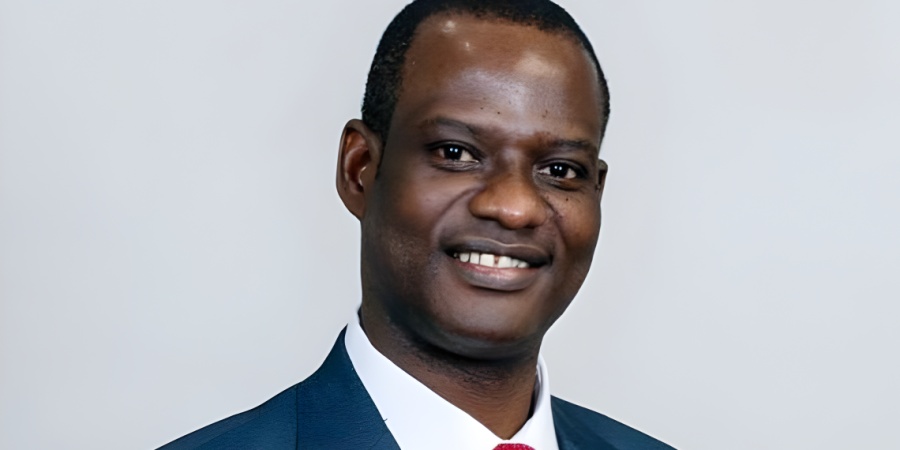
Taiwo Oyedele, Chairman Presidential Committee on Fiscal Policies and Tax Reforms
By BONIFACE AKARAH
The Presidential Fiscal Policy and Tax Reforms Committee has pushed back against observations made by professional services firm, KPMG, on Nigeria’s newly-enacted tax laws, saying the firm’s publication largely reflected misunderstandings of policy intent, mischaracterisation of deliberate reforms, and the presentation of opinion as fact.
In a statement issued Saturday morning, January 10, 2026, the Committee said while it welcomed constructive perspectives and acknowledged that some of KPMG’s points relating to implementation risks and clerical issues were useful, the majority of the commentary failed to properly situate the reforms within their broader policy objectives.
“A significant proportion of the issues described as ‘errors,’ ‘gaps,’ or ‘omissions’ are either the firm’s own errors and invalid conclusions, issues not properly understood, or areas where KPMG prefers different outcomes from deliberate policy choices,” the Committee said.
The Committee stressed that disagreements over policy direction should not be framed as legislative mistakes, noting that other professional firms engaged directly with the government during consultations, allowing for clarification and mutual learning.
Addressing concerns over taxation of shares and potential stock market sell-offs, the Committee stated that the new chargeable gains framework does not impose a flat 30 per cent tax, but operates on a graduated scale from zero to a maximum of 30 per cent, which will reduce to 25 per cent. It added that about 99 per cent of investors are entitled to unconditional exemptions.
“The sell-off narrative is unsubstantiated,” the statement said, pointing to record market performance and increased investment flows as evidence that investors understand the reform’s long-term benefits to firm profitability and cash flows.
On the commencement date of the tax laws, the Committee rejected suggestions that reforms should begin strictly at the start of an accounting period, describing such a view as narrow and incapable of addressing the complexities of transition across multiple assessment bases, audit cycles, deductions, and penalties.
The Committee also defended provisions on indirect transfer of shares, describing them as aligned with global best practices and international Base Erosion and Profit Shifting (BEPS) initiatives aimed at closing long-standing tax loopholes exploited by multinational corporations.
“This is a common international tax provision, and the suggestion that it threatens economic stability is disingenuous,” the statement said.
Responding to KPMG’s comments on VAT exemption for insurance premiums, the Committee said such an exemption was unnecessary because insurance premiums do not constitute taxable supplies under Nigerian tax law, as insurance relates to risk transfer rather than the supply of goods or services.
The Committee further dismissed claims of ambiguity in the inclusion of “community” in the definition of a taxable person, explaining that modern legislative drafting uses comprehensive definitions to avoid redundancy and streamline charging provisions.
It also clarified that the composition of the Joint Revenue Board was intentional, designed to provide sub-national revenue perspectives that complement federal fiscal policy, and consistent with the structure under which its predecessor body previously operated.
On dividend taxation, the Committee said KPMG conflated foreign-controlled companies with foreign operations of Nigerian companies, noting that dividends from foreign companies cannot be franked since no Nigerian withholding tax would have been deducted.
The Committee equally rejected calls to exempt non-resident companies from registration where withholding tax is deemed final, stressing that filing returns serves broader regulatory and compliance purposes beyond revenue collection.
Several KPMG proposals were described as potentially harmful to reform objectives, including suggestions to exempt foreign insurance firms from tax on Nigerian-written premiums, which the Committee said would disadvantage local insurers, and proposals to allow tax deductions for foreign exchange purchases from the parallel market.
“The disallowance of such deductions is a deliberate fiscal choice aimed at strengthening and stabilising the naira by removing incentives for patronage of the parallel market,” the Committee said.
Defending the progressive personal income tax regime, the Committee said the top marginal rate of 25 per cent for high-income earners remains competitive globally and supports fairness without discouraging growth.
“The effective tax rate for high earners can be significantly lower through lawful deductions such as pension contributions,” it noted.
The Committee also corrected what it described as factual errors, including references to the Police Trust Fund, whose six-year lifespan expired in June 2025, and concerns over small-company tax thresholds, which it said pre-dated the new tax laws.
While faulting KPMG’s analysis, the Committee said the firm failed to highlight major structural improvements introduced by the reforms, including tax harmonisation, reduction in corporate tax rates, expanded input VAT credits, exemptions for low-income earners and small businesses, elimination of minimum tax on turnover, and enhanced incentives for priority sectors.
“The tax reform represents a bold step toward a self-sustaining and competitive Nigeria,” the Committee said, adding that clerical issues identified internally would be addressed through administrative guidance and future amendments.
It urged stakeholders to move away from static critique and instead adopt a dynamic engagement model that supports effective implementation of the new tax framework.