Updating your news feed...
NEWS EXPRESS is Nigeria’s leading online newspaper. Published by Africa’s international award-winning journalist, Mr. Isaac Umunna, NEWS EXPRESS is Nigeria’s first truly professional online daily newspaper. It is published from Lagos, Nigeria’s economic and media hub, and has a provision for occasional special print editions. Thanks to our vast network of sources and dedicated team of professional journalists and contributors spread across Nigeria and overseas, NEWS EXPRESS has become synonymous with newsbreaks and exclusive stories from around the world.























Loading banners
Loading banners...

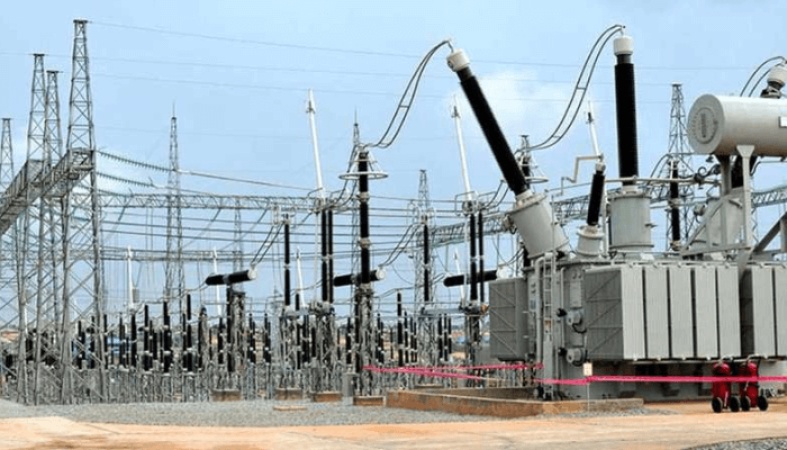
A power generation station
The Nigerian Electricity Regulatory Commission (NERC) has announced that an additional 20 firms secured captive power generation permits in the third quarter of 2025, enabling them to produce a combined 5.85 megawatts independently and potentially reduce reliance on the faltering national grid.
NERC, in its latest quarterly report released this week, stated that these companies opted for self-generation licenses exceeding 1MW capacity exclusively for internal use, reflecting escalating frustration with grid unreliability.
“Captive power plants above 1MW require NERC permits to ensure they operate solely for the license holder’s consumption without selling to third parties,” the regulator explained, underscoring the surge in such approvals amid persistent supply deficits.
The Commission reported that grid-connected generation averaged just 4,179 megawatt-hours per hour in Q3 2025, resulting in lower output due to gas constraints that slashed production by 602 gigawatt-hours.
NERC attributed this to ongoing feedstock shortages, noting, “Average hourly output stood at 4,179.15 MWh/h, translating to reduced overall supply despite available capacity hovering around 5,400MW.”
This performance lags far behind captive capacities, which now surpass grid levels nationwide.
The report also showed that DisCos collected N570.25 billion from N706.61 billion billed in Q3, achieving an efficiency of 80.7 per cent, yet consumers continue to face constant outages.
The Q3 report also flagged bilateral deals where generation firms earned $7.12 million and N3.19 billion directly from customers, bypassing the grid entirely.
NERC warned of liquidity strains, stating,
“Remittance gaps persist, with special customers like Ajaokuta owing N1.03 billion to NBET, undermining market stability.”
Captive power, however, thrives without such dependencies, with licensed off-grid capacity exceeding 6,500MW per recent estimates.
NERC affirmed, “We issued multiple captive permits in Q3 to support industrial energy security, aligning with Electricity Act provisions.”
While DisCos posted revenue gains—collecting N570 billion—the report exposed deeper woes, including no system collapses but voltage/frequency deviations outside norms.
“Gas supply constraints directly reduced generation by 602GWh, forcing more firms to go captive,” NERC concluded, urging federal intervention on debts and infrastructure.
This exodus underscores Nigeria’s power paradox: abundant potential trapped by grid failures, pushing 20 more firms—and counting—to self-reliance with 1,045MW of fresh captive muscle.
The Q3 report showed that DisCos recorded modest operational gains in the third quarter of 2025, with tariff collection efficiency rising to 80.7 per cent,
DisCos’ collected N570.21 billion of the N706.61 billion billed to customers between July and September 2025, reflecting improved revenue recovery despite tariffs remaining below cost-reflective levels.
The regulator noted that government subsidies continued to support the power sector, accounting for 58.63 per cent of total Generation Companies’ (GenCos) invoices during the period. The Federal Government paid N458.75 billion in electricity subsidies in the quarter.
NERC attributed the heavy subsidy burden to the freezing of some end-user tariffs at July 2024 levels, despite rising generation costs, even as DisCos recorded slight improvements in billing and collection performance.
Total energy offtake by all DisCos was valued at N854.53 billion, while billing efficiency improved to 82.69 per cent, up from 81.61 per cent in the previous quarter. However, cumulative billing losses stood at N147.92 billion.
Collection efficiency rose by 4.63 percentage points from 76.07 per cent in the second quarter. Still, NERC stressed that the timely settlement of upstream market obligations remains essential to sustaining power generation and transmission.
The commission disclosed that the N458.75 billion subsidy represented a 10.81 per cent reduction from N514.35 billion paid in the previous quarter, driven by lower energy offtake and a slight drop in generation costs, while tariffs remained unchanged.
On bilateral transactions, international customers remitted $7.13 million of the $18.69 million invoiced, while domestic bilateral customers paid N3.19 billion of the N3.64 billion billed.
NERC identified poor metering, service dissatisfaction and unwillingness to pay as significant factors affecting revenue recovery across the sector. (LEADERSHIP)