Updating your news feed...
NEWS EXPRESS is Nigeria’s leading online newspaper. Published by Africa’s international award-winning journalist, Mr. Isaac Umunna, NEWS EXPRESS is Nigeria’s first truly professional online daily newspaper. It is published from Lagos, Nigeria’s economic and media hub, and has a provision for occasional special print editions. Thanks to our vast network of sources and dedicated team of professional journalists and contributors spread across Nigeria and overseas, NEWS EXPRESS has become synonymous with newsbreaks and exclusive stories from around the world.


























Loading banners
Loading banners...

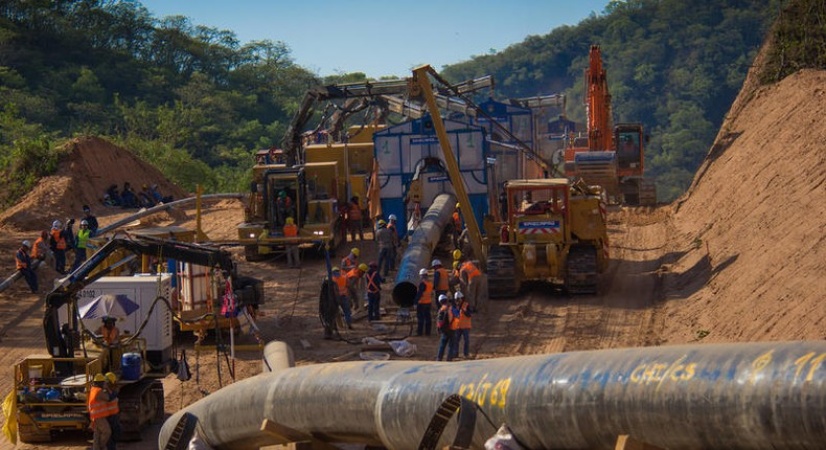
Uganda and Tanzania are preparing to ship their first barrels of crude oil through the $5 billion East African Crude Oil Pipeline (EACOP) as early as October, a milestone that could transform energy trade across the region.
Uganda and Tanzania say crude oil exports from Uganda’s long-delayed petroleum sector are expected to begin in October, marking a pivotal moment for East Africa’s entry into global oil markets.
The East African Crude Oil Pipeline (EACOP), which runs 1,443 kilometres from Uganda’s Albertine Graben to the Indian Ocean port of Tanga in Tanzania, was about 75% complete as of the end of December 2025, according to officials from both countries.
That estimate aligns with figures released earlier by Uganda’s Petroleum Authority, which said nearly three-quarters of the $5 billion project had been completed by November last year, with all pipeline segments already laid and $3.3 billion invested.
Ernest Rubondo, chief executive of the Uganda Petroleum Authority, has described EACOP as “the backbone of Uganda’s crude oil exports and a key driver for economic transformation,” highlighting its central role in the country’s long-term energy strategy.
Energy ministers from Uganda and Tanzania reaffirmed their commitment to the project during a high-level stakeholder meeting in Dar es Salaam on January 5, where they reviewed progress on pipeline construction, above-ground installations and the marine export terminal at Tanga.
Officials said construction activities are now at peak levels, with start-up readiness targeted for July 31, 2026.
Uganda’s delegation was led by Energy Minister Ruth Nankabirwa, alongside officials from the Uganda National Oil Company and the National Petroleum Council.
Tanzania’s Energy Minister Deogratius Ndejembi led his country’s delegation, which included representatives from the Tanzania Petroleum Development Corporation and energy regulator Ewura.
Once operational, EACOP will be the world’s longest heated crude oil pipeline, designed to transport Uganda’s waxy crude at around 50 degrees Celsius.
At full capacity, the pipeline is expected to carry up to 230,000 barrels of oil per day to Tanga, where it will be loaded onto tankers for export.
For Uganda, the pipeline is key to unlocking its estimated 6.5 billion barrels of crude reserves and establishing itself as a new oil producer in Africa.
The project’s success, however, will depend on global oil prices and the timely completion of related upstream infrastructure.
The pipeline’s benefits extend beyond Uganda’s borders. For Tanzania, EACOP is shaping up as an economic and logistical lifeline.
Authorities say the project has already generated about 50 billion Tanzanian shillings ($19.5 million) in revenue through development levies, taxes and construction-related charges.
Tanzania’s EACOP project coordinator, Asiadi Mrutu, has said the project has so far employed about 1,200 Tanzanians, including workers from communities around the Chongoleani terminal in Tanga, reinforcing Tanzania’s role as a regional energy transit hub.
Despite sustained criticism from environmental and human rights groups, Ugandan and Tanzanian officials argue that EACOP reflects a strategic push for infrastructure-led growth and regional integration.
They say the pipeline’s developers, including TotalEnergies and China National Offshore Oil Company (CNOOC), have incorporated measures aimed at managing emissions, including plans to power most of the pipeline’s operations with solar energy.
For East Africa, EACOP is a key project that could boost economic growth, create jobs, and strengthen regional trade while addressing energy and environmental challenges. (Business Insider Africa)