ADAD
ADAD
Updating your news feed...
NEWS EXPRESS is Nigeria’s leading online newspaper. Published by Africa’s international award-winning journalist, Mr. Isaac Umunna, NEWS EXPRESS is Nigeria’s first truly professional online daily newspaper. It is published from Lagos, Nigeria’s economic and media hub, and has a provision for occasional special print editions. Thanks to our vast network of sources and dedicated team of professional journalists and contributors spread across Nigeria and overseas, NEWS EXPRESS has become synonymous with newsbreaks and exclusive stories from around the world.

Loading banners
Loading banners...

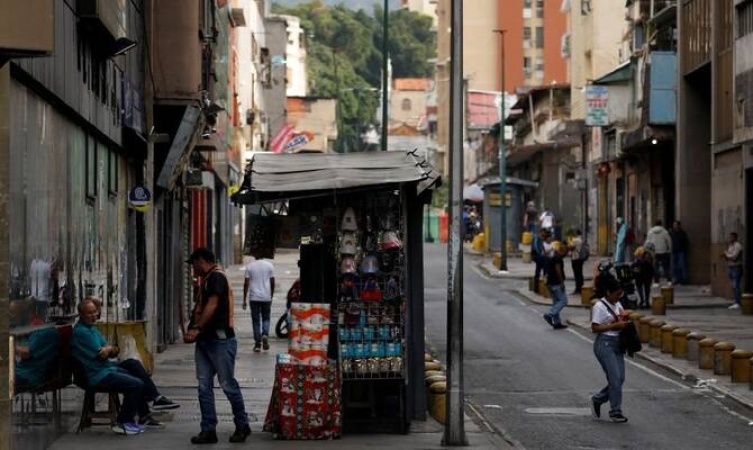
What unfolded in Venezuela over the weekend is not an isolated incident, nor should it be treated as such. It is a clear signal, one that deserves careful reading, not emotional reaction, and is a defining moment that exposes the fragile reality of the international order we inhabit today.
On Saturday, the US carried out a direct military operation on Venezuelan soil, resulting in the arrest of President Nicolas Maduro and his transfer to America to face criminal charges. This was not the result of a multilateral decision, nor the conclusion of an international judicial process. It was a unilateral act, executed by force.
The message is unmistakable: there are no absolute guarantees and state sovereignty is conditional when it clashes with the interests of powerful states.
If the accusations against Maduro were legal in nature, a simple question must be asked: Why was the International Criminal Court not used? Why were formal complaints not submitted, evidence examined and due process followed?
By bypassing international legal institutions, the US has effectively taken international justice into its own hands. In doing so, it has not only weakened Venezuela’s sovereignty but also undermined the very system it claims to uphold. This sets a dangerous precedent. If one power can ignore international mechanisms without consequence, what prevents others from doing the same?
The US is not the only global power. China, Russia, India, Pakistan and others all possess military strength and nuclear capability. If unilateral action becomes an accepted norm, who will restrain the next intervention carried out under the banner of “security” or “justice?” This is why Venezuela matters. Not because of sympathy for a regime or a leader but because the rules themselves are being rewritten.
The UN met. Statements were delivered. Concerns were voiced. But beyond words, there was little action. This familiar pattern sends a clear message to the world: power overrides principle and accountability is selective. When international institutions fail to act decisively, they do not preserve stability; they erode it.
Even warnings from UN bodies that such actions make the world less safe were met with indifference. This silence is not neutral; it is consequential.
President Donald Trump has repeatedly stated that Greenland is vital to US national security. If security interests justify unilateral action, it is reasonable to ask: Should the world expect similar logic to be applied elsewhere?
This is not alarmism. It is the logical outcome of a world in which power replaces law. The uncomfortable question we must ask, honestly and without illusion, is this: Who is safe today?
Despite this reality, we must be clear about one thing: we are not powerless.
The Arab world possesses immense human capital; scientists, innovators, thinkers and leaders, many of whom have contributed significantly to global progress when given the opportunity. Our challenge has never been a lack of talent. There has been a lack of consistent structures that protect, empower and retain that talent.
Our most successful Arab economies were not built through dependence. They were built on our land, by our people, through vision, discipline and long-term planning. This is not theory; it is lived experience. True independence does not come from slogans. It comes from knowledge, institutions and the ability to make sovereign decisions without fear.
So, what must be done? First, strengthen the Arab League in practice, not form. The Arab League must move beyond symbolism. It must evolve into a credible political, economic and security framework capable of protecting its members and deterring external pressure. A bloc that cannot protect its own sovereignty will not be respected by others.
Second, keep Arab capital and strategic assets within the region. Recent global events have once again proven a simple truth: assets held abroad are vulnerable. The freezing and seizure of Russian private assets in Europe stand as a clear reminder that political decisions can freeze, seize or restrict access to foreign-held wealth overnight, regardless of legal ownership or prior assurances.
The message is unmistakable: there are no absolute guarantees and state sovereignty is conditional.
Khalaf Ahmad Al-Habtoor
Economic sovereignty begins at home — through regional investment in food security, energy, industry and technology. This is not isolationism; it is prudence.
Third, unity, vigilance and trusted leadership circles. Unity is not an emotional concept; it is a strategic necessity. Arab states must coordinate policies, close ranks and reinforce internal cohesion. At the same time, it is imperative to examine carefully those closest to decision-makers, retaining only those whose loyalty to national interests is unquestionable.
History teaches us that internal weaknesses are often more destructive than external threats.
Venezuela is not an exception. It is a warning. We are entering an era where international guarantees are fragile, institutions are weakened and power speaks louder than principle. Awareness today is not a luxury; it is a requirement for survival. Those who understand the direction of the world and prepare wisely will endure. Those who rely on assumptions that no longer hold may not be given another opportunity.
The lesson is clear. The time to act is now. (ARAB NEWS)