Updating your news feed...
NEWS EXPRESS is Nigeria’s leading online newspaper. Published by Africa’s international award-winning journalist, Mr. Isaac Umunna, NEWS EXPRESS is Nigeria’s first truly professional online daily newspaper. It is published from Lagos, Nigeria’s economic and media hub, and has a provision for occasional special print editions. Thanks to our vast network of sources and dedicated team of professional journalists and contributors spread across Nigeria and overseas, NEWS EXPRESS has become synonymous with newsbreaks and exclusive stories from around the world.


























Loading banners
Loading banners...

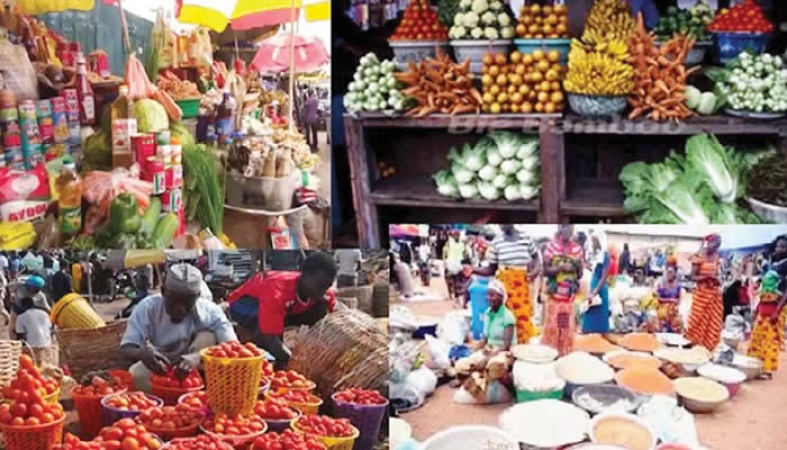
Food items displayed in a market
Nigeria’s recent disinflation gains could come under renewed pressure in 2026 as a combination of domestic and external shocks threatens to disrupt price stability, according to the PwC 2026 Nigeria Economic Outlook.
The report titled ‘Turning macroeconomic stability into sustainable growth’ disclosed that Nigeria achieved sustained disinflation in 2025, with headline inflation falling for eight consecutive months to 14.45 percent in November, a 3.5-year low driven by exchange rate stability, improved food supply, and tight monetary policy.
“Disinflation in 2025 was broad-based, but sustaining price stability in 2026 will hinge on how effectively Nigeria manages internal and external shocks,” PwC said in the report.
The outlook for 2026 remains fragile. PwC warned that food insecurity, energy market volatility, and others could reignite inflationary pressures if not carefully managed.
Here are five shocks that may disrupt Nigeria’s price stability
Food insecurity risks
One of the most significant threats to price stability in 2026 is food insecurity. PwC highlighted that ongoing insurgency and banditry in key food-producing regions, particularly in the North Central and Northeast, continue to disrupt agricultural output.
“The ongoing insecurity has led to an estimated 30.6 million people facing acute food insecurity during the 2025 lean season, with numbers expected to rise without sustained intervention,” the report stated.
Read also: Nigerians earning between N30,000 and N100,000 most affected by inflation in December – CBN
PwC warned that disruptions to food production and distribution would primarily fuel supply-side inflation, keeping food prices elevated even if demand conditions remain weak. Climate shocks, including flooding, erratic rainfall, and dry spells, have further reduced food availability and are expected to persist into 2026.
Energy and oil market shocks
Energy shocks also pose a material risk to inflation in 2026. PwC projects average crude oil prices around $55 per barrel, noting that a sustained downturn below this level could weaken government revenue and foreign exchange inflows.
“With Nigeria still reliant on fuel imports, reduced oil receipts would tighten FX liquidity and amplify energy-related pressures during periods of oil market volatility,” PwC said.
The report added that while lower oil prices could ease some fuel costs, exchange rate pressures arising from weaker FX inflows could offset these benefits and contribute to broader cost-push inflation across transportation and production sectors.
Pre-election fiscal pressures
PwC noted pre-election fiscal pressures as a key domestic risk ahead of Nigeria’s 2027 general elections. The report noted that election cycles in the past have been associated with elevated government spending on wages, transfers, and politically sensitive programmes.
“Pre-election pressures are likely to drive higher government spending, injecting additional liquidity into the economy and boosting aggregate demand without a proportional increase in goods and services,” PwC said.
Read also: Inflation projected to moderate further in 2026, but no single digit in sight
Such demand-side pressures, the report warned, could undermine disinflation efforts, particularly if combined with food supply disruptions or exchange rate instability.
Capital flow and FX shocks
External financial shocks could further complicate the inflation outlook. PwC noted that shifts in global risk sentiment, US interest rate expectations, and geopolitical tensions could reduce foreign portfolio inflows into Nigeria’s fixed income and equity markets.
“Weaker portfolio inflows or delayed foreign direct investment would reduce FX inflow momentum, tightening market liquidity and raising the naira cost of imports,” the report stated.
The report added that capital flow shocks could limit Nigeria’s ability to maintain exchange rate stability, increasing pass-through to domestic prices.
Geopolitical and trade disruptions
Heightened global geopolitical tensions, particularly in the Middle East and key shipping routes, were also identified as inflation risks. PwC warned that disruptions to global trade routes could raise freight and insurance costs, increasing Nigeria’s import bill for food, fuel, medicines, and industrial inputs.
“Escalating geopolitical tensions could amplify oil price volatility and global risk-off sentiment, affecting Nigeria’s FX inflows, external reserves, and borrowing costs,” PwC said. (BusinessDay)