
Updating your news feed...
NEWS EXPRESS is Nigeria’s leading online newspaper. Published by Africa’s international award-winning journalist, Mr. Isaac Umunna, NEWS EXPRESS is Nigeria’s first truly professional online daily newspaper. It is published from Lagos, Nigeria’s economic and media hub, and has a provision for occasional special print editions. Thanks to our vast network of sources and dedicated team of professional journalists and contributors spread across Nigeria and overseas, NEWS EXPRESS has become synonymous with newsbreaks and exclusive stories from around the world.

























Loading banners
Loading banners...

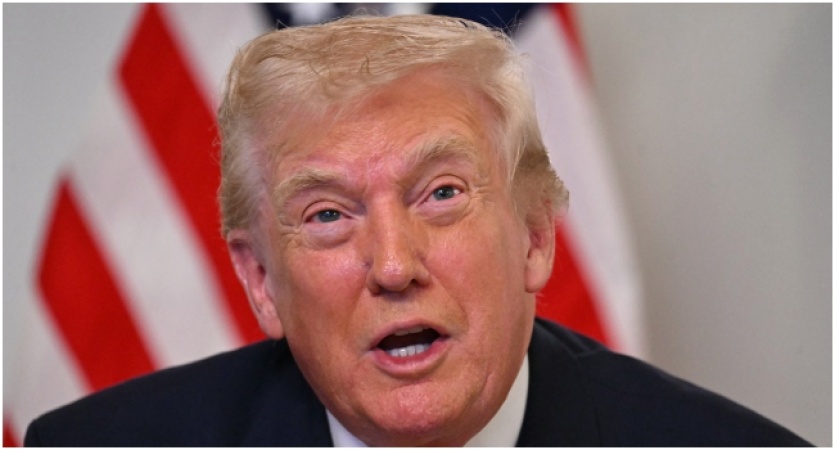
President Donald Trump has claimed that about 33.3 per cent of Nigerian immigrant households receive some form of public assistance from the United States.
He claimed in a chart he shared on his Truth Social platform on Sunday, where he detailed welfare participation rates among immigrant households in the United States.
Trump’s post comes as his administration continues to frame access to public benefits as a key consideration in shaping immigration rules and eligibility standards.
Titled “Immigrant Welfare Recipient Rates by Country of Origin,” the chart covers immigrants from approximately 120 countries and territories.
It shows the percentage of households receiving public support, including food assistance, healthcare benefits, and other welfare programs.
Countries with the highest reported rates of welfare participation among immigrants include Bhutan (81.4 per cent), Yemen (75.2 per cent), Somalia (71.9 per cent), the Marshall Islands (71.4 per cent), and the Dominican Republic and Afghanistan (both at 68.1 per cent).
Placing the country closer to the middle of the chart, Nigeria was listed at 33.3 per cent.
On the other hand, countries with the lowest welfare participation rates among immigrants included Bermuda, Saudi Arabia, Argentina, Korea, and Kenya, with rates ranging between roughly 25 and 29 per cent.
The welfare statistics were shared alongside expanded travel bans and immigration restrictions.
The White House, in June 2025, introduced a presidential proclamation imposing full and partial travel bans on several countries, citing security concerns, weak identity systems, and limited cooperation with U.S. immigration authorities.
And throughout 2025, the administration reiterated that welfare usage should factor into decisions on who is allowed to enter or remain in the United States.
As a follow-up, in late December 2025, the administration issued a public notice, extending the restrictions into 2026 and expanding the list to 39 countries, effective January 1, 2026.
While it added Burkina Faso, Mali, Niger, South Sudan, and Syria to the full ban category, partial restrictions were expanded to include Nigeria and several other African and Caribbean countries.
The partial restrictions affect access to immigrant visas and several non-immigrant visa categories, including student (F), vocational (M), and exchange (J) visas. (Channels tv)




