ADVERTISEMENT

ADVERTISEMENT

















Loading banners


NEWS EXPRESS is Nigeria’s leading online newspaper. Published by Africa’s international award-winning journalist, Mr. Isaac Umunna, NEWS EXPRESS is Nigeria’s first truly professional online daily newspaper. It is published from Lagos, Nigeria’s economic and media hub, and has a provision for occasional special print editions. Thanks to our vast network of sources and dedicated team of professional journalists and contributors spread across Nigeria and overseas, NEWS EXPRESS has become synonymous with newsbreaks and exclusive stories from around the world.
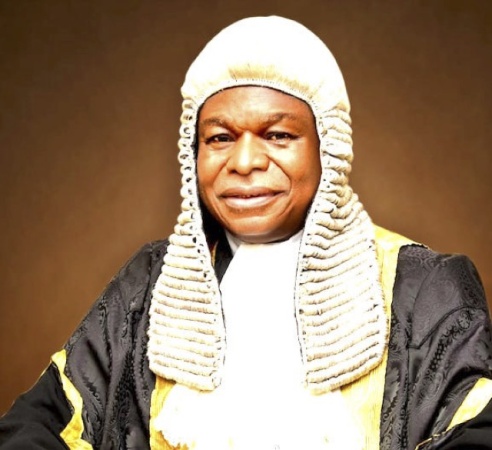
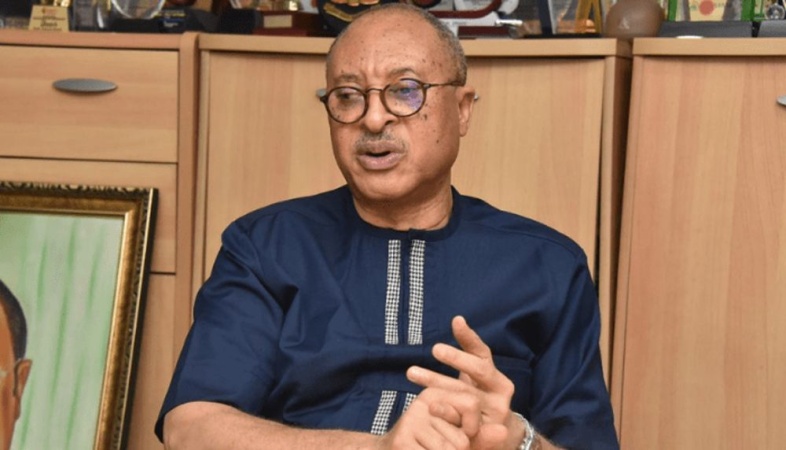
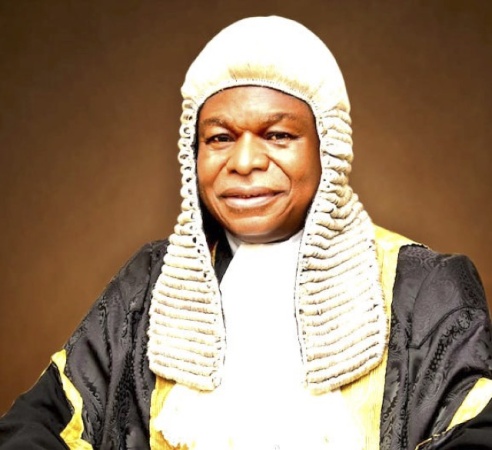
Dr Reuben Atabo, Senior Advocate of Nigeria SAN
A Senior Advocate of Nigeria (SAN), Dr. Reuben Atabo, has said that the dispensation of justice is too slow and sluggish in Nigeria’s judicial system.
In this interview with our correspondent shortly after he marked his 36 years at the Bar on December 18, 2025, Atabo said such delays of justice could scare away foreign investors.
How do you feel marking 36 years at the Bar, and what does this milestone mean to you?
I’m grateful to God Almighty for this wonderful 36 years at the Bar. It means a lot; 36 years old child, he’s no longer a baby, he’s already a mature man capable of marrying, taking a wife, and, if she is a woman, getting a husband. So, these 36 years have been the period when I started as a young lawyer and to what God has brought me and where he’s taking me to. So, it has been a challenging moment and a defining moment in my life and I give God praises, I give Him thanks. He has been so wonderful, He has been so merciful. I thank him for everything.
Can you share a defining moment in your career that shaped your approach to law?
Some of the defining moments I could regard is where injustice is done to one. Sometime in 1991, at the formative stage of my legal service, legal practice, one boy then, named Samuel Akwaya, he was a lesson teacher to one man and he was taking care of the children in terms of teaching, taking them classes at home. An incident happened in their house where their house was robbed. This boy became a suspect, Samuel Akwaya. The matter was reported to the police. The boy was framed up and kept in custody of Nigerian Prisons, then, now Correctional Centre, Kaduna. He spent about five, six months before I was contacted. He’s a Tiv boy from Benue State. And when I looked at the charge, the allegation against him, I took up the matter. The charge against him was for armed robbery. A teacher that had nothing more than a chalk in his hand. A teacher that had no gun and bullets. To the glory of God, I took up the matter. The boy was released and the charge against him was quashed. That was one of the defining moments; to the glory of God, the man became a free man.
How have you seen the Nigerian legal landscape evolve since you were called to the Bar?
I appreciate God that in the last 36 years there were a lot of changes in the legal space, a lot of changes in the legal profession, some as a result of technological development. When I was called to the Bar, what was prevalent then was typing of documents with typewriters, manual typewriters were in vogue. Within a short period, electronic typewriters evolved and made the process of typing easier than manual typewriters. And after that, computer age came up and this has greatly improved the processes from typing in the office to filing and even in the conduct of cases in courts. The officers of the courts, many of them have been trained, thereby becoming masters of computers, electronic typewriters, and the system keeps on evolving. And, to the glory of God, in some courts now in the Federation, there is a recording system. And I was told that, by 2026, even the Supreme Court will go digital. Record of appeal, transmission of everything will be done electronically, will be kept in the system. This will go a long way to hasten the administration of justice, reduce the burden of work on the judges. So, there has been a lot of improvement from the time I started legal practice in 1989 to date. So, there is some level of development.
What qualities do you believe make a good lawyer, and how do you think young lawyers can develop these traits?
One of the qualities of a good lawyer is, one, to be consistent, two, to be patient, three, to maintain integrity in all your conduct, and to reduce high temperament. You must be consistent and you must be studious. Once you have these qualities, that will be your power. You must be ready to work. Once there is work that is pending, you should be ready to work and make progress.
How important is pro-bono work in shaping the profession, and what role should senior lawyers play in mentoring the next generation?
You see, pro-bono cases are cases that are done mostly without payment and in some cases, in criminal matters. In some cases, even civil matters, pro-bono cases are handled as well by the media. I’ll give you one example: Sergeant Bala Akau, a soldier, was accused of murder. Military court martial was set up for him. He was tried and convicted of murder and to die by hanging. So, it was after this that the matter came to me on appeal to the Court of Appeal. At that time, prior to even appeal against the judgment of the court martial has lapsed. I took up the matter at the court of appeal. The appeal was allowed but he was not discharged by the Court of Appeal. The Court of Appeal now said I should bring a motion for the interpretation of that judgment. On the 5th day of July 2017, the Court of Appeal held that the appellant must stay in prison until another court martial was constituted. I took up the further appeal to the Supreme Court. At the Supreme Court, in Supreme Court No. 889, 2017, the appeal was allowed. The appellant was set free. So, it’s one of the cases that I’ve handled. And all through the Court of Appeal, Supreme Court, the man involved was already in prison, condemned to death. And his salary was nothing to write home about. It was not even enough to take care of his wife and children. So, to the glory of God, the appeal was allowed. He’s not in prison. He’s a free person today. That too is one of my defining moments. And it’s one of the things that I would recommend to senior lawyers as part of our role in mentoring the younger ones. Some younger ones may not have the patience to go through the rigours. But, above all, we are grateful to God.
What are the biggest challenges facing the Nigerian judiciary and legal practice at present?
Like any other institution in the country, there is no institution that is immune from challenges, so also the judiciary, several challenges are there: from the process of filing to courtroom to delivery of judgment. In some cases, in filing processes, there are a lot of delays of processes from one process to the other to such an extent that there are some allegations of exchange of money by the officials of the registry; so, the registry needs to work hard so that the process of filing will be easier and easily accessible to all litigants. Secondly, just as I have highlighted before, many judges are still writing judgments proceeding in longhand. And in some cases, you will discover that there are 25 to 30 cases in some jurisdictions. I was in Lagos last week and then several judges were attending to several cases that have piled up over time. These are some of the challenges faced by our judiciary.
What reforms would you champion to enhance access to justice in Nigeria?
One of the reforms that I would recommend is that all costs should be digitalised. I recommend e-filing. Once you want to file a process, it can be done from your register just the way filings have been done in the Corporate Affairs Commission. But the process should be put in place that all relevant fees must be paid. Two, I equally recommend that the advance party, the defender in the matter, both the plaintiff or the parties to an action, must be communicated through WhatsApp and through emails. It will go a long way to hasten the administration of justice. Once parties provide relevant information, your WhatsApp, your phone numbers, your text messages can be sent and that will be sufficient proof of hearing notices to the other parties. This will reduce the physical contact for information.
How can the Nigerian legal system be improved to increase foreign investment and economic growth?
One of the things that can attract foreign investment is quick dispensation of justice. Commercial transactions or disputes should not last more than one to two years, one and a half years. Where commercial transactions take up to three, four, five years to resolve the dispute, either through arbitration or through legal disputes in court, it will go a long way to impede foreign investments. Before most of these foreign investments can come to your country, look at your legal system. How fast can you disarm disputes? If your legal system ensures that disputes cannot be resolved within a reasonable time, that the judiciary has a weak institution or the system is weak, they may not proclaim life. To invest, say for instance, somebody will come to Nigeria to invest $1 billion. Any investor looks at the return on his investment. And if the return on his investment can be mitigated through litigation, you go to where your return on investment will be easier and where dispute resolution is faster. So, these are some of the things that impede development, particularly in developing countries. In some foreign jurisdictions, the process of litigation is very fast. The system has been put in place in such a way that once trial commences within a reasonable time, it will be determined. I cite two or three cases here. There was a case I handled from High Court. Durbar Hotel PLC vs. Casablanca United. We filed the case August 2006. Judgment was delivered 18 March, 2018. That is a period of 12 years. The appeal to Court of Appeal was decided… in part of 1999, the year we brought the law report. Then there is a further appeal to Supreme Court. Do you get it? From 2006 till now, we are in 2025. It’s a period of how many years? There is another one at the Supreme Court. It was filed in 1990. The matter is at the Supreme Court. And it went in 2017 for hearing of the appeal. That is a period of over 27 years litigation. These are some of the things, in my view, that will reduce foreign investment in a country.
What inspired you to become a lawyer, and how has your motivation changed over the years?
In the 1950s, some of my brothers from Okpotala village in present Kogi State in Omala local government area, went to Bagana market to sell their bags of cotton wool. And at that time, my people started embracing Western education. They started learning how to read and write. And how the scale was being weighed before payment for their cotton would be made. So, some of their brothers from the neighbouring Idrisu village, the people, including Expatriates, who were weighing the bags of cotton, decided to surcharge the people from Idrisu village. When some of our people noticed the surcharge, they raised the alarm. The people who were weighing the cotton, using scale to weigh, now called them aside. That they will treat the people fairly, with a proper way. But they should leave them to deal with the other people. Our people did not yield. And that caused a big fight, where some of our brothers and fathers were in prison. They were taken to prison custody. In the 1950s, before Nigeria got independence. They spent six months in prison at that time. When I grew up, and I was told of this story, it became a defining moment in my life. That wherever injustice lies, I will hate it. (The Sun)