ADAD
ADADUpdating your news feed...

NEWS EXPRESS is Nigeria’s leading online newspaper. Published by Africa’s international award-winning journalist, Mr. Isaac Umunna, NEWS EXPRESS is Nigeria’s first truly professional online daily newspaper. It is published from Lagos, Nigeria’s economic and media hub, and has a provision for occasional special print editions. Thanks to our vast network of sources and dedicated team of professional journalists and contributors spread across Nigeria and overseas, NEWS EXPRESS has become synonymous with newsbreaks and exclusive stories from around the world.










Loading banners
Loading banners...

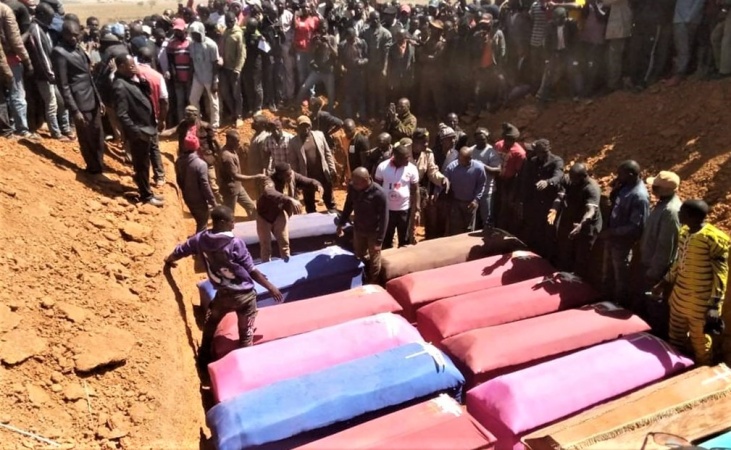
Mass burial of slain victims of Fulani herdsmen attack
(Over 35 churches destroyed, 33 pastors murdered)
Stakeholders in the North-Central geopolitical zone have raised the alarm over what they described as sustained and coordinated violence that has claimed no fewer than 11,749 lives in Plateau State between 2001 and 2025, warning that Nigeria risks further descent into insecurity unless urgent structural and constitutional reforms are undertaken.
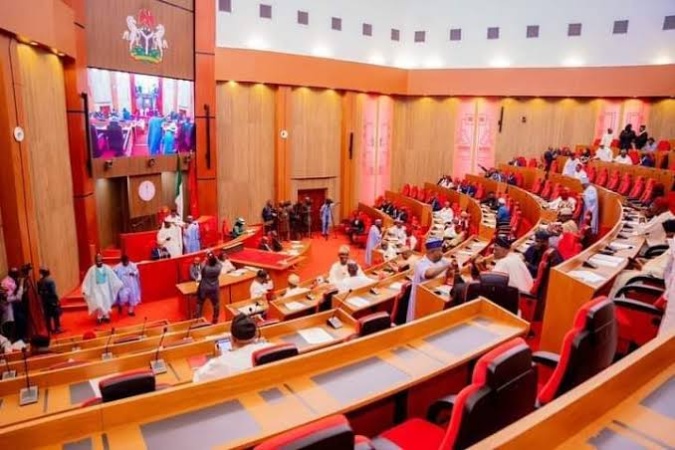
According to a Senate report presented by Senate Leader, Opeyemi Bamidele (APC, Ekiti Central), documentary evidence submitted by stakeholders painted a disturbing picture of long-running attacks, mass displacement, and the gradual erasure of indigenous communities.
“Between 2001 and 2025, stakeholders documented 11,749 deaths, attacks on 420 communities across 13 local government areas, and the displacement of 25,528 households,” Bamidele said while presenting the committee’s report.
The figures were contained in a report presented to the Senate last Wednesday and obtained by our correspondent.
According to the report, over 136 communities have been deserted by their original inhabitants and are now occupied and renamed by strangers, while more than 35 churches were destroyed and 33 pastors murdered within the period under review.
Stakeholders argued that the scale, pattern and persistence of the attacks suggest something beyond sporadic farmer-herder clashes.
“This is not merely farmer-herder conflict,” the report quoted stakeholders as saying. “It is systematic ethnic cleansing and territorial displacement, carried out through organised violence to erase indigenous Plateau communities from their ancestral lands.”
The hearing also heard that several villages in Plateau State had come under repeated attacks by unknown gunmen, often at night, leading to mass killings, destruction of homes and forced occupation of the affected areas by the attackers after the natives had fled.
Financiers, foreign fighters and arms flow
Beyond the casualty figures, stakeholders told senators that Nigeria’s security crisis is being fuelled by a complex web of financiers, arms suppliers and foreign fighters, particularly in the North-East, North-West and North-Central zones.
They warned that Boko Haram, bandits and armed Fulani herdsmen — described as the “triumvirate of evil” — thrive because their sources of funding and weapons remain largely intact.
Stakeholders called for urgent action to “track, identify and apprehend” those financing violent groups, insisting that seized assets should be used to compensate victims and survivors.
They further advocated technology-driven and intelligence-led warfare, noting that asymmetrical conflicts can no longer be addressed with outdated methods.
Call for commission of inquiry, state police
The hearing also renewed calls for the establishment of an Independent Commission of Inquiry, made up of individuals of “proven integrity and expertise in conflict management,” to investigate allegations of genocide, persecution and violent criminal attacks across affected regions.
On governance, stakeholders linked the worsening insecurity to the erosion of traditional institutions, arguing that prior to colonial amalgamation, ethnic nationalities were governed under native laws and customs that ensured order and mutual respect.
They urged a constitutional review to formally recognise traditional rulers and restore their relevance in local administration and conflict resolution.
Participants also criticised the contradiction in Nigeria’s constitution, which designates governors and local government chairmen as chief security officers without granting them control over security agencies in their domains.
“This imbalance,” they said, “justifies the clamour for state police, and the constitution must be amended to address it.”
Fulani communities, stereotypes and vigilantes
While acknowledging criminal elements among armed groups, stakeholders stressed that many Fulani communities in Plateau State have historically lived peacefully as pastoralists and agro-pastoralists.
However, they noted that since 2000, rising land pressure, proliferation of arms and ethno-religious tensions have worsened relations, leading to the stereotyping of innocent Fulani communities because of the actions of violent actors.
To stem further bloodshed, stakeholders recommended strengthening and properly equipping local vigilante groups, arguing that community members possess critical knowledge of terrain and attackers’ hideouts.
The hearing concluded with a consensus that Nigeria urgently needs a centralised, well-coordinated and well-equipped security architecture, backed by robust surveillance and intelligence-sharing with neighbouring countries to curb cross-border crimes. (BusinessDay)