
Updating your news feed...
NEWS EXPRESS is Nigeria’s leading online newspaper. Published by Africa’s international award-winning journalist, Mr. Isaac Umunna, NEWS EXPRESS is Nigeria’s first truly professional online daily newspaper. It is published from Lagos, Nigeria’s economic and media hub, and has a provision for occasional special print editions. Thanks to our vast network of sources and dedicated team of professional journalists and contributors spread across Nigeria and overseas, NEWS EXPRESS has become synonymous with newsbreaks and exclusive stories from around the world.
















Loading banners
Loading banners...

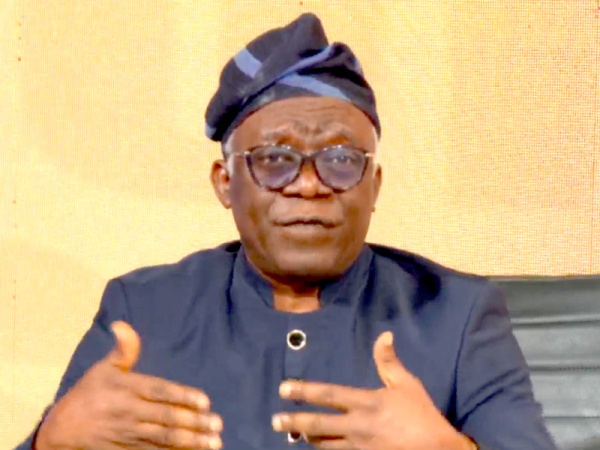
Femi Falana, SAN
Human rights lawyer, Femi Falana, has said that the new tax laws cannot take effect until the controversies surrounding the legitimacy of their provisions, occasioned by allegations of insertion, are addressed.
The Senior Advocate of Nigeria stated this in a chat with journalists at his Ilawe-Ekiti hometown on Wednesday.
Falana said the Federal Government ought to have used the last few days of 2025 to address the issue and make clean copies of the new tax laws available before January 1, 2026.
“If that was not done, the government will put itself in trouble by deciding to implement the laws. There are interest groups ready to challenge the legitimacy of the laws,” he said.
There have been allegations that certain provisions were smuggled into the tax bills passed by the National Assembly, making the tax laws signed by President Bola Tinubu on June 26, 2025, and billed to take effect from January 1, 2026, different from the bills passed by lawmakers.
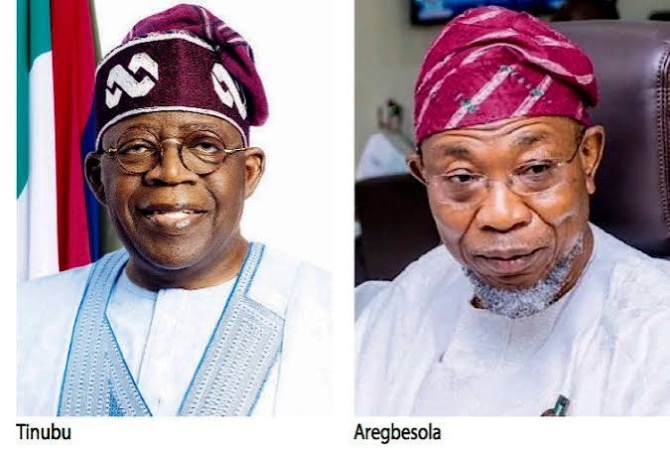
Recall that President Bola Tinubu, in a personally signed statement on Tuesday, said the implementation of the new tax laws, including those enacted on June 26, 2025, and the remaining Acts scheduled to commence on January 1, 2026, would take effect as planned.
Tinubu said the reforms represented “a once-in-a-generation opportunity to build a fair, competitive and robust fiscal foundation” for the country, clarifying that the new laws were not intended to increase taxes but to support a structural reset, drive harmonisation and protect dignity while strengthening the social contract.
The President urged all stakeholders to support the implementation phase, which he said was now “firmly in the delivery stage,” adding that “no substantial issue has been identified that warrants a disruption of the reform process.”
However, Falana stated that the laws could not take effect until the controversies surrounding their legitimacy were resolved.
“The laws cannot take effect until the controversies surrounding the legitimacy of the provisions are addressed.
“There are questions about the authentic tax laws, so which laws are we talking about? Until we have clean copies of the tax laws, you cannot talk about a commencement date.
“There is a serious allegation that some items were smuggled into the new tax laws. Some have described it as forgery. Whichever way you look at it, the National Assembly has itself to blame.
“In this day and age, it is unacceptable that we cannot access bills passed by the National Assembly and signed into law by the President. Why are the bills not on the website of the National Assembly?
“If you want to run a transparent government, the proceedings of the National Assembly, laws passed by the legislature and signed by the President should be accessible to all,” Falana said.
Falana noted that the government considered the tax laws part of its economic reform programme, stressing the need for Nigerians to familiarise themselves with the provisions of the laws.
He charged the government to be ready to justify the imposition of taxes on Nigerians.
“As taxes are going to be imposed on Nigerians, the federal, state and local governments should be prepared to justify the payment of taxes. The government must be prepared to use the taxes to fight poverty, unemployment, insecurity and infrastructural decay that have arrested the development of the economy.
“The government cannot expect Nigerians to pay more taxes if they cannot send their children to school, afford school fees, pay for astronomical medical bills or even buy food,” he said.
Falana also threatened to drag the Federal Government to court over what he described as a discriminatory policy that excluded some companies from paying taxes.
“Under the new laws, some of those who make money and smile to the banks daily are excluded from paying taxes. For instance, in some parts of the country, free trade zones are being established.
“The richest companies in Nigeria operate in those zones. They are excluded from paying taxes and levies imposed by the federal, state and local governments. The goods imported by those companies are also exempted from paying duties at the ports.
“If you want to engage in progressive taxation, the rich must pay much more than the poor, but the reverse is the case under the new tax regime. You can’t have hundreds of companies operating in free trade zones without collecting huge taxes from them. It is unjust, discriminatory and illegal.
“So whenever the laws are properly passed, the government should expect legal challenges to the discriminatory tax regime in the country.
“The laws that exclude certain companies from paying taxes were enacted by military dictators under defunct military regimes.
“Any law that is inconsistent with the provisions of the Constitution will have to go. Those making huge profits cannot be excluded from paying taxes. It is ridiculous,” Falana said. (The PUNCH)




