ADVERTISEMENT

ADVERTISEMENT



















Loading banners


NEWS EXPRESS is Nigeria’s leading online newspaper. Published by Africa’s international award-winning journalist, Mr. Isaac Umunna, NEWS EXPRESS is Nigeria’s first truly professional online daily newspaper. It is published from Lagos, Nigeria’s economic and media hub, and has a provision for occasional special print editions. Thanks to our vast network of sources and dedicated team of professional journalists and contributors spread across Nigeria and overseas, NEWS EXPRESS has become synonymous with newsbreaks and exclusive stories from around the world.

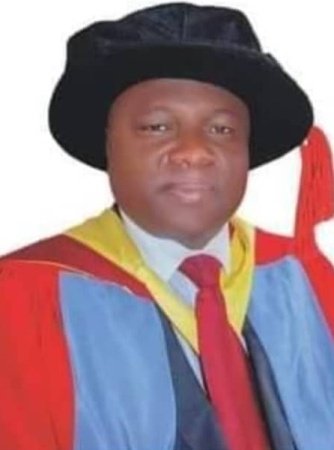
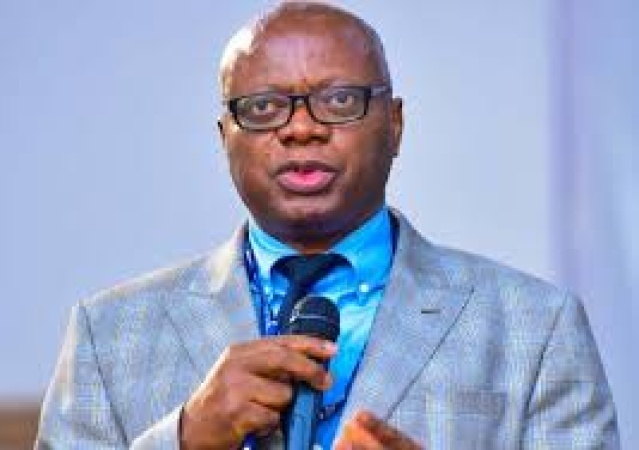
Prof Abdullahi Ribadu, Executive Secretary, National Universities Commission NUC
Professor Abdullahi Ribadu is the Executive Secretary of the National Universities Commission (NUC). He was a former vice chancellor of the Federal University of Technology, Yola, and later served as the pioneer vice chancellor of Jigawa State University, Kafin Hausa. In this interview, Ribadu tells CLEMENT IDOKO why the Federal Government cannot determine tuition fees charged by private universities in the country, weighs in on the embargo on the creation of new federal universities and the NUC’s readiness to clamp down on degree mills, among other key issues shaping the Nigerian university system. Excerpts:
The Federal Government recently placed a moratorium on the establishment of new federal universities, in spite of the fact that over two million applicants seek admission every year, with few getting placement in available spaces. Is it to say that the existing number of universities is adequate for the country?
Given the growing population of this country, we cannot say the existing number of universities is adequate. However, given the manpower, facilities and equipment deficits that the existing ones struggle with, I believe the embargo is a step in the right direction. There has also been a trend where proposals for new public universities arise more from local expectations than from the results of national planning. When universities are created this way, they often start without the requisite infrastructure or funding needed to deliver quality.
Slowing down the creation of new public universities gives the country a chance to focus on improving the ones already in existence and to ensure that any future establishments are driven by clear developmental needs rather than other considerations. Therefore, at the NUC, we believe that expansion of public institutions is better than creation. Instead of creating more universities, it is better to expand the existing ones by increasing their capacities in terms of human resources, equipment provision and structural expansion, with a view to boosting capacity and ensuring quality.
The Core Curriculum Minimum Academic Standard (CCMAS) has been implemented across Nigerian universities for a while now. How is it making our graduates employable?
CCMAS is structured in such a way that it equips undergraduates with the requisite knowledge they need to specialise in their respective fields. It affords them a comprehensive curriculum needed in their area of knowledge pursuit. Unlike the Benchmark Minimum Academic Standards (BMAS), which used to combine courses from the core area of expertise and related areas, CCMAS solely focuses on the area of specialty an undergraduate is pursuing.
Despite the rapid increase in the number of private universities nationwide, they still attract only a very small share of total student enrolment. What, in your view, is responsible for this trend, and how can it be reversed?
I think we can look at it from a socio-economic point of view. What I mean by that is that many parents and guardians struggle financially; hence, they would prefer to send their children and wards to public universities where they spend less in terms of registration and other expenses. Private universities charge higher fees as they do not receive government funding. They depend almost entirely on tuition to cover their operational costs, including the cost of establishing and maintaining physical facilities. This makes them less accessible to a large segment of the population.
Reversing the trend may require an improvement in the financial standing of parents, if that is possible. We cannot determine how private universities charge, but we can ensure that they face strong competition from public universities through quality assurance. However, a broader range of student financing options can also make a difference. The current government loan scheme is focused on public universities because of limited funds, and it has not had an impact on enrolment into private universities for now. In the long term, similar financing models, scholarships, or targeted grant schemes from non-government actors, such as private sector scholarship schemes, could open more pathways for students to consider private institutions.
In the past, NUC had secured various forms of support and grants for Nigerian universities through the Africa Centres of Excellence (ACEs) and other initiatives. Should the sector expect additional funding, and can you quantify the amount attracted in the past year?
Currently, the NUC, through various partnerships between donor agencies such as the World Bank and AFD and the Nigerian government, has secured various loans for intervention. Since universities are meant to proffer solutions to a nation’s existential problems, there will always be a need for more funding to ensure the sustainability of these centres and the work they are doing. So, yes, we expect additional funding.
Regarding the amount attracted in the past year, the Commission secured €38 million for an AFD (French Development Agency) Blueprint ICT Development Project, which will expand digital infrastructure in 10 selected universities. The Commission is also in talks with the World Bank and the Federal Government to secure an additional $65 million for the ongoing Sustainable Procurement, Environmental and Social Standards Enhancement (SPESSE) project, as well as $150 million for the ACE Innovate project, a new phase of research collaboration for all existing ACE centres and other universities in Nigeria.
Stakeholders have expressed concerns that a number of governors establish state universities but struggle to fund them adequately, leaving most of the burden to the Tertiary Education Trust Fund (TETFund). What is the take of the commission on this?
Education is on the Concurrent List in the Constitution. States should only establish additional universities if there is a need and if they can sustain them without relying largely on other interventions like TETFund. On our part, the NUC will ensure that due process is strictly followed in establishing universities and in their operations. All states in the country have at least one university. TETFund can only intervene in one university at a given time.
Research funding in universities appears to receive only moderate attention. What, in your opinion, can be done to revitalise research sponsorship and ensure that research outputs are fully utilised?
An important means of securing research funding is the ability of universities to identify sources of funding and access them. There are many institutions in the world ready to partner with academics in Nigerian universities to conduct research peculiar to their terrain. What universities need to do is ensure that their staff are well equipped with the knowledge and techniques of writing proposals and conducting research worthy of sponsorship or partnership, as the case may be.
They need to build the capacity of staff to write strong, competitive proposals that can attract grants and sponsorship. This, however, does not mean that sourcing funding should be solely the responsibility of universities or their staff. The Federal Government also has an important role to play. Recently, the Honourable Minister of Education, Dr Tunji Alausa, announced that significant progress has been made towards the establishment of a National Research Development Fund Agency to provide support for research and innovation in Nigeria.
Since assumption of office, what have been some of the major challenges affecting the smooth operations of the Commission?
Funding is the major challenge. The overhead cost is inadequate and sometimes not fully released. Another major challenge the Commission faces is the outdated nature of the laws that establish and guide the NUC’s work. The current legal framework does not give the Commission the tools it needs to address emerging problems, especially the rise of degree mills. The Commission has no power to criminalise their operations or impose penalties on their promoters. This limits enforcement and allows illegal providers to exploit students and parents.
Another challenge is interference from some professional regulatory bodies in areas that fall within the NUC’s mandate. The Commission is responsible for setting and maintaining academic standards for all degree programmes in universities, while professional bodies are expected to guide practice within their respective fields. Yet, many professional bodies now issue directives on academic matters that conflict with NUC requirements. This creates confusion for universities and weakens confidence in the system because institutions are unsure whose directives to follow.
We are making progress through ongoing joint accreditation exercises with some professional bodies, although a few procedural issues still need to be resolved to ensure smooth implementation. Updating the Commission’s operational laws to accredit academic degrees without recourse to any authority and criminalise the operations of degree mills will allow the Commission to regulate more effectively and strengthen the credibility of the Nigerian University System.
What is the Commission doing following your earlier announcement to clamp down on degree mills?
Part of what we are doing now is automating the accreditation of academic programmes in Nigerian universities. Once this is achieved, we will be able to curtail attempts to create degree mills and make relevant information available to the public regarding the credibility of all degree-awarding institutions in the country. We also maintain and update the official list of approved universities on the Commission’s website and weekly Monday bulletin, which helps the public confirm which institutions are licensed to award degrees.
A major limitation remains the current legal framework, which does not give the Commission powers to criminalise or impose penalties on operators of degree mills. We have made submissions for the review of the NUC Enabling Act so the Commission can enforce stronger sanctions. Once the law is updated, our capacity to clamp down on degree mills will be significantly strengthened.
Nigerian universities continue to rank poorly on the global stage. What are the underlying issues, and does the NUC have any plan to undertake a national ranking of Nigerian universities?
This issue is largely about the database being referenced. Nigerian universities do not have the visibility enjoyed by many institutions globally. Part of my priorities in office is to ensure that Nigerian universities gain global visibility and compete in recognised international ranking systems. We aim to achieve this by enhancing their visibility.
What is the NUC, as a regulator, doing on issues of sexual harassment, cultism, rape and other vices in universities to ensure a credible university system?
I want to categorically affirm that social vices in whatever form will not be tolerated within the Nigerian University System. The NUC is working closely with universities to ensure that students are safe on campuses and that no student is short-changed due to the unscrupulous actions of a few individuals within the system.
The Commission continues to encourage universities to strengthen reporting mechanisms, enforce disciplinary procedures, and create support systems for students. We also engage universities on the need for clear policies that address staff and student conduct. Over the past year, the NUC has participated in several gender-based violence prevention and anti-bullying initiatives. These platforms help us share expectations on adequate student support facilities and push for stronger campus safety standards across the system.
What are the Commission’s plans for transnational education, and how does it impact the nation’s university system?
The Commission sees transnational education as an important avenue for widening and deepening international collaboration across Nigerian universities. Our focus is to help universities build credible partnerships with reputable foreign institutions that can deliver degree programmes in Nigeria or collaborate on joint teaching, research and curriculum development.
To guide this process, the Commission issued guidelines for transnational education, which ensure that all foreign partners operate in line with national quality requirements and global best practices. The Commission recently granted a licence for the operation of Nigeria’s first TNE branch campus to Lincoln University College, Malaysia (Kuno Campus), and is currently processing several TNE applications on twinning, articulation and teaching institutions.
When properly integrated into the Nigerian University System, TNE will offer students more choices and create stronger opportunities for knowledge exchange. It will also help reduce brain drain by giving Nigerian students and academic staff access to international learning experiences within the country. Ultimately, this will strengthen the university system and support national development. (Nigerian Tribune)