
Updating your news feed...
NEWS EXPRESS is Nigeria’s leading online newspaper. Published by Africa’s international award-winning journalist, Mr. Isaac Umunna, NEWS EXPRESS is Nigeria’s first truly professional online daily newspaper. It is published from Lagos, Nigeria’s economic and media hub, and has a provision for occasional special print editions. Thanks to our vast network of sources and dedicated team of professional journalists and contributors spread across Nigeria and overseas, NEWS EXPRESS has become synonymous with newsbreaks and exclusive stories from around the world.







Loading banners
Loading banners...

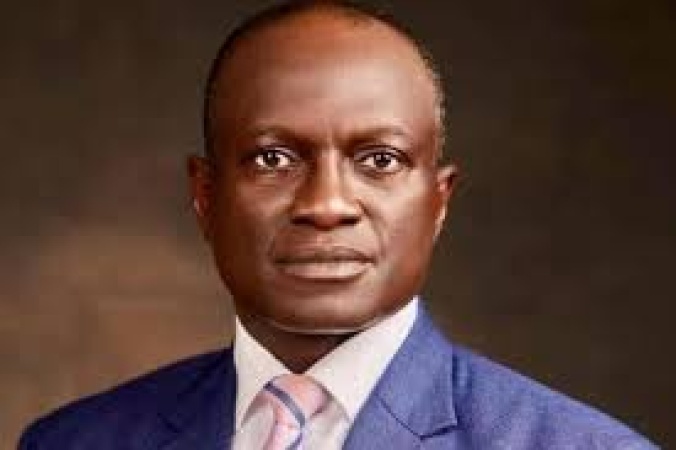
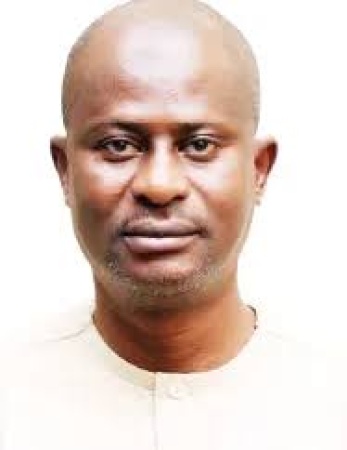
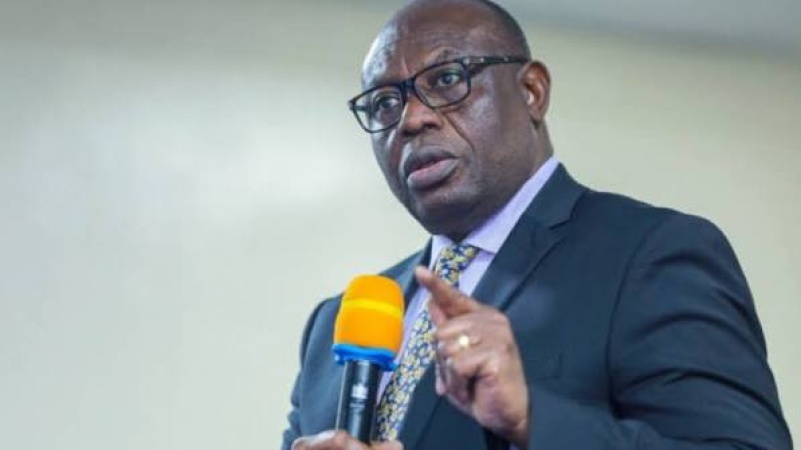
NCTC National Coordinator, Adamu Laka
Nigeria’s position as the largest and wealthiest economy in West Africa has inadvertently turned the country into a prime destination for kidnappers and terrorist financiers operating across the sub-region, Adamu Laka, National Coordinator of the National Counter Terrorism Centre (NCTC), has said.
Laka made the disclosure during an end-of-year media interactive session with journalists in Abuja on Tuesday, where he outlined the evolving dynamics of terrorism, kidnapping, and transnational criminal financing in Nigeria and the wider West African region.
According to him, Nigeria’s capacity to meet high ransom demands has made it especially attractive to criminal networks seeking funds to sustain terrorist and bandit operations.
“If you look at the whole region, Nigeria is the richest country in West Africa. Nigeria is the only country where you kidnap somebody, ask for ₦100 million, and it will be paid. That is why these people come into this country to look for means of running their operations”, Laka said.
The NCTC coordinator said kidnapping in Nigeria has evolved beyond a local crime into a transnational criminal economy, with ransom payments now serving as a major funding stream for terrorist organisations operating within and beyond Nigeria’s borders.
He explained that proceeds from kidnappings are often funnelled into arms procurement, logistics, recruitment, and the expansion of violent networks, worsening insecurity across the region.
Despite the scale of the challenge, Laka said Nigerian security agencies have significantly strengthened their capacity to disrupt terrorist financing, particularly through the tracking and recovery of ransom payments.
“We track ransom payments, we recover funds, and we make arrests.These issues are security-sensitive, so we cannot disclose all details. But I can assure you that many people have been arrested based on ransom payments and prosecuted in court”, he said.
Laka linked Nigeria’s recent exit from the Financial Action Task Force (FATF) Grey List to sustained counterterrorism financing efforts, noting that investigations and prosecutions related to ransom payments played a decisive role in meeting international compliance benchmarks.
Under Presidential Implementation Order 9, he said a Joint Investigation Committee was established, bringing together the Economic and Financial Crimes Commission (EFCC), the Nigeria Financial Intelligence Unit (NFIU), the judiciary, police, military, and other relevant agencies to tackle terror financing linked to kidnapping.
“We provided FATF with evidence of cases handled, assets seized, funds recovered, and prosecutions concluded. These were part of the requirements that helped Nigeria exit the Grey List”, he said.
The NCTC coordinator raised concerns over the increasing abuse of Point-of-Sale (POS) operators as conduits for ransom payments, explaining that kidnappers often rely on third-party accounts to receive funds anonymously.
“A victim transfers ransom into a POS operator’s account, and the kidnappers simply go and collect the cash,” he said, adding that security agencies are tightening oversight and closing regulatory loopholes to disrupt the practice.
Beyond financial channels, Laka disclosed that terrorist and bandit groups have increasingly exploited social media platforms for recruitment, communication, propaganda, and glorification of criminal acts.
“We have taken down many terrorist social media accounts. We hold meetings with TikTok, Instagram, Facebook, X, Snapchat. There was a time bandits openly displayed their loot on TikTok through live streams. You don’t see that anymore because we shut them down”, he said.
He noted that terrorists frequently register accounts using aliases and exploit weak verification systems, but stressed that Nigerian authorities are continuously adapting to counter evolving digital tactics.
“Terrorism is evolving. Every time they change tactics, we respond. We will not relent,” he said.
Laka also declared that there is no meaningful distinction between mass kidnapping and terrorism, stressing that both are deliberate acts designed to instil fear, undermine state authority, and destabilise society.
According to him, criminal gangs involved in mass abductions, banditry, and large-scale violence now operate in ways that mirror classical terrorist organisations in both intent and impact.
“What is the objective of kidnapping hundreds of schoolchildren or attacking entire communities if not to instil terror, extract concessions, and cripple normal life?” he asked.
He added that the effects, mass displacement, shutdown of schools and farms, psychological trauma and fear are indistinguishable from terrorism.
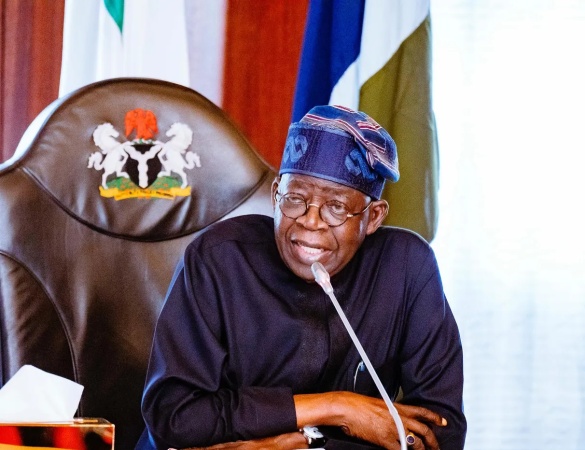
He said President Bola Tinubu’s formal classification of bandits, armed non-state actors, and major criminal gangs as terrorists marked a decisive shift in Nigeria’s national security policy, enabling a more unified and forceful response under both domestic and international law.
Laka explained that while groups such as Boko Haram and the Islamic State West Africa Province (ISWAP) are ideologically driven, bandit groups increasingly display core terrorist characteristics, including territorial control, parallel taxation systems, organised violence, and direct challenges to the state’s monopoly on force.
He further revealed growing evidence of convergence between insurgents and bandits, including shared weapons, logistics, and tactical cooperation, which he said has strengthened the case for a single, integrated counterterrorism framework.
The NCTC coordinator urged the media to balance press freedom with national security considerations, cautioning against the premature release of sensitive operational details that could endanger lives or compromise ongoing security operations.
“In this era of instant news and digital virality, responsibility is critical. National security and press freedom are not adversaries; they are complementary pillars of democracy”, he said.
He reaffirmed the NCTC’s commitment to sustained engagement with journalists through regular briefings and structured information sharing, describing the media as indispensable partners in countering extremist narratives and denying criminals the publicity they seek.
Laka also emphasised the need for a whole-of-society approach to tackling insecurity, warning that security agencies cannot succeed without community cooperation.
“These people are within us. Communities know who is involved. Security agencies cannot act if information is withheld. We must decide what kind of society we want and work together to achieve it”, he said.
Looking ahead, Laka disclosed that Tinubu has directed security agencies to significantly escalate counterterrorism operations in 2026, with the NCTC positioning itself as a regional centre of excellence to address cross-border threats in West Africa.
“Terrorism knows no borders. We are not only looking at Nigeria but the entire sub-region. In 2026, we are going to up our game”, he said.
He assured Nigerians of the Federal Government’s resolve to protect lives, restore stability, and confront all forms of violent threats undermining the country’s peace and unity. (BusinessDay, excluding headline)




