
Updating your news feed...
NEWS EXPRESS is Nigeria’s leading online newspaper. Published by Africa’s international award-winning journalist, Mr. Isaac Umunna, NEWS EXPRESS is Nigeria’s first truly professional online daily newspaper. It is published from Lagos, Nigeria’s economic and media hub, and has a provision for occasional special print editions. Thanks to our vast network of sources and dedicated team of professional journalists and contributors spread across Nigeria and overseas, NEWS EXPRESS has become synonymous with newsbreaks and exclusive stories from around the world.














Loading banners
Loading banners...

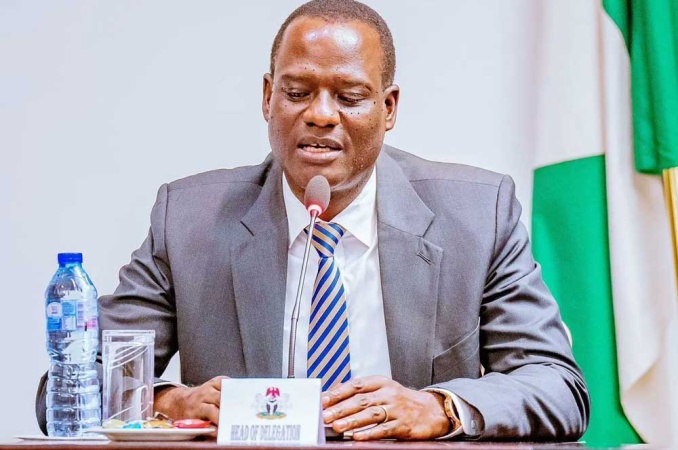
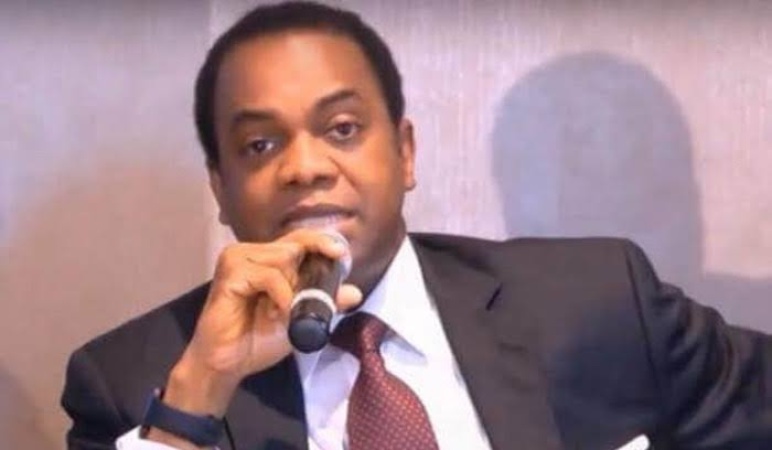
Taiwo Oyedele, Chairman, Presidential Committee on Fiscal Policy and Tax Reforms
The controversy trailing Nigeria’s tax reforms intensified yesterday as claims of altered legislation, calls for strikes and protests, and warnings of public revolt clashed with official denials, exposing a widening crisis of trust, transparency and governance.
The opposition Action Democratic Party (ADP) condemned alleged post-legislative alterations to Nigeria’s Tax Act 2025, dismissing official claims of a “printer’s error” as indefensible and warning that the controversy points to a deeper crisis of governance under President Bola Ahmed Tinubu’s administration.
Speaking at a State of the Nation address in Abuja yesterday, the ADP’s National Chairman, Yabagi Yusuf Sani, described the reported alterations as a “grave constitutional violation” that undermines parliamentary authority and democratic accountability.
“You cannot explain away alterations to an Act of Parliament as a printer’s error. Defending the indefensible is itself a slap on Nigerians and a clear sign of government failure,” Sani said.
He stressed that legislative authority rests solely with the National Assembly, warning that any tampering with laws after their passage, if proven, would amount to a serious breach of the constitutional order.
“If there are errors or policy concerns, the law is clear. The government must return to Parliament, propose amendments, and convince lawmakers. Smuggling clauses into a law that has already been passed is not reform. It is abuse,” he added.
Sani said that while Nigeria urgently requires tax administration reform, such changes must not be implemented in a way that punishes ordinary citizens or erodes public trust.
He acknowledged ongoing efforts to modernise the tax system and said that measures aimed at shifting the tax burden from poorer Nigerians to wealthier individuals, alongside targeted tax reliefs, could help stimulate economic growth if implemented transparently.
“We commend aspects of the reform agenda that seek fairness and efficiency. But reform loses legitimacy when due process is violated, and the burden is placed disproportionately on struggling Nigerians,” he said.
Coalition urges halt to tax laws, calls for mass resistance
ALSO, a coalition of left-wing organisations operating under the Network of Abuja Left Groups called on the Federal Government to suspend the implementation of the new tax laws, scheduled to take effect on January 1, 2026.
In a statement, the coalition rejected the tax laws outright and called for mass resistance, describing them as a direct assault on Nigeria’s working population.
The group accused the administration of President Bola Tinubu of advancing policies that would further impoverish workers, traders, youths and other vulnerable Nigerians already facing severe economic hardship.
The statement was jointly signed by representatives of several organisations, including the Creative Change Centre, the Democratic Socialist Movement, the Revolutionary Socialist Movement, the Socialist Workers League, the Committee for the Defence of Human Rights, and other civil society and labour rights groups.
According to the coalition, the new tax regime seeks to extract additional resources from citizens who are already under intense economic pressure. It alleged that the laws were designed to finance what it described as the “luxury of an oligarchic class” and to service foreign debts, rather than support national development.
The Network of Abuja Left Groups also raised concerns about the legislative process behind the tax laws, claiming that some lawmakers had exposed what it called “criminal alterations” to the legislation after it was passed by the National Assembly. It said governing with what it termed a “doctored statute” would be undemocratic and unacceptable.
The coalition appealed directly to organised labour, urging the Nigeria Labour Congress and the Trade Union Congress to align with public opposition to the tax laws. It called on both labour centres to declare a nationwide strike and mobilise protests against what it described as the Tinubu administration’s “anti-people policies”.
Anchoring its call for resistance on historical precedents, the group cited popular opposition to colonial-era taxation, including labour protests and women-led uprisings such as the Aba Women’s Riots and the Egba women’s resistance. It argued that unjust taxation had historically failed in the face of organised popular resistance.
“You cannot tax poverty into prosperity,” the group said, adding that more than six decades after independence, Nigeria should not be subjected to what it likened to colonial-style taxation.
The coalition called for the immediate suspension of the tax laws and the commencement of a repeal process. It insisted that any future tax reforms should be subjected to broad public consultation beyond the National Assembly, rather than imposed through what it described as “technocratic diktat”.
It further urged Nigerians to reject the tax laws and prepare for sustained mobilisation, pledging to actively participate in organising mass resistance and calling for a united front of workers, youths and students.
“As a first step, we demand the immediate and unconditional suspension of these tax laws,” the statement said. “We strongly urge Nigerians not to accept the tax law and resolutely fight against it. A government that gives nothing to citizens should not take everything away from them.”
Tax reforms risk rejection without transparency, lawyer warns
SIMILARLY, the Federal Government has been urged to urgently clarify its proposed tax reforms amid growing concerns that Nigerians may reject the measures due to a lack of transparency and weak public trust in state institutions.
Niyi Aborisade, a UK-based human rights lawyer and political commentator, warned yesterday that citizens would resist paying additional taxes unless they were confident that public funds would be managed responsibly.
Speaking in an interview with The Guardian in Ibadan, Aborisade described Nigeria’s economic climate as “a perfect storm” for public dissatisfaction.
“Taxation is a normal and necessary part of governance worldwide,” he said, “but in Nigeria, trust is fundamental. Citizens cannot be expected to surrender 25 per cent of their income to a government that has mismanaged oil revenues, wasted public funds, and failed to explain how resources are being deployed.”
He cited the removal of fuel subsidies and the sharp rise in petrol prices, from about N125 to nearly N859 per litre, as policies that have intensified hardship for ordinary Nigerians.
“Yet there has been no clear communication on how these new tax revenues will be collected, or how they will directly benefit the people,” Aborisade said. “Without transparency and accountability, these reforms risk becoming deeply unpopular.”
The lawyer also drew attention to the broader economic context in which the tax measures are being introduced, pointing to high inflation, a weakening naira, collapsing infrastructure and widespread poverty.
“Introducing new taxes under these conditions, without proper consultation or explanation, is a recipe for public anger and potential unrest,” he warned.
Aborisade called on government officials to engage more actively with citizens and civil society organisations to explain the rationale behind the proposed tax regime, stressing that fiscal discipline must accompany any increase in tax obligations.
“Until Nigerians see responsible governance, imposing new taxes will remain unjustifiable,” he said.
He further emphasised the importance of democratic accountability, warning that citizens were increasingly unwilling to tolerate poor governance or electoral manipulation.
“The people will decide the future, and no amount of power or money can permanently silence them,” Aborisade said.
His comments come as many Nigerians continue to struggle with rising living costs, shrinking purchasing power and inadequate public services. Analysts warn that failure to clearly communicate tax plans could heighten social tension, undermine public trust and weaken the government’s credibility ahead of future elections.
“The government must not assume that citizens will automatically comply,” Aborisade added. “People are tired of empty promises and reckless spending. They want transparency, accountability and concrete benefits for their contributions.”
Oyedele dismisses claims of tax law alterations, urges focus on reform process
However, the Chairman of the Presidential Fiscal Policy and Tax Reforms Committee, Taiwo Oyedele, rejected claims that the new tax laws were altered, describing the controversy as a governance and process issue rather than a political dispute.
In a post on X yesterday, Oyedele said the debate should not be framed as a clash between the legislature and the executive, insisting that tax reform must be grounded in trust, facts and accountability.
“To be clear, this is not a legislative versus executive blame game, nor is it politics. It is a process and governance issue,” he said.
Oyedele stressed that tax policy sits at the heart of the social contract between government and citizens, warning that fear and misinformation only breed uncertainty and further erode public confidence.
“Tax policy affects citizens directly, being at the centre of the social contract, so it must be anchored in trust and facts, not fear or misinformation, which only creates uncertainty and further undermines confidence,” he said.
He dismissed a viral document circulating online, which alleged specific alterations to the tax laws and was presented as the report of a committee set up to investigate the matter.
“The viral document claiming specific alterations to the tax laws and presented as the report of the committee set up to investigate the issue surfaced when the committee had not even met,” Oyedele said.
He urged Nigerians to use the controversy as an opportunity to strengthen institutional processes and accountability, rather than spread what he described as misinformation.
“Rather than spreading misinformation, we should seize this moment to strengthen our processes, deepen accountability, and build a tax system that moves Nigeria forward,” he said.
Oyedele also warned against calls to halt or abandon the reforms, arguing that delaying change would entrench a dysfunctional tax system.
“Rejecting or stalling reform is not a neutral choice. It means preserving a broken system that over-taxes workers, hurts small businesses, sustains multiple and nuisance taxes, and distorts economic growth,” he added.
Ex-Plateau gov backs tax reform officials, declines comment on policy details
Also, a former governor of Plateau State, Fidelis Tapgun, declined to engage in the ongoing debate over the Federal Government’s new tax policy, saying many of its critics appear to be commenting without sufficient information.
Tapgun said he had not studied the policy document in detail and therefore did not wish to take a position on it. However, he expressed confidence in the competence of the Executive Chairman of the Nigeria Revenue Service, Zaccheus Adelabu Adedeji, after listening to his public explanations of the policy.
Speaking in an exclusive interview with The Guardian in Abuja, the former minister of trade and industry said Adedeji’s presentations suggested that specific categories of Nigerians would be exempt from paying tax when the policy takes effect.
“I don’t want to get involved in that tax thing because I’ve not read it properly. I just hear what the NRS chairman says most of the time,” he said. “He’s an expert. He knows the details offhand, and I admire him whenever I see him speaking. He knows the job.”
Tapgun said he assumed that no policy harmful to Nigerians would be implemented, noting that, based on the explanations he had heard, some groups would no longer be liable to tax from January.
Describing the approach as people-oriented, he said the policy reflected social democratic principles aimed at easing the burden on ordinary citizens.
“This is a socialist policy to ordinary people. These are the kinds of things we expected political parties to do. When I started as governor under the SDP, this was part of what we tried to implement, to lift the burden on the people, because they are the government,” he said.
He also expressed optimism that President Bola Tinubu, whom he described as a social democrat, would ensure that the promised tax reliefs were implemented to ease economic hardship. (The Guardian)




