Updating your news feed...
NEWS EXPRESS is Nigeria’s leading online newspaper. Published by Africa’s international award-winning journalist, Mr. Isaac Umunna, NEWS EXPRESS is Nigeria’s first truly professional online daily newspaper. It is published from Lagos, Nigeria’s economic and media hub, and has a provision for occasional special print editions. Thanks to our vast network of sources and dedicated team of professional journalists and contributors spread across Nigeria and overseas, NEWS EXPRESS has become synonymous with newsbreaks and exclusive stories from around the world.
























Loading banners
Loading banners...

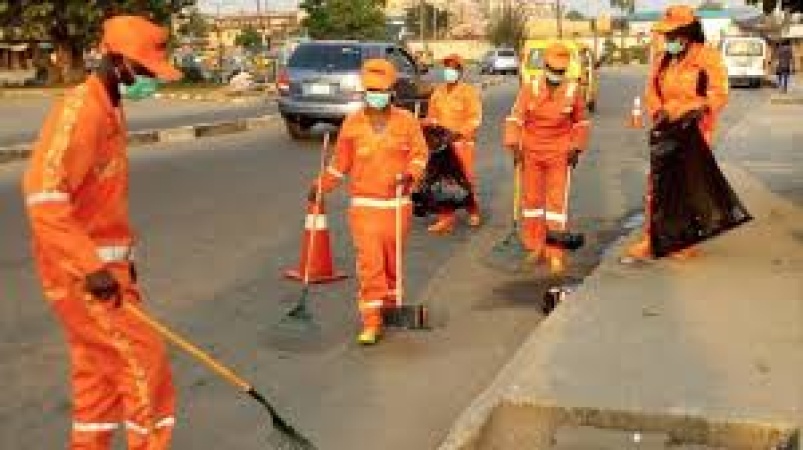
Lagos street sweepers
In this special report, IMOLEAYO OYEDEYI and MUHAMMED LAWAL capture the painful tales of sweepers in Lagos State who are left to endure untold hardship amid life-threatening risks
As the blazing sun reached its zenith, the effect of the heat wave was obvious to residents in the Iyana-Iba area of Lagos State. Amid the chaos of honking cars and the bustling crowd, a lone figure toiled away.
Rianat, a 37-year-old street sweeper, paused to catch her breath.
Her worn-out broom barely kept up with the relentless dust and debris on the road. Beads of sweat trickled down her forehead, mixing with the grime on her face, which painted streaks of exhaustion.
Rianat?s back ached from the unending toil.
Every sweep felt heavier, every step more laborious.
She glanced at the passing vehicles and made a frail attempt to beg for money from a motorist. The female driver sneered and quickly wound up her windows as Rianat tried to advance towards the vehicle.
She shook her head in shame as she was treated like a leper. Withdrawing slowly from the traffic, Rianat looked at her tattered shoes, the soles worn thin from a long distance of sweeping, and sighed.
The weight of her struggles pressed down on her weary shoulders. Rianat?s mind wandered to her children waiting at home, their innocent faces filled with hope she would return home with something for them to eat.
Crestfallen, she tightened her grip on the broom, wiping her brow with the back of her hand. The woman straightened her back and resumed her work, each stroke of the broom a testament to her resilience.
Despite the tiredness, she knew she had to keep going. Her spirit, though battered, remained unbroken.
?I am just managing,? she told Saturday PUNCH. ?This life hasn?t been easy for me.?
Rianat?s salary is a meagre N30,000 ? a sum that is quickly swallowed up by the daily necessities of life.
?I have to borrow money to buy food or things for my children, and when my salary comes, it?s already used up paying back debts,? she said, her voice faltering.
Despite this, she walks long distances to work, sometimes covering half the journey on foot just to save on transportation fares, which cost her nearly N1,000 daily. The fare ironically totals her monthly salary.
?I barely have anything left by the end of the month,? she said, wiping her eyes with the back of her hand.
Yet, Rianat?s struggles do not end with transportation costs.
To survive, she scavenges cans and plastic bottles from the streets, selling them to raise money for her daily contributions and to send her kids to school.
?I don?t even have a proper uniform anymore,? she stated, her voice breaking. ?The last time I got a new one was two years ago.?
Her daily routine Is a painful reminder of her reality.
Rianat does not just struggle with the weight of her job; she fights for the future of her children. ?I can?t send them to university,? she said. ?They?ll have to learn a trade instead.?
It?s not that her children lack ambition. It?s that their mother simply cannot afford the cost of education. The dream of a better life for them is slipping further away with every passing day.
Tope, another street sweeper, shakes her head in sadness as Rianat wipes off the tears forming in her eyes. She has a similar story of hardship, worsened by the economic hardship in the country.
Like Rianat, her salary is also barely enough to cover the basics.
Tope says she treks to work daily.
?I live far away and can?t afford transport, so I walk,? she says. ?If I had to pay for transport every day, it would cost me N1,300 without food.?
But Tope says she has been managing to survive. However, she says what breaks her spirit is the lack of health coverage in her job.
When she fell ill after injuring herself at work a few weeks back, she had to take from her meagre earnings to treat herself.
?I went to Igando General Hospital every three days, but when I reached out for help, my supervisor didn?t respond,? she said, shaking her head in disbelief. ?I didn?t receive any help.?
In addition to the physical toll, Tope?s emotional burden is heavy. She cannot even provide for her children?s basic needs.
?We only eat when there?s money,? she said quietly. ?When there?s nothing, we just go hungry.?
It?s a life lived in constant fear of the future?unsure of where the next meal will come from or how to pay the bills.
?I don?t have a pension, and I have no idea what the future holds.?
Lagos street sweepers
The experiences of these women highlight the daily struggles of most Lagos sweepers, who are tasked with the responsibility of keeping the state clean, yet left to endure hardship and life-threatening risks.
Lagos, the largest city in Nigeria and sub-Saharan Africa according to Statista, produces more than 13,000 tons of waste daily, generated by its population of over 16 million.
Once ranked as the second dirtiest city in Nigeria by the United Nations Environmental Programme and Clean-Up Nigeria, coming only behind Abia State, Lagos faced a pressing need for sustainable waste management.
This led to the creation of the Lagos State Waste Management Authority, originally established as the Lagos State Refuse Disposal Board in 1977, as Nigeria prepared to host the Festival of Arts and Culture.
Today, LAWMA employs over 16,489 street sweepers and supervisors, who work daily to manage the city?s waste through a comprehensive collection, transportation, and disposal system.
Despite their relentless efforts to maintain the city?s cleanliness, many of these workers endure harsh working conditions.
Usually clad in orange or lemon jumpsuits, the sweepers grapple with inadequate compensation, delayed wages, and a troubling absence of support in terms of safety and health benefits, all of which create immense challenges for these essential workers. Saturday PUNCH gathered that the sweepers work six days a week. They resume as early as 6 a.m. and leave their assigned routes around 12 noon daily. While some of them are males, most are either single mothers or widows.
A cycle of debt
Abosede has been on the job for four years now, but it has not become the stable opportunity she once envisioned.
?I used to work as a house cleaner,? she begins, her tone weighed down by disappointment.
?I thought a government job would be a step up, a path to something better. But nearly four years down the line, it turned out quite differently.
?Every morning, we?re out here sweeping the streets, and by noon, we have to go around again to pick up the litter.?
For Abosede, a mother of three, each day brings with it not only the grind of her tasks but also the constant sting of disrespect.
?People treat us as if we?re invisible, or worse, as if we?re nothing. They hurl insults, laugh, and just walk on by,? she recounted, her voice barely holding back the hurt.
She describes a troubling incident earlier in the week involving one of her colleagues who was attacked by motorcyclists at Ile Epo Bus Stop.
?They beat her up over something trivial, and since then, she hasn?t been able to come back to work. This kind of a thing happens all too often,? she said, her words carrying the weight of pain. ?This is the life we face every day.?
Yetunde, a single mother of three, has also been working with LAWMA for four years, but like Abosede, her experience has been overshadowed by a constant cycle of debt.
?I?ve been surviving almost entirely on credit. There?s a woman who sells bread on my street, and right now, I owe her around N4,500?money for bread I bought on credit just to feed my children,? she explained, her voice heavy with strain.
When her salary finally comes, Yetunde says it?s mostly used to clear old debts, only for her to start borrowing again soon after.
?That?s how I manage with my children. At the end of the month, there?s nothing left to save from the small amount I earn,? she said.
Despite her determination to provide a future for her children, Yetunde?s limited income has made this challenging.
She?s had to keep her youngest child at home for months due to unpaid school fees, while her two older children now stay with her elder sister to ease the burden.
?My youngest has been home since last term because I couldn?t afford the fees,? she said. ?This term, I didn?t even bother sending her because last term?s debt alone is about N120,000?and that?s still hanging over me.?
The pressures of daily life are mounting, she added. ?There?s so much we have to deal with. House rent keeps going up every year. Even though I work for LAWMA, I still pay for their services in my own home. Then there are electricity bills and other expenses,? she listed, her voice a quiet plea. ?The government really needs to raise our salaries.?
Another street sweeper, Bukky, a mother of four, has endured her own set of struggles.
When Saturday PUNCH met her on Wednesday afternoon, her weary face spoke of hardship.
?As I stand here talking to you, I have nothing to take home to my hungry children,? she said.
?I survive solely on this LAWMA job, and it hasn?t been easy,? she continued.
?Most days, I end up borrowing money here and there just to feed my children, because my husband doesn?t have steady work.?
Often, Bukky is forced to take food on credit, a cycle that leaves her in debt by the end of the month.
?My salary isn?t enough to pay back what I owe,? she said, appealing to the government for a wage increase. ?That?s why some of us end up asking strangers for help on the streets?to get by.?
Then there is Sabalimotu, who, like others, works tirelessly just to keep her family afloat.
working to make a living, but often go hungry just trying to get by. It?s heartbreaking. A few days ago, while working in the Ajah area, I encountered some sweepers on the road. As I was walking, one of the men started following me, asking if I could spare any money for him to eat. He said he?d be grateful for even N100,? the coordinator said, his voice cracking with emotion. ?It was heart-wrenching.?
According to him, the sweeper also begged for something to take home to his wife and children, whom he left at home hungry.
?It was such a painful moment, knowing they face these hardships daily,? he added.
The coordinator further recounted some of the dangers the sweepers face on the job.
?There was one instance when a hit-and-run driver struck a sweeper. It was reported to LAWMA, but nothing was done,? he stated with palpable frustration. ?I had to cover the sweeper?s medical expenses myself, using my own modest N80,000 monthly income as a coordinator.?
The source also highlighted the lack of basic support for workers, noting that despite putting their lives at risk to keep the streets clean, the sweepers receive no health insurance from the government.
?They?re exposed to all kinds of hazards, but there?s no safety net for them,? he added.
The fatal hazards
According to LAWMA, between 2007 and 2010, no fewer than 57 street sweepers were killed in car accidents while carrying out their duties across the state.
In 2014, a pregnant road sweeper, Kikelomo Bamidele,
was crushed to death by a petrol tanker along the Lagos-Ibadan Expressway.
Public Affairs Unit, Ministry of Environment, Mr Adekunle Adeshina, the street sweepers are not core public servants.
He said, ?They have their terms for which they were employed. They are employees of LAWMA. So, the agency will be in the best position to answer that. This is because the sweepers were not employed by the state government. LAWMA employed them for the specific purpose of cleaning the streets. And people who work in the parastatals are different from the core public servants. So, LAWMA will be in the best position to answer you.?
But Kadri, the LAWMA spokesperson, expressed optimism that the street sweepers would be paid the minimum wage as soon as the state Governor, Babajide Sanwo-Olu, gives the directive.
?I am sure they will be paid. When they start, every one of us will see it,? she stated. (Saturday PUNCH)
Joseph
13th, Jan, 2025
13th, Jan, 2025