ADAD
ADAD
Updating your news feed...
NEWS EXPRESS is Nigeria’s leading online newspaper. Published by Africa’s international award-winning journalist, Mr. Isaac Umunna, NEWS EXPRESS is Nigeria’s first truly professional online daily newspaper. It is published from Lagos, Nigeria’s economic and media hub, and has a provision for occasional special print editions. Thanks to our vast network of sources and dedicated team of professional journalists and contributors spread across Nigeria and overseas, NEWS EXPRESS has become synonymous with newsbreaks and exclusive stories from around the world.






Loading banners
Loading banners...


Supporters of Nigerien President Mohamed Bazoum gather to show their support in the capital Niame
Just over a week afterNiger's democratically elected President Mohamed Bazoum was ousted in a coup, people in the vast Sahel nation are already feeling the economic squeeze.
Markets are still full of goods, but shoppers say food prices are going up.
In Niger's bustling southern city of Maradi, which lies just 40 kilometersfrom the border to Nigeria, one resident told DW that he was shocked byhow much the price of ricehad shot up since the military seized power.
It has gone from11,000 West African CFA francs a bag (€16.75 or $18.30)to 13,000 francsin just a few days, explained Moutari, who didn't want to give his last name. That's a rise of 20%.
"I have enough to buy this rice, butI feel sorry for the poorest people who can't afford to buy a bag," he said. "The days ahead are going to be very difficult. We just have to pray that things will work out."
What can ECOWAS do to counter Niger coup?
The Economic Community of West African States(ECOWAS)slapped severe sanctions on Niger on Sunday in response to the coup, including a number of border closures.
These impose additional hardships on theimpoverished and landlocked nationof Niger, where the majority of key imports,including food staples like rice,would normally be trucked in from neighboring countries.
Niger's coup leaders, who closed all land borders and airspace when they took control on July26, announced on Tuesday that borders to some neighbors were reopened.
People and goods can move again to Algeria, Libya and Chad — who aren't in ECOWAS — as well as to ECOWAS members Mali and Burkina Faso, who support the coup leadership.
But the key borders to Benin andNigeriaremain closed due to the ECOWAS sanctions.
The Atlantic ports of those two nations are vital to Niger for the import and export of goods,Abdoul Aziz Seyni, an economist at the University of Niamey, told Reuters news agency.
"We aren't a country with direct access to the sea," Seyni said."Everything we buy arrives at the ports of neighboring countries, and from these neighboring countries we have to transport it to Niger. So if these countries decide to close their borders, frankly there will be an impact on the socio-economic life of Nigeriens," he said.
Minivan driver Moussa Halirou, who transports passengers on the Maradi-Nigeria route, is feeling the pinch of the Nigerian border closure already.The sharp rise in the price of fuel on the black market is eating into his profits.
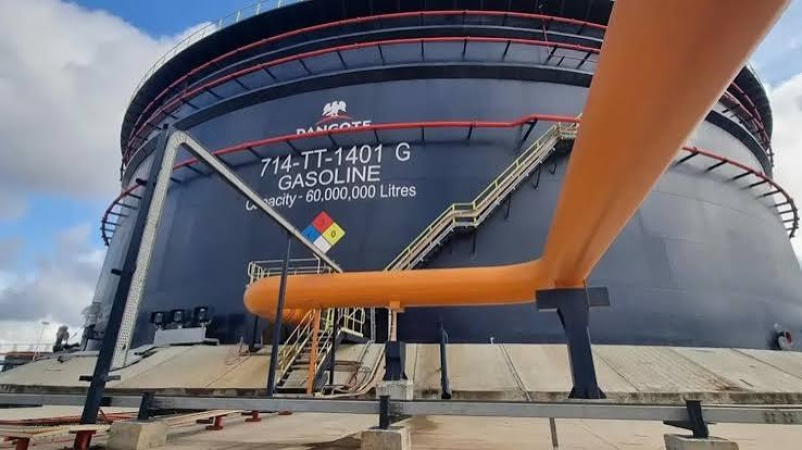
Before the coup, he would pay350 Nigerian naira (€0.42 or $0.45) for a liter of gasoline, he told DW.But now, the price hasgone up to 620 naira.
Halirou said that even though he has doubled the price of transporting passengers to account for the rise in fuel, he is still only making a profit of about 4,500 naira a trip.
Stuck at the border
Others find themselves in an even more difficult situation. Up to 1,000 vehicles a day,many carrying goods to markets, normally travel the trade corridor betweenBenin's port of Cotonou and Niger's capital Niamey. It's one of the busiest crossings in West Africa, according to Reuters.
But since the coup in Niger, nothing is moving.
"Even if a truck is loaded, it has to stay parked, because it can't move," said Salissou Idrissa, one ofthe many truck drivers stuck at the Malanville border crossing, waiting to go from Benin into Niger. "The vehicles are lined up at the border as far as the eye can see."
Nigeria has also cut electricity to Niger, which depends on its neighbor forthe majority of its power. Many districts suffered from frequent power cuts even before the coup, although less than one out of five people actually have access to electricity in the country, according to the World Bank.
On top of this, ECOWAS sanctions have seen the suspension of commercial and financial transactions between member states and Niger as well as a freeze of Niger's assets in ECOWAS central banks and commercial banks.
Inaddition, the 15-member blochas also threatened to use forceif President Mohamed Bazoum wasn't returned to power.
People in Niger can hardly afford these rising prices, let aloneeconomic and political uncertainty ina region that has been plagued byinstability. One of the world's poorest countries, Niger was already in the midst of its worst humanitarian crisis in a decade before the militarypower-grab.
With two thirds of the countrybeing desert, Niger suffers fromintense droughtsand has little arable land.Some 4.3 million people, or 17% of the population, are dependent on food aid to survive.
United Nations humanitarian operationscontinued uninterrupted, a UN spokesperson said at a Wednesday briefing, adding that "road movements are possible and have been authorized."
But some of Niger's biggest donors, including theEuropean Union, Germany,Franceand the United Kingdom, have cut various types of development and budgetaryaid to the government since the coup.
The country receives close to $2 billion a year in official development assistance, with some 40% of the Nigerien government's budget reportedly comingfrom outside aid.
The German government stressed, however, thatit will continue to provide humanitarian aidto people in need in Niger.(DW)