Updating your news feed...
NEWS EXPRESS is Nigeria’s leading online newspaper. Published by Africa’s international award-winning journalist, Mr. Isaac Umunna, NEWS EXPRESS is Nigeria’s first truly professional online daily newspaper. It is published from Lagos, Nigeria’s economic and media hub, and has a provision for occasional special print editions. Thanks to our vast network of sources and dedicated team of professional journalists and contributors spread across Nigeria and overseas, NEWS EXPRESS has become synonymous with newsbreaks and exclusive stories from around the world.
Loading banners
Loading banners...


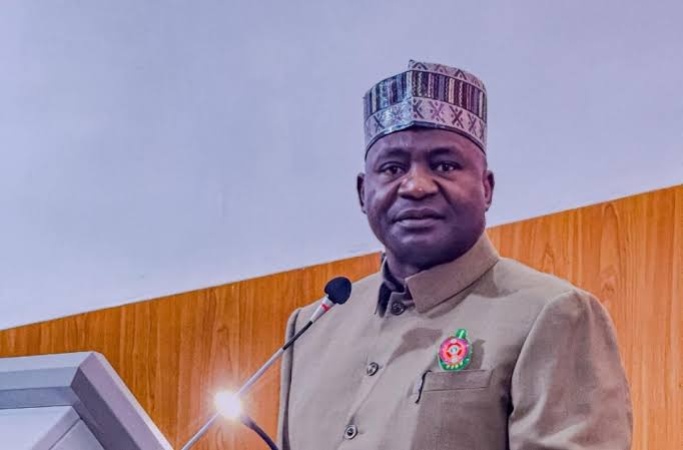
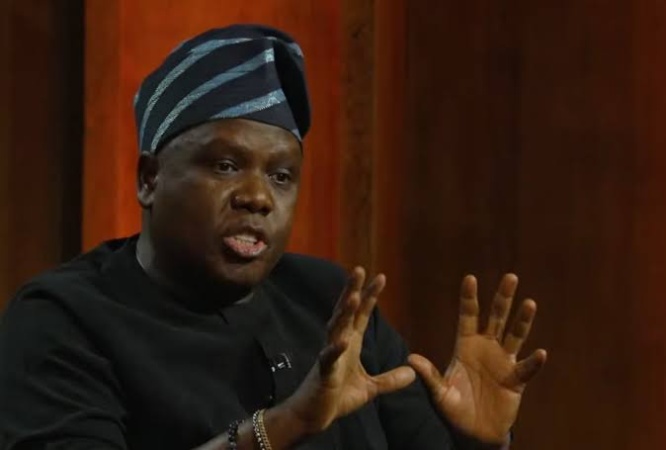
INEC Chairman, Prof Yakubu
In this exclusive interview, the chairman of the Independent National Electoral Commission (INEC), Professor Mahmood Yakubu, spoke on preparations for the 2023 general elections, the issues of election funding, challenge of insecurity, among others. Excerpt:
Campaigns for the 2023 general elections have started; do you feel a sense of trepidation or fulfilment?
I feel a sense of responsibility and satisfaction. Recall that on February 26 this year, the commission released the timetable and schedule of activities for the elections.
The elections will hold in two phases: the first one is what we call national elections—presidential and National Assembly, meaning that senatorial and House of Representatives elections will hold on February 25; then we have the state elections – governorship elections in 28 states and the state houses of assembly.
The governorship is holding in 28 instead of 36 states because in the other eight states their elections were held off cycle, like the ones we conducted recently in Ekiti and Osun states.
In the timetable we released early this year, we identified 14 activities between the publication of the notice for elections and the election day. And today, we have successfully accomplished 9 out of the 14 activities.
Why does it seem as if this is the longest period of electioneering-related campaigns before the actual elections?
It is actually a reality because previously, parties were required to submit the names of candidates to the commission, 60 days before the elections. In fact, we have up to 45 days for withdrawal for substitution and that has created a lot of challenges for the commission, and the responsibilities we discharge keep increasing. For instance, in 2019 we had 84million registered voters, our projection for 2023 is 95 million, and so, the responsibility for recruitment and training of ad hoc staff, the production of sensitive and non sensitive materials will increase on that basis.
So, we approached the National Assembly and specifically requested for some extension of time between the conclusion of the primaries by political parties and the conduct of subsequent activities leading to the election day; and the National Assembly granted 180 days, which is six months.
So they are very generous with the days?
Although we asked for a year, they were generous enough to give us six months; that is why it looks very long.
Parties have concluded their primaries and submitted the names of their candidates. We have published the final list of candidates for the national election as required by law.
For the presidential and National Assembly elections, we have over 4,200 candidates. We are in the process of concluding the final list of candidates for state elections, which is going to be much longer and bigger than the national elections.
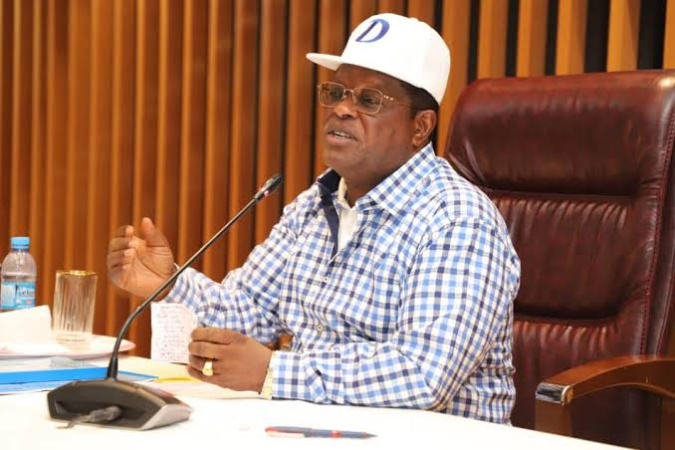
Professor Mahmood Yakubu
Don’t you think this is very costly for the country?
I think it is good. As our democracy matures, we will become used to certainty. What you have just said reminded me of the period before the 2019 general elections, when, in order to engender certainty into our electoral calendar, the commission decided that going forward, our elections would hold on February 3 of the election year.
For that reason we released the timetable one year to the elections, but people said it would distract the country and overheat the polity, but it is now accepted. It is the norm and practice in many countries. Every Ghanaian knows that December 5th of the election year is election day irrespective of the day of the week. In Kenya, they all know that elections will hold on the second Tuesday of August of the election year. In the United States, for instance, it is on the first Tuesday of November of the election year unless it happens to be the first day of the month.
So much money is sucked up by public service and very little trickles down to do the necessary things for everybody. Would any of these in any way improve the quality of democracy in the country because you will find that there are pockets of despondency now?
My responsibility is to conduct elections, and as you can see, there has been progressive improvement on the conduct and management of elections. It is clear now that with every election the process is getting better and more participatory.
So, as far as the commission is concerned, we have seen tremendous improvement. No one can say that the way elections were conducted in 1998 and 1999 is the same way they are conducted today. And we will keep improving.
There may be other issues that are beyond the electoral commission, but as far as we are concerned, I think there have been progressive improvements, and Nigerians acknowledge that.
I understand that you have put a limit to campaign funding, such as N5billion for certain candidates, is that realistic?
The limits are actually in the law. But it wasn’t N5billion under the old law, it is the new electoral act that set the limit for presidential and other elections —from governorship down to councillorship in the Federal Capital Territory (FCT). The FCT is the only part of the country where the INEC conducts local government elections. So, since the limits are in the law, they must be obeyed.
There are also limits to what individuals can contribute to campaign financing. The party also has its own limitations as to what it can spend, including where the money is coming from and the responsibility for full disclosure for transparency.
I have seen push-backs, especially regarding Nigerians who are based abroad, who want to contribute and who say they are being prevented by the law in terms of funding, how would you react to this?
Well, the law is the law. It states that parties cannot receive financial contributions outside the country.
From anybody?
From anybody.
Whether he is a Nigerian based in the United States, United Kingdom and wherever?
That is right. And if there is any money received by any party from outside the country, such funds must be transferred to the commission. But there is another dimension to the foreign issue you have raised. At present, Nigerians only vote in Nigeria because the law states that you can only vote if you registered; and we don’t have registration centres or polling units outside Nigeria.
However, there has been an advocacy by Nigerians living outside the country to be given the right to vote as is the case in many other countries, even in West Africa, but the law has not allowed that.
We have also championed that cause because the commission supports Nigerians living outside the country to vote; and they are in two categories. You have Nigerians resident outside Nigeria, and that is the category called Diaspora Nigerians. But there is another category of out-of-country Nigerians who may be in Foreign Service or doing medical services overseas, or members of the technical corps. Like those who are permanently resident outside the country, they don’t vote.
But as soon as the law permits that we should register them outside the country, we will work out the modalities for voting.
You concluded voter registration some months ago and new voters are supposed to begin the collection of their cards this October, but it is said that over a million people were found to be fraudulently registered, what is your take?
The first point to make is that these cards should be available for collection by citizens. We hope that by the end of October or early November they would be collected. We have consistently said so, and we are working towards that. Quite a number of the cards of new registrants have already been printed.
During the registration exercise, there were complaints from various quarters that many intending voters were frustrated because there were limited centres. How are you going to distribute the cards to avoid such frustrating experiences?
Well, we must admit that the number that turned out to register was overwhelming. What every agency like the INEC does is to rely on institutional memory of what happened.
The commission registered over 14million Nigerians before the 2019 general elections and we had 1,446 centres. Our projection for 2023 was that more Nigerians would register; therefore, we increased the number of centres to 2,672 or so, but even so, towards the end, there was a big surge and we extended it to the end of July 2022.
We made ample provisions, including, for the first time, online pre-registration for those who have access to smart-phones and internet and computers. But we appreciate the fact that not all Nigerians have access to these facilities.
In addition to the online pre-registration opportunities, we also had the physical or walk-in registration centres, including roving or rotational centres, but towards the end, there was a big surge.
Now, regarding the 1 million we announced as invalid registration, the commission, after every registration, cleans up the data. In cleaning up the data, we remove those who are not eligible to be registered under the law – those who are below the age of 18, those who are not Nigerians, or those who have registered before. Nigerians are not allowed to register more than once, so we remove those who engaged in multiple registration. That was what we did. But that only covered from June 28, 2021 to January 14,2022. Right now, we are cleaning up the data of new registrants from January 15, 2022 to July 31 when the exercise was suspended, until after the general elections.
So you could have another big number of unqualified registrants?
Most definitely, there is going to be another number to be added to the 1.1million we already cleaned up.
The law also requires that once we do so, we should throw the register open to Nigerians for claims and objections by citizens. The law specifically requires the commission to publish hard copies of the register in all the 8,809 wards nationwide, as well as 774 local government areas. Now, the idea is for citizens to help the INEC to further clean up of the register.
We are about to complete the cleaning up of new registrants and add the data of eligible or valid ones to the existing register of 84million, then publish the entire register nationwide for citizens to help us clean it up further.
Let me take you back to collection. How easy are you going to make it because you have a short window from November to, maybe January, for people to collect their cards?