 ADAD
ADADUpdating your news feed...

NEWS EXPRESS is Nigeria’s leading online newspaper. Published by Africa’s international award-winning journalist, Mr. Isaac Umunna, NEWS EXPRESS is Nigeria’s first truly professional online daily newspaper. It is published from Lagos, Nigeria’s economic and media hub, and has a provision for occasional special print editions. Thanks to our vast network of sources and dedicated team of professional journalists and contributors spread across Nigeria and overseas, NEWS EXPRESS has become synonymous with newsbreaks and exclusive stories from around the world.













Loading banners
Loading banners...


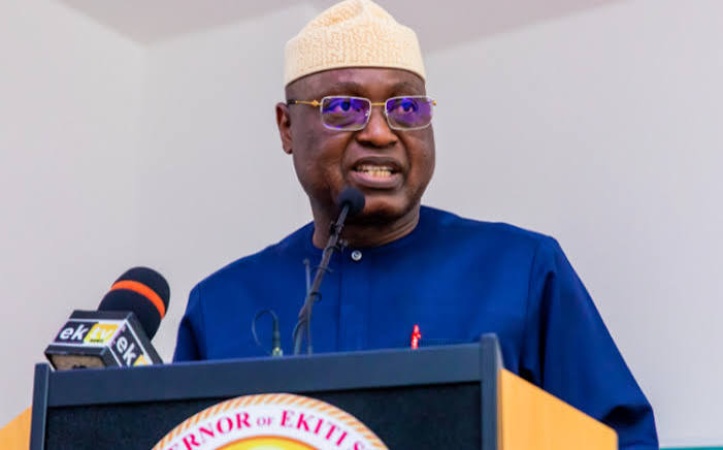
Governor El-Rufai
The Kaduna State Government has on Tuesday published its 2016 Audited Accounts.
A statement signed by Samuel Aruwan, Senior Special Assistant-Media and Publicity to Governor Nasir El-Rufai, said the accounts are published in national newspapers, as well as on the state website, www.kdsg.gov.ng.
He said the Audited Accounts show that during the year under review, the combined revenue of Government grew from N65 billion in 2015 to N74 billion in 2016 representing an increase of 13%. Federal Allocation (Statutory and VAT Allocation) plummeted by 1.8% from N51.7 billion in 2015 to N50.8 billion in 2016.
In the period under review, the state strengthened its capacity to raise revenues. As a result, Internally Generated Revenue (IGR) spiked by 69.8%, from N13.6 billion in 2015 to N23 billion in 2016. In absolute terms, the aggregate decline in Federal Allocation (N0.94 billion) is ten percent of the growth in IGR (N9.5 billion). Put in another way, the absolute increase in IGR is over one thousand per-cent of the decline in Federal Allocation.
He quoted the State Commissioner of Finance Suleiman Abdu Kwari as saying that the growth in IGR “is an impressive and commendable streak in performance over just a 12month budget year! The total IGR collected is the highest in the history of the state. It is a significant advance towards the government’s ultimate target of being able to fund all its recurrent costs and wages solely from IGR.”
Mr. Aruwan said factors responsible for the decline in Federal Allocation ranged from the drop in the hydrocarbon-dollars to the unrest in the Niger Delta. 2016 was a peculiar year compared with similar periods in the past.
“For example, there were months, April and May 2016, when the Federal Allocation stood at N2.4b, a sum that could barely cover the wage bill of Kaduna State Work Force,” he said.
The statement further reads: “2016 is the first year to reflect the full impact of policies adopted in 2015, including the TSA and no-cash-collection policy. KADIRS, the state’s revenue service, was inaugurated in 2016, and it centralised collection of all revenues across all channels. This strategy infused efficiency into the revenue collection process, plugging loopholes while avoiding harassment of taxpayers.
“Tax revenue alone stood consistently above N1.2 billion monthly, averagingN1.3 billion in the year with a peak of N1.6 billion in June 2016. The year closed with a record N2.3 billion generated in December 2016 alone.
“The Capital Development Fund shows a total investment of N62.2 billion (2015: N27.6 billion), a 125% increase. This is the highest ever in the history of democratic Kaduna State.
“In 2016, state government continued with the renovation and reconstruction of primary schools and some selected secondary schools, under the Education Emergency Programme. The Primary School Feeding (PSF) programme was another major Education intervention in the year 2016, implemented from January to July 2016. There was a massive investment in construction and rehabilitation of Township Roads, and other selected roads under an innovative retainership programme. All these are in addition to the over N10 billion investment in the Mass Rail Transit Programme.
“At the same time, successes in moderating the cost of governance arehighlighted as the recurrent expenditures showed a N5 billion reduction in personnel cost of N21.8 billion (2015: N26.8 billion). This reduction was recorded despite the implementation of a number of government policies that saw to the increase in staff strength. For example, 2016 was the full year of KASTELLEA operations which were enabled by the hiring of 2,550 marshals. In the same 2016, about 2,000 Science Teachers were recruited and about 50 health workers recruited by the last administration were paid their two-year salary arrears.
“Kaduna State has also announced the conversion of its financial information processing facilities to IPSAS accrual basis of reporting, with 2016 as the year of adoption. The 2016 audited accounts are presented in IPSAS Cash Basis. However, processes have started with the aim of converting same to the IPSAS accrual. This is in line with the Road Map on the implementation of IPSAS as per the relevant International Standards and the recommendations of the FAAC sub-Committee on IPSAS implementation.”




